



Table of Contents
- Unpacking Emotional Intelligence
- Deconstructing Emotional Intelligence
- Self-Awareness
- Self-Regulation
- Motivation
- Empathy
- Social Skills
- Why Emotional Intelligence Matters
- Elevating Emotional Intelligence
- Emotional Intelligence: A Catalyst for Growth
- The Path Ahead
Unpacking Emotional Intelligence
Emotional intelligence is definitely not just some trendy buzzword tossed around in self-help circles; rather, it’s a fundamental pillar for achieving both personal and professional success. Dr. John D. Mayer from the University of New Hampshire and Peter Salovey, now presiding over Yale University, first introduced the world to the term “emotional intelligence” back in the early ’90s. Their definition? It’s the knack for perceiving, utilizing, comprehending, and managing emotions—not just in oneself, but in others too. But why all this fuss over emotional intelligence? Simple: results. Research shows people with higher EI tend to perform better at work, exhibit stronger leadership traits, and enjoy better mental health.
When individuals like Maya find themselves in a whirlwind of emotions, those with high EI manage to surf that wave with ease, spotting emotional cues and responding aptly. So, could tuning into EI really be the secret ingredient to Maya’s success layer cake?
Deconstructing Emotional Intelligence
EI can be best understood by breaking it into five key components: self-awareness, self-regulation, motivation, empathy, and social skills. Dr. Daniel Goleman, whose book “Emotional Intelligence” brought the concept into the limelight, suggests these components interact to empower behavior that’s emotionally intelligent. Let’s dive deeper.
Self-Awareness
At its core, self-awareness involves a thorough understanding of your emotions, strengths, weaknesses, needs, and motives. Ever caught yourself reacting to a situation only to then ponder why you reacted a certain way? That’s self-awareness in action.
“Being self-aware allows you to have a well-rounded understanding of how you fit into the world and react in varied situations.”
— Dr. Sarah Chen, Clinical Psychologist
It acts as a linchpin for personal growth.
Imagine the potential if Maya had tuned into her emotions during that tense meeting instead of letting her instincts take the wheel. Journaling, mindfulness, and platforms like Hapday, now used by millions for mental health coaching, can bolster self-awareness, offering insight into our emotional world.
Self-Regulation
Aware of your emotions is step one, but what do you do with those emotions once you’ve recognized them? Enter self-regulation. It’s not about bottling emotions up but navigating them constructively. Imagine it’s the dead of night, your thoughts are swirling, and you crave immediate guidance—apps like Hapday offer real-time support, no appointment necessary.
A study in the Journal of Organizational Behavior points to employees who exhibit self-regulation as being better liked and more adaptable—an investment well worth it. Techniques from mindfulness apps, like simple deep breathing, can be instrumental in mastering this art.
Motivation
In the realm of emotional intelligence, motivation goes beyond mere external rewards. It’s an internal drive, fueling a passion to attain personal success. Maya’s pursuit might be less about financial bonuses and more about personal evolution.
According to Dr. David Caruso of Yale, individuals brimming with emotional intelligence embark on their goals with resilience and unwavering fervor, even when faced with setbacks.
Empathy
Empathy—an essential facet of EI—allows us to comprehend and resonate with the feelings of others. It’s the mortar that binds the bricks of compassion and interpersonal bonds. When Maya sensed her colleague was disengaged, her ability to connect empathetically made a significant difference.
The American Psychological Association has highlighted empathy as a catalyst for fostering trust and cooperation in teams, boosting workplace environments substantially. Developing empathy, some argue, should be a cornerstone of human interaction, not just a skill.
Social Skills
Social skills are where emotional intelligence hits the ground running—forming relationships, resolving conflicts, paving a path of effective communication. Whether you’re a leader or a team player, these skills are invaluable.
Maya’s ability to align with her team hinges on them. Encountering challenges like hers becomes a shared journey in personal and team growth, fostering camaraderie and mutual success.
Why Emotional Intelligence Matters
But why all this emphasis on EI? Quite simply, it’s a strong predictor of success across life’s numerous landscapes. A TalentSmart study notes that EQ accounts for 58% of job performance, transcending industries. Those with high EI often find more joy in their careers, bolster relationships, and generally thrive.
As per Dr. Marc Brackett of Yale,
“Emotional intelligence endows individuals with the capacity to endure setbacks, recover, and adapt, thus driving long-term success.”
— Dr. Marc Brackett, Yale
A skill set that’s crucial for weathering life’s storms.
In leadership, high EI levels cultivate environments ripe for innovation and teamwork, correlating with reduced turnover and heightened employee contentment. Findings from the Consortium for Research on Emotional Intelligence in Organizations indicate that even a slight boost in EQ can lead to substantial savings—money talks, as they say.
Elevating Emotional Intelligence
The notion that emotional intelligence is innate? Debunked. It’s a skill, learnable and improvable. Here’s how to embark on this journey:
- Practice Mindful Listening: Don’t just hear—genuinely listen. Focus on understanding, not merely responding. Watch your relationships transform as a result.
- Reflect on Your Emotions: Take a moment each day to ponder your emotional experiences. Ask yourself, what did I feel and why?
- Seek Feedback: Trusted friends or colleagues can offer invaluable insights about your emotional interactions. Use their feedback to fine-tune your skills.
- Embrace Stress-Reduction Techniques: Incorporate yoga, meditation, or breath-focused exercises into your routine to enhance emotional regulation.
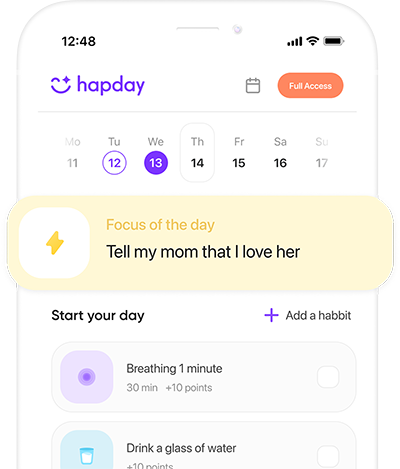
- Leverage Technology: Platforms like Hapday offer structured coaching and habit tracking, acting as a tech-savvy mentor on your EI journey.
Emotional Intelligence: A Catalyst for Growth
Picture a workplace where emotional intelligence shapes its essence. Empathetic leaders, articulate employees, a hub of creativity. Emotional intelligence paves the way for effective leadership and personal progression.
Imagine Maya, equipped with emotional intelligence, navigating challenges with a toolkit that promotes reflective growth and problem-solving. The five facets of EI—self-awareness, self-regulation, motivation, empathy, and social skills—plug into establishing deeper connections, cohesive teams, and a more empathetic, understanding society.
The Path Ahead
Embracing emotional intelligence is more than acquiring a skill; it’s the beginning of a journey towards fulfillment. It’s about wading through the chaos of daily life with finesse and assurance, forging relationships that offer warmth and nourishment.
As Maya continues her park stroll, latte still in hand, she’s not just savoring coffee—she’s imbibing lessons in emotional growth. Consider your emotional intelligence journey as a path ripe with opportunities. Those curious about enhancing these skills might find resources like Hapday offering all-around support, promising a future of burgeoning emotional intelligence (hapday.app).
Key Takeaways
- Emotional intelligence (EI) is crucial for personal and professional success.
- EI is made up of five components: self-awareness, self-regulation, motivation, empathy, and social skills.
- High EI leads to better job performance and satisfaction in life.
- Emotional intelligence can be learned and improved through practice and feedback.
- Developing EI fosters better relationships and enhances teamwork in various environments.
The Bottom Line
Embracing and enhancing emotional intelligence is not just a skill—it’s a transformative journey that enriches your personal life and professional landscape, equipping you to navigate challenges with grace and build deeper, more meaningful connections.