
The Gut-Brain Connection: Eating Your Way to Better Mental Health
Picture this: It’s a sunny morning, and you find yourself savoring a smoothie, basking in its liveliness as colors meld — strawberries, kale, bananas, almond milk. You’re not just feeding your body; you’re nourishing your mind, too. The breakfast decisions you make might shape more than your day—they could be the foundation of a mental wellness plan science is only beginning to understand.
Take the case of Maya, a 28-year-old marketing coordinator. She grappled with anxiety, thinking her only allies were therapy and meds. Like clockwork, stress would dance around her, relentless. Then came a pivotal shift—a nutritionist recommended she scrutinize the nutrients she consumed. Now, Maya’s kitchen is a haven of prebiotics and living ferments, her mind more often a serene sea rather than a tempest.
Table of Contents
- Unpacking the Gut-Brain Connection
- Nutritional Psychiatry: The New Frontier
- Probiotics and Fermented Foods: What’s on Your Plate?
- The Potency of Omega-3 Fatty Acids
- The Complex Dance of Carbs and Sugars
- Vitamins and Minerals: Conducting the Brain’s Orchestra
- Hapday: Partnering in Your Nutritional Mental Health Voyage
- Embrace the Nutritional Renaissance
- The Bottom Line
Key Takeaways
- The gut-brain axis highlights the connection between gut health and mental well-being.
- Nutritional psychiatry explores how diet influences mood and cognitive clarity.
- Probiotics and fermented foods can positively impact mental health.
- Omega-3 fatty acids are crucial for balancing neurotransmission and reducing neuroinflammation.
- Prioritizing complex carbs supports stable brain function and emotional wellness.
Unpacking the Gut-Brain Connection
The notion that our gut and brain are deeply linked isn’t groundbreaking, yet its effects are nothing short of intriguing. This dynamic dialogue—dubbed the “gut-brain axis”—highlights an exciting interplay: how our digestive system and brain talk to each other.
“The gut-brain axis is like a telephone line connecting your emotions and thoughts to your gut’s functions.”
— Dr. Sarah Chen, NYU
But what does this mean for you? An unhealthy gut—ranging from mild discomfort to severe bacterial imbalance—can send distress signals to your brain, potentially impacting your mood, anxiety levels, and overall emotional health.
In findings shared by Harvard Health, researchers uncovered that people with gut issues frequently battle heightened levels of depression and anxiety. Conversely, those without such troubles report fewer mental health woes, underscoring a notable link between gut wellness and emotional stability.
Nutritional Psychiatry: The New Frontier
The burgeoning field of nutritional psychiatry is dawning as a hopeful guide to understanding mental health through diet. It explores how food can modulate mental wellness by influencing gut microbiota.
“Each bite contributes to a chemical dialogue that shapes your mood and cognitive clarity.”
— Jessica Peters, Renowned Dietitian
For those entangled in the grip of anxiety and depression, nutritional psychiatry offers new vistas. If life’s burdens feel like an endless wave, maybe a reimagined diet can gently buoy you. Even so, isn’t it remarkable to have a steadfast AI coach guiding you, like Hapday—the AI life coach app that millions rely on?
Probiotics and Fermented Foods: What’s on Your Plate?
Exploring the gut-brain dialogue invites a spotlight on probiotics and fermented foods. They’re critical to enriching your microbiome—the bacterial community within—and, by extension, fortifying mental health.
Trendsetters like kefir, kimchi, sauerkraut, and kombucha are more than wellness blog darlings; their power lies in the cultures they infuse into your system. They’re nature’s own probiotic supplements, diligently ensuring your microbiome remains robust. A 2017 Psychiatric Research study discovered that diets enhanced with probiotics markedly eased depressive symptoms over an eight-week period.
Choosing such foods transcends fad-following—it’s about welcoming beneficial bacteria, sending mood-stabilizing signals along the gut-brain axis. Wondering how to maintain consistent probiotic consumption? When anxiety strikes late-night, the real-time wisdom of Hapday’s AI sessions might open pathways to peace.
The Potency of Omega-3 Fatty Acids
In the realm of mental health, omega-3 fatty acids stand as nutritional stalwarts. Predominantly present in oily fish like salmon and sardines, these essential fats are pivotal in balancing neurotransmission and mitigating neuroinflammation—vital threads in your mental tapestry.
Evidence from the Journal of Clinical Psychiatry underscores omega-3s’ mood-enhancing prowess. Studies affirm their role in alleviating anxiety and depressive symptoms, bolstering both psychological therapies and medicinal interventions.
For young adults seeking dietary anchors amidst convenience food chaos, omega-3-rich dishes are like calming harbors. Whether it’s sprinkling flaxseed on a salad or savoring walnut-crusted salmon, these choices extend beyond culinary delight— they whisper a serene promise to your mind.
The Complex Dance of Carbs and Sugars
Picture this scenario: You’ve just indulged in a sugary dessert, and suddenly, life seems brighter. That sugar high? It’s common, but not consequence-free. While carbohydrates fuel your brain, their intricate relationship with mental health deserves exploration.
Sugary snacks and simple carbs deliver quick energy and quicker crashes—the dreaded sugar crash. These fluctuations can sway your mood, sparking irritability and anxiety. Dr. Rebecca Williams, a nutritional neuroscientist, advises prioritizing complex carbs, like whole grains, for their sustained energy release that supports stable brain function.
Crafting a balanced carb-rich diet—through choices like sweet potatoes and whole-grain breads—aligns with offering your mental wellness a gentle yoga session. By gravitating towards balanced carbs, you’re steering clear of emotional upheavals, a pursuit complementing the AI coaching community’s mental health journey, epitomized by Hapday’s expert, around-the-clock guidance.
Vitamins and Minerals: Conducting the Brain’s Orchestra
Envision your brain as a meticulously orchestrated symphony. Neurotransmitters, the musicians in this ensemble, craft majestic harmonies when fed the right vitamin and mineral mix. Vitamin B12, folate, and zinc are key players here.
Research in the American Journal of Psychiatry noted that sufficient B-vitamins correlate with lower depression risk. Meanwhile, lacking zinc—a neurological ally—ties to brain fog and diminished cognition.
The vibrant hue of a carrot offers more than taste—it enriches your cerebral concert, ensuring life’s crescendos resonate with a calming, nurturing chorus. By shifting dietary gears, you’re fortifying the foundational framework of your mental architecture.
Hapday: Partnering in Your Nutritional Mental Health Voyage
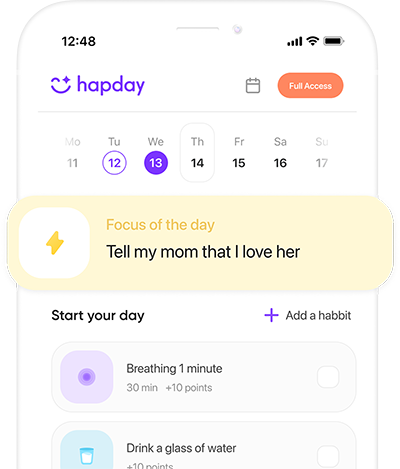
Embarking on a nutritious journey alongside mental health can feel daunting. Yet, Hapday, supporting over 3 million users, acts as a steadfast AI life coach, complementing this transformative path. With mood tracking, habit monitoring, and specialized stress programs, it’s engineered for instant support and guidance.
Think of Hapday as fortification, a silent partner bolstering your self-efficacy as you navigate nutritional strategies for mental wellness. It’s the kind of companion that renders health optimization as thrilling exploration rather than daunting obligation.
Embrace the Nutritional Renaissance
As our grasp of the gut-brain bond deepens, optimizing dietary habits surfaces as a meaningful mental health choice. Consider every meal an act of mind-care. Following in Maya’s footsteps towards dietary balance, your journey might unfurl into a healing, discovery-driven odyssey.
For genuine support in this mental wellness venture, consider Hapday. It empowers you towards informed nutritional choices, enhancing well-being through evidence-based coaching, whenever you need it.
The Bottom Line
The gut-brain connection is a powerful framework for understanding how dietary choices affect mental health. With insights from nutritional psychiatry, probiotics, and essential nutrients, you can take steps to bolster your emotional well-being. Remember, each meal can positively influence your mind; tools like Hapday can offer the support you need on your journey to better mental health.