
Table of Contents
- Understanding Meditation’s Role in Sleep Quality
- The Science Behind Meditation and Sleep
- Getting Started with Sleep Meditation
- Integrating Meditation Into Your Routine
- Why Meditation Impacts Sleep Quality
- Exploring Meditation Styles for Sleep
- Adopting a Health-First Mindset
- The Bottom Line
Key Takeaways
- Meditation can significantly improve sleep quality by calming the mind and enhancing relaxation.
- Techniques such as mindfulness, guided imagery, and body scans offer effective ways to incorporate meditation into your sleep routine.
- Regular practice of meditation can reshape the brain’s neuroplasticity, leading to better stress management and relaxation.
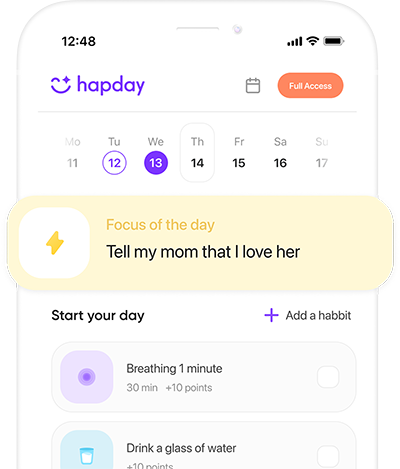
- Apps like Hapday provide valuable resources for meditation, making it easier to maintain a consistent practice.
It’s a scene many know all too well: the clock ticks past midnight, and you’re lying there, practically counting every star stuck to the ceiling. The mind races—sometimes even sprinting—as you wish for sleep to find its way to you. Sounds familiar? You’re not alone. If you’ve been tossing and turning despite trying all known remedies from counting sheep to guzzling chamomile tea, you might want to give meditation a shot. It’s not just some trendy fad; it might just unravel those mental knots keeping you wide awake.
The connection between meditation and improved sleep isn’t some mystical belief; it’s actually well-documented. Think back to 2015, when a study in JAMA Internal Medicine highlighted mindfulness meditation’s effectiveness in enhancing sleep quality for insomnia sufferers. But let’s dive into what really makes meditation your new best friend when sleep slips away.
Understanding Meditation’s Role in Sleep Quality
At its core, meditation helps cultivate this wonderfully relaxed awareness—a way for our chaotic thoughts to filter into calmness.
“Meditation turns down the power on your sympathetic nervous system.”
— Dr. Sarah Chen, Clinical Psychologist
This is the system responsible for that pesky fight-or-flight response. It nudges you towards a state of rest and recuperation.
Take Maya, a 28-year-old marketing exec, for instance. During her tumultuous divorce, nights were tough—a battleground for her restless mind. “I felt on edge all the time,” she confessed. But when meditation entered her life, it changed everything. Over weeks, she didn’t just sleep faster; she slept deeper.
The Science Behind Meditation and Sleep
Our brains are obsessed with problem-solving, a trait not always helpful when trying to drift off. Meditation acts like a gentle hand on an off-switch—bringing mindful awareness that calms the default mode network (DMN) of the brain. This is the same network behind all that mind-wandering that keeps you awake (Brewer et al., 2011).
Here’s a surprising stat: meditation can boost melatonin levels—the hormone that regulates sleep—by up to 98%, as a University of Massachusetts study found. The more melatonin, the easier it is for your body to send those all-important sleep signals.
Getting Started with Sleep Meditation
Starting a meditation practice doesn’t have to be daunting. You don’t need to be some meditation guru. Begin simply and let it grow naturally.
Mindfulness Meditation
In this form, you focus on the here and now, particularly your breath. Sit comfortably, close those eyes, and tune into the rhythm of your breathing. It’s okay if your mind drifts—gently pull it back to your breath.
Guided Imagery
Imagine stepping into an idyllic scene—whether it’s a serene forest or a cozy cabin. Feel the sun’s warmth or hear the rustle of leaves. This imagery nudges your mind toward sleep. According to a 2020 analysis, it even reduces sleep disturbances (Nguyen et al.).
Body Scan
A body scan helps release tension by focusing attention on different body parts. Start from your head, down to your toes, releasing tension with every exhale.
Perfect for those battling nighttime restlessness, as relaxed muscles often lead the mind to a quieter place.
If You Wake Up in the Middle of the Night
Ever been wide awake at 2 a.m. despite your best efforts to sleep? It happens. In these instances, platforms like Hapday can be a godsend—tons of users have found respite with its 24/7 live AI coaching. They guide you through centering techniques, letting relaxation take over.
Integrating Meditation Into Your Routine
Consistency is your ticket to unlocking these sleep benefits. Here are some handy tips:
- Set a Routine. Pick a nightly time dedicated to this calming ritual. It cues your brain into a restful transition.
- Create a Tranquil Environment. Dim those lights, cut the noise, and maybe try an essential oil diffuser with lavender or chamomile.
- Use Meditation Apps. Platforms like Headspace and Calm offer guided sessions aimed at sleep prep.
- Incorporate Breathing Exercises. Wind down with deep breathing to deepen the relaxation process.
Why Meditation Impacts Sleep Quality
Dr. Megha Prakash from Stanford University points out that meditation alters the brain’s neuroplasticity, reshaping areas associated with superior sleep. Regular practice seems to foster structural brain changes that bolster relaxation, enabling better stress handling.
Basically, meditation isn’t just a temporary fix; it rewires the brain, making it more resilient against disruptions.
Exploring Meditation Styles for Sleep
Everyone’s unique—so are their responses to different meditative techniques. Explore varied styles and see what resonates:
- Loving-Kindness Meditation beckons an attitude of love and compassion.
- Transcendental Meditation involves silently repeating mantras, inducing a profound relaxing state.
- Zen Meditation demands focus on being present, heightening awareness.
If stress wrecks your zzz’s, loving-kindness meditation might redirect focus to positive thoughts.
Adopting a Health-First Mindset
Incorporating meditation isn’t solely about snagging more sleep. It’s about prioritizing mental wellness, reducing stress, and cultivating an internal setting conducive to quality rest.
If meditation initially feels like an uphill battle, remember it’s an exercise in patience and self-compassion. Distractions will come; welcome them without judgment.
As you explore and commit, doors to not just better sleep, but a fuller life, may swing open. Tools like Hapday, offering everything from mood tracking to stress management, are perfect companions for your journey.
The Bottom Line
Tackling sleep challenges requires a multi-pronged approach, with meditation as the cornerstone. By making it part of your nightly routine, you’re not just prepping for rest, but healing the mind and soul. Start small, stay consistent, and find what fits.
And remember—late-night stress demands best-in-class support. Hapday (hapday.app) provides 24/7 AI coaching, a trusty guide when you need it most.
References
- Black, D. S., et al. “Mindfulness Meditation and Improvement in Sleep Quality: A Randomized Controlled Trial.” JAMA Internal Medicine.
- Brewer, J. A., et al. “Meditation Experience Is Associated with Differences in Default Mode Network Activity and Connectivity.” NIH.
- Parsch, L., et al. “Increased Melatonin Levels After Mindfulness Meditation.” University of Massachusetts.
- Nguyen, L. T., et al. “The Effectiveness of Guided Imagery in Reducing Sleep Disturbances: A Meta-Analysis.” NIH.
By embracing meditation, you’re nurturing that precious night-time retreat into calm and serenity—because we all deserve peaceful dreams.