



The text arrives at 11:41 p.m.: “You never call. We’re family. You owe us.” You stare at the screen—again—and feel your stomach drop. The same old guilt trip with a fresh ribbon. You want peace, yet every “yes” seems to cost a quiet night’s sleep, a small piece of dignity, sometimes your weekend. If you’ve been searching how to say no to toxic family members, you’re in crowded company. Many readers tell me they juggle loyalty with dread, love with a knot in the throat, and they wonder—does a boundary make me selfish or finally sane?
[Image alt: how to say no to toxic family members—woman drafting a calm text message while taking a deep breath]
Here’s a plain truth the research keeps circling back to: the quality of our closest relationships shapes both mental health and long-term physical health. The National Institute of Mental Health has long warned that chronic stress increases risks for anxiety, depression, and sleep problems—and, over time, raises the odds of high blood pressure and heart disease (NIMH). Toxic dynamics at home are a steady drip of that stress. Harvard Health has also reported that supportive relationships protect health and longevity; corrosive ones wear them down. Naming limits with harmful relatives isn’t cold. It’s health-protective—a preventive care choice, as unglamorous and life-saving as a seatbelt.
When Maya, 28, finalized her divorce in late 2022, a parent insisted on a play-by-play of every court date and criticized each decision. “I just want what’s best,” they’d say—then chip at her confidence. Maya stopped sleeping, clenched her jaw until it ached, canceled dinners she had once looked forward to. The day she finally said, “I’m not discussing my divorce with you,” she cried in the car, then slept through the night for the first time in months. It felt small. It was not.
Table of Contents
- Why Saying No Feels So Hard (and Why It Matters)
- The Inner Work: Preparing to Set Boundaries
- How to Say No to Toxic Family Members: Scripts That Keep You Grounded
- Handling Pushback, Guilt, and Gaslighting
- When Tradition and Culture Complicate Boundaries
- When “No” Needs Backup: Planning for Safety and Stability
- Repair, Limit, or Release: Deciding Your Long-Term Path
- Real-World Cases
- Tools to Make Boundaries Stick
- How to Say No to Toxic Family Members During Holidays and Big Events
- Micro-Scripts for the Moment
- Grief, Guilt, and the Second Arrow
- How to Say No to Toxic Family Members When Children Are Involved
- Your Personal Boundary Manifesto
- Why Saying No Heals More Than Just You
- The Bottom Line
- References
Key Takeaways
- Clear, consistent boundaries reduce chronic stress and protect long-term mental and physical health.
- You don’t need a diagnosis to justify limits—if contact harms your functioning, boundaries are clinically appropriate.
- Use brief, neutral scripts with follow-through; repetition and calm tone are more effective than debate.
- Plan for pushback and prioritize safety; adjust contact levels based on health and behavior data.
- Boundaries can honor culture and relationships while refusing mistreatment, modeling healthier patterns for others.
Why Saying No Feels So Hard (and Why It Matters)
Most of us learned our family’s invisible rules before we could name them: Do not rock the boat. Keep the secrets. Put others first. Those rules can make how to say no to toxic family members feel like betrayal—even when a “no” is the only thing protecting your sanity.
“Our nervous systems are wired for belonging. When a client sets a boundary in a volatile family, the body can register it as a survival threat. That’s why people feel shaky, guilty, even panicked—despite the boundary being reasonable.”
— Dr. Lina Morales, Licensed Clinical Psychologist (Family Systems)
I have seen this in interviews year after year. The cost of silence is high, but the cost of speaking can feel immediate.
Why it works: A clear “no” reduces the chronic stress input. The NIMH notes that short bursts of stress may be adaptive; the chronic kind disrupts sleep and immunity and worsens anxiety and mood disorders. Mayo Clinic lists headaches, irritability, tension, fatigue. If family contact reliably spikes your stress, containing it is not a preference; it’s a health intervention.
What “toxic” looks like in behavior, not labels:
- Repeated boundary violations after clear requests
- Guilt-tripping, shaming, or controlling access to money/childcare/love
- Triangulating relatives, smear campaigns, silent treatments that last weeks
- Verbal aggression, gaslighting, threats
“You don’t need a diagnosis to justify a limit. If contact consistently harms your functioning, your boundary is clinically indicated.”
— Dr. Eric Wu, Psychiatrist
That framing helps. It removes the debate club tactics and brings us back to impact.
The Inner Work: Preparing to Set Boundaries
Before the words, the work. How to say no to toxic family members begins with noticing what your body does around them—the held breath, the tight shoulders, the checking of your phone like it’s a life raft.
Why it works:
- Clarity calms. Naming nonnegotiables reduces decision fatigue and rumination; you cut off the 2 a.m. spin cycle at the source.
- Rehearsal strengthens the prefrontal cortex, the brain’s planning center, so you can stay steadier when emotions surge.
How to do it:
- Define your red lines. Which topics, times, behaviors are off-limits? Examples: “No surprise visits.” “No discussions about my weight.” “No yelling.” Specific helps.
- Choose your contact level. Boundaries exist on a spectrum:
- Conversation: “I won’t talk about X.”
- Time: “I can stay for one hour.”
- Access: “No key to my apartment.”
- Limited contact: Holidays only; text-only.
- No contact: A pause or an indefinite stop.
- Write your “boundary bank.” Draft short, neutral two-sentence scripts you can reuse. Consistency is a gift to yourself.
- Rehearse with a low-stakes audience. Say it aloud in the mirror, to a friend, to a voice memo. Let your voice remember the calm you want.
- Prepare for feelings. Expect guilt, fear, second-guessing. Those are old alarms doing their job—useful data, not reliable guides.
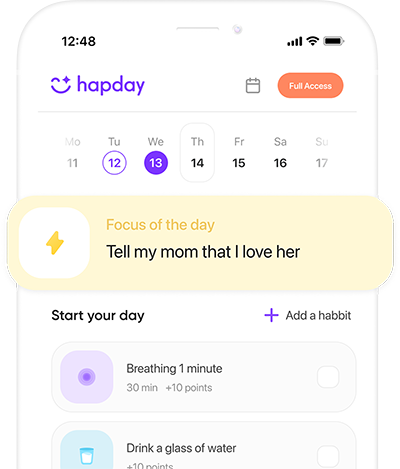
Mid-article support you might actually use: Late-night spikes are common. If your hardest moments arrive after a blowup or at 11 p.m., an AI coach like Hapday can walk you through scripts and breathing in real time, 24/7, so you do not spiral between conversations.
How to Say No to Toxic Family Members: Scripts That Keep You Grounded
In the moment, your brain wants something simple and repeatable. Mayo Clinic recommends assertive communication—clear, respectful, direct—to lower stress and resentment. Try these word-for-word options, then tailor. Even tone. Minimal justification. Repeat as needed.
For invasive questions
- “I’m not discussing that. Let’s talk about your garden instead.”
- “I choose to keep that private. Thanks for understanding.”
For guilt trips
- “I hear you’re disappointed. I’m not available this weekend.”
- “I care about you, and I’m not able to host right now.”
For put-downs or body comments
- “I don’t accept comments about my body. If it continues, I’ll leave.”
- “We can have a good time without critiques. If not, I’m heading out.”
For demands on time or money
- “That doesn’t work for me. I’m focusing on my budget.”
- “I can help for 30 minutes on Saturday—no more.”
For surprise visits
- “Please call before coming. I won’t open the door without notice.”
- “Drop-bys don’t work for me. Let’s schedule another time.”
When they escalate
- “We can continue when voices are calm. I’m going now.”
- “If the name-calling continues, this conversation is over.”
Why these work:
- Brief beats debate. The longer you argue, the more room there is for manipulation.
- Neutral tone disarms. You are communicating, “This is the rule,” not engaging a tug-of-war.
- Consequences make it real. A boundary without a follow-through is a wish.
“People assume ‘no’ must be angry or explain everything. The most effective ‘no’ is gentle, brief, and immovable.”
— Kara Patel, LCSW
Handling Pushback, Guilt, and Gaslighting
Pushback is data. It shows you exactly why the boundary is needed. Expect patterns:
- Minimizing: “You’re overreacting.”
- Rewriting history: “I never said that.”
- Martyrdom: “After all I’ve done for you…”
- Recruiting allies: “Everyone in the family thinks you’re cruel.”
Why it works to stay steady:
- A calm, consistent message reduces the payoff for drama. Over time, the system learns the new rule—even if, at first, it protests loudly.
- Constancy also protects your nervous system from spikes of stress hormones that keep you locked in fight-or-flight.
How to respond:
- Use the broken-record technique. “I’m not discussing that.” “I’m still not discussing that.” “We can talk about something else if you’d like.”
- Name the behavior, then hold the line. “That’s a guilt trip. My answer is still no.”
- Exit when needed. “We can pick this up another time.” Then hang up or leave. Your feet are part of your script.
Self-soothing in the aftermath:
- Slow, paced breathing—longer exhale than inhale—dampens the sympathetic stress response, lowering heart rate and reactivity. This aligns with evidence-based strategies from NIMH and Mayo Clinic.
- Move your body. A brisk 10-minute walk helps metabolize adrenaline.
- Ground in facts. Write what happened, what you said, what you will do next time. Facts are an antidote to gaslighting, including the internal kind.
When Tradition and Culture Complicate Boundaries
For many of us—especially in collectivist cultures or tight-knit religious communities—family is identity. Saying no can feel like cultural betrayal.
“Honoring culture and honoring your health can coexist. You can preserve rituals and respect while refusing mistreatment.”
— Dr. Lina Morales, Licensed Clinical Psychologist (Family Systems)
I would add: boundaries can be a form of care for the relationship, not merely a wall.
You might say:
- “I respect our traditions. I’m keeping this part private.”
- “I’ll be at the ceremony, and I won’t discuss my dating life there.”
If a relative uses culture to pressure you, pair your values with your boundary:
- “Family loyalty matters to me. So does mental health. I’m choosing both by limiting this topic.”
When “No” Needs Backup: Planning for Safety and Stability
Some patterns are not just hurtful; they are harmful. If there is emotional abuse, stalking, financial control, or fear of violence, your “no” needs a safety plan alongside it.
What the data says: The CDC documents the long-term health toll of adverse childhood experiences (ACEs). About 61% of adults report at least one ACE; nearly 1 in 6 report four or more. Ongoing household dysfunction and abuse correlate with higher risks of mental health issues and chronic disease later in life.
Why it works to expand your support:
- Safety planning reduces uncertainty—lowering your system’s overall stress load.
- Professional guidance can help you navigate legal, financial, housing, and technology safety questions you should not have to hold alone.
How to do it:
- Create layers: change passwords, secure finances, alert trusted friends or partners, document incidents.
- Choose safer contact: email over calls; public places for in-person meetings.
- In dangerous situations, consider limited or no contact. Trust your instincts; they learned this terrain the hard way.
Repair, Limit, or Release: Deciding Your Long-Term Path
Not every toxic dynamic ends in no contact. Some shift with steady boundaries and time. Others do not budge, then distance becomes the kindest choice—first to yourself, sometimes to the other person.
Try a 90-day experiment:
- Define: Which boundary will you hold? What metrics will signal progress (fewer panic spikes, deeper sleep, less rumination)?
- Communicate once, clearly.
- Track weekly: mood, sleep, body tension, and any boundary breaches.
If your metrics improve, continue. If your health worsens or boundaries are ignored, level up: shorter visits, text-only, or a pause. How to say no to toxic family members may look like “not now” or “not this way,” which still counts. More than enough.
Real-World Cases
- Maya, 28: Post-divorce, she limited calls to neutral topics and ended conversations at the first critique. Within a month, her parent stuck to small talk. Sleep improved. Panic episodes eased.
- Jordan, 31: A brother “borrowed” money as routine. Jordan shifted to, “I don’t lend money. I’m rooting for you.” The brother erupted, smeared him in the family group chat—then stopped asking. Jordan used the saved cash to start therapy. A hard door that led to a real room.
- Priya, 26: An aunt commented on her body at every holiday. Priya said, once, “Body comments are off-limits. If it happens again, I’ll leave.” When it happened, she hugged her grandmother and left. By the next holiday, the comments were gone.
Tools to Make Boundaries Stick
Why tools help:
- Stress narrows attention and erodes willpower. External supports—scripts, timers, checklists—save your future self from on-the-spot collapse.
- Tracking gives you proof you are not “making it up.” You can watch headaches recede, sleep lengthen, or anxiety soften.
What to try:
- A “boundary script” note on your phone for quick copy/paste replies.
- A shared calendar with exit times for family events.
- A grounding routine before and after contact: breathe, stretch, jot three facts.
- A habit tracker to mark when you held a boundary and how you felt afterward.
Platforms like Hapday can help because they combine 24/7 coaching, breathing, and habit tracking—so you can practice scripts, calm your body, and see progress in one place instead of juggling five apps. On a rough Sunday night, that simplicity matters more than it’s given credit for.
How to Say No to Toxic Family Members During Holidays and Big Events
High expectations, alcohol, and old roles make celebrations pressure cookers. Plan for the spike; it lowers the flame.
Why it works:
- Anticipating triggers softens their punch. You are less likely to be blindsided and more likely to act by design.
- Public spaces and clear timelines reduce the room for drama.
How to do it:
- Pre-commit to arrival and exit times. Tell a friend your plan and text when you leave.
- Bring a buddy or an ally relative. Agree on a discreet code word for “I need air.”
- Set topic boundaries up front: “I’m glad to see everyone. I’m not discussing work/relationships/health today.”
Micro-Scripts for the Moment
- “Not for me, thanks.” (When pressed to drink or overshare)
- “I’m stepping outside a minute.” (When tension rises)
- “Let’s save that for another time.” (When cornered)
Grief, Guilt, and the Second Arrow
Even when you know how to say no to toxic family members, grief can flood in for the relationship you wanted. That grief is the first arrow—loss. The second arrow is the shame you throw at yourself for feeling it. You can put down the second arrow.
Try this:
- Name the grief directly: “I wish my dad could be kind to me.”
- Offer context: “I’m choosing the healthiest option available to me.”
- Ritualize care: After a hard boundary, do something tangible—make tea, call a friend, walk by water. A small ritual tells your nervous system it’s safe to stand down.
“Guilt is a feeling, not a verdict.”
— Dr. Eric Wu, Psychiatrist
How to Say No to Toxic Family Members When Children Are Involved
Protecting children may require firmer lines. The CDC’s work on ACEs shows how household dysfunction and emotional abuse echo into adulthood, with higher risks for mental and physical illness. Guardrails now matter—more than any speech ever could.
Why it works:
- Predictable, calm boundaries create psychological safety for children, who learn their own limits from what they watch you do.
- Reducing exposure to demeaning or chaotic behavior lowers the stress load on developing nervous systems.
How to do it:
- Set visit rules: supervised visits, neutral locations, no put-downs, clear time limits.
- Use kid-first language with relatives: “We’re keeping visits short because long ones dysregulate the kids.”
- If rules are violated, end the visit immediately and document what happened. Calm ending, firm message.
Your Personal Boundary Manifesto
Write a one-page manifesto to reread when the temptation to cave appears.
- My health matters because…
- The relationships I’m building feel like…
- Behaviors I allow vs. won’t allow…
- What I’ll do when a line is crossed…
- Three people or tools I’ll lean on…
Why Saying No Heals More Than Just You
Boundaries are not walls. They are footprints toward the life you are building. When you practice how to say no to toxic family members, you change the emotional weather for your future self—and for anyone watching who needs permission to do the same. Harvard Health’s reporting on relationships underscores this: healthier interpersonal patterns protect well-being across the lifespan. You are not only ending a cycle. You are starting a new one, and its ripple is wider than it looks.
The Bottom Line
Saying no is not the end of love; it’s the beginning of self-respect. Boundaries—spoken calmly, held consistently, and backed with action—lower chronic stress, protect your health, and make space for relationships that truly support you.
If you want steady support while you practice, consider an AI coach. Hapday offers 24/7 sessions, habit and mood tracking, and guided breathing—grounded in evidence-based techniques—to help your boundaries stick. Check out Hapday to get coaching in the exact moments you need it most.
References
- National Institute of Mental Health (NIMH) — Stress
- Mayo Clinic — Stress symptoms: Effects on your body and behavior
- Mayo Clinic — Assertiveness training: Tips for becoming more assertive
- Centers for Disease Control and Prevention (CDC) — Preventing and mitigating the effects of Adverse Childhood Experiences (ACEs) Fast Facts
- Harvard Health Publishing — The health benefits of strong relationships