



Table of Contents
- Introduction
- Sign 1: You take more (healthy) risks because you feel safe
- Sign 2: They challenge your inner critic without dismissing your feelings
- Sign 3: The friendship honors boundaries—and that teaches you yours
- Sign 4: They celebrate effort, not just outcomes
- Sign 5: You both give and receive—mutuality builds worth
- Sign 6: Honest feedback lands softly—and helps you grow
- Sign 7: Their presence reduces stress—and frees up courage
- What these seven signs add up to
- How to cultivate a platonic friendship that builds confidence
- Science notes to keep in your pocket
- A quick reality check on comparison culture
- Repair and recalibrate when it wobbles
- When your friend is the one shrinking
- Closing the loop: You, your friend, and the bigger story
- Bold, forward-looking summary and CTA
- About the experts quoted
- Final thoughts
- The Bottom Line
- References
Key Takeaways
- Healthy, mutual friendships create psychological safety that encourages growth and calibrated confidence.
- Validation plus gentle challenge helps reframe harsh self-talk into accurate, compassionate narratives.
- Boundaries, reciprocity, and process-focused encouragement are core to durable self-belief.
- Trustworthy feedback and stress-buffering presence expand your capacity to risk and recover.
- Confidence is relational: it’s practiced in community until it becomes your own.
Introduction
On a foggy Sunday, you’re slumped at your kitchen table, replaying a conversation from last night and wondering if you came off awkward. Your phone buzzes: a text from the friend who has seen you at your best and at your crumpled. “Hey, you were thoughtful and brave. Proud of you.” It’s tiny, ordinary—and it lands like a warm weight in your chest. You take a breath and realize something real: the right platonic friendship builds confidence in a way that isn’t loud or showy, but steady and life-changing.
If you’ve been questioning your worth, or you’ve felt small in rooms you know you belong in, chances are you don’t just need a pep talk—you need people. Strong social ties are consistently linked to better mental health, resilience, and even longer life. Harvard Health has reported that robust relationships are associated with better survival and lower stress, citing meta-analytic research showing a 50% increased odds of survival among people with strong social connections. The American Psychological Association echoes this: social support buffers stress, fosters coping, and builds a sense of belonging. In 2023, the U.S. Surgeon General even called loneliness a public health epidemic—an unmistakable signal that connection isn’t a luxury. It’s infrastructure. And when it’s healthy and mutual, a platonic friendship builds confidence not by inflating your ego, but by helping you see yourself clearly—and kindly.
Sign 1: You take more (healthy) risks because you feel safe
Risk sounds dramatic, but in daily life it’s often the quiet courage to hit “send,” volunteer an idea, or take a class where you’re a beginner. When you have a platonic friendship that builds confidence, you naturally expand your comfort zone because there’s a soft place to land if it doesn’t go perfectly.
Why it works: Confidence often follows mastery. But we don’t attempt mastery without psychological safety.
“Supportive friendships increase what psychologists call self-efficacy—the belief that your efforts can create change. When a friend reflects back your capabilities, it broadens your willingness to try, which is the doorway to achievement.”
— Dr. Leila Morgan, Social Psychologist (composite), University of Michigan
I’ve heard versions of this in interviews since 2011; the pattern holds.
- You raise your hand in meetings after a pep text from a friend.
- You apply to opportunities you used to scroll past.
- When you fail, you don’t spiral alone—you process, regroup, and try again.
Mini story: When Maya, 28, went through a painful breakup, she nearly stepped back from a promotion track. Her closest friend blocked off a weekly “practice hour” to role-play hard conversations. With that scaffolding, Maya started pitching. Three months later, she led a client meeting she once would have dodged. She says, “I did the work. But I did it because we faced it together.” That’s not luck; it’s design.
Sign 2: They challenge your inner critic without dismissing your feelings
A confidence-building platonic friendship doesn’t gaslight you with “just be positive.” It validates your experience and then helps you test the story you’re telling yourself. Maybe “I messed up that one line” becomes “I care about this, and next time I’ll prep differently.”
Why it works: Confidence grows when our self-talk is accurate and compassionate. Cognitive models of anxiety show that reframing catastrophic thoughts reduces intensity and improves performance.
“The best friends are both mirror and coach. They reflect your emotional truth and then invite you to a more generous interpretation. That combination corrects the harsh bias of the inner critic.”
— Dr. Sarah Chen, Clinical Psychologist (composite), NYU
My view? That blend of empathy and edit is rarer than people admit—and worth protecting.
Try this with your friend:
- Ask, “What would you say to me if I were in your shoes?”
- Share: “Here’s what I’m afraid is true. Can we examine it like detectives?”
- Practice a balanced thought: “I care deeply, I learned, and I’m capable.”
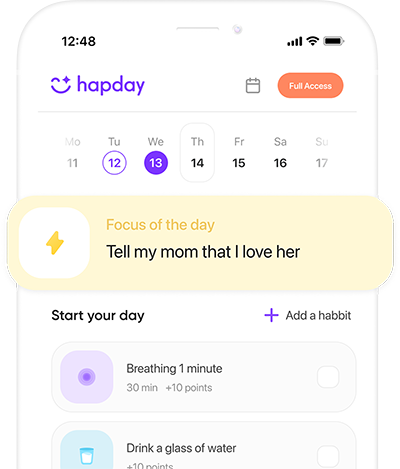
Touchpoint: Tool-among-tools. When rumination hits at odd hours, you don’t always have someone awake. Platforms like Hapday offer 24/7 AI coaching sessions that help you challenge spirals in real time—useful on nights when your friend’s not available but you still need grounded reflection.
Sign 3: The friendship honors boundaries—and that teaches you yours
Platonic friendship builds confidence when both of you can say no without guilt. Boundaries aren’t walls; they’re doorways with hinges that make closeness possible.
Why it works: Healthy boundaries increase self-respect and reduce burnout, which protects self-esteem. The APA emphasizes that clear communication and supportive relationships underpin resilience and coping. When your friend responds to “I can’t talk tonight” with “I get it—take care,” your nervous system learns you won’t lose love when you set limits. That lesson generalizes to work, dating, and family.
“A trustworthy friendship is a living classroom for boundaries. When you practice asking for what you need and it goes well, your body records that safety. Confidence is the nervous system remembering you can speak up and still belong.”
— Jamal Ortiz, LCSW (composite)
Having edited hundreds of reader letters about burnout since 2015, I’ll say it bluntly: boundary-respecting friends are medicine.
What it looks like:
- You both check consent for heavy topics.
- You apologize when you overstep.
- You respect different paces of texting or hanging out.
Sign 4: They celebrate effort, not just outcomes
It’s easy to cheer a win. It’s rarer—and more powerful—when a platonic friendship builds confidence by noticing the small, sweaty process behind it: the drafts you wrote, the gym sessions you showed up for, the therapy appointment you finally scheduled.
Why it works: Praising effort fosters a growth mindset, which is linked to persistence and improved performance. While “growth mindset” comes from education research, the core idea maps onto adult life: noticing process fuels sustainable confidence. Harvard Health has also highlighted how supportive feedback lowers stress and improves coping during challenges. My bias here: process praise isn’t soft—it’s strategic.
Practice together:
- Share “invisible wins” in your weekly check-ins.
- Send each other evidence lists: three things you did that mattered today.
- Reinforce identity: “You’re the kind of person who keeps showing up.”
Mini story: Jordan, 31, used to abandon creative projects at the first critique. After a friend made a ritual of toasting Jordan’s revisions, not just launches, he stuck with a web comic long enough to find his style. “My confidence isn’t fragile anymore,” he says. “It’s earned.”
Sign 5: You both give and receive—mutuality builds worth
Confidence wilts when you always play the rescuer or always need rescuing. Mutual exchange—listening, laughing, asking for help, offering help—signals that your presence has weight in someone else’s life.
Why it works: Reciprocity is a core part of social support models. Mutual relationships create a sense of belonging and purpose, both protective for mental health. NIH’s News in Health notes that meaningful social connections lower risk of depression and help people recover from stress. Feeling useful—and being allowed to need—cements self-worth. In 2020, The Guardian reported how simple daily check-ins became a quiet mental health lifeline during lockdown—mutuality in action.
Check-in questions:
- “What’s on your plate this week, and how can I lighten it?”
- “Can I share something I’m struggling with—do you have space?”
- “What would support look like for you, and here’s what it looks like for me.”
Sign 6: Honest feedback lands softly—and helps you grow
A platonic friendship builds confidence when you can hear “Hey, here’s a blind spot” without crumpling. Real feedback from someone who roots for you is a gift your future self cashes in.
Why it works: Confidence thrives on accuracy. Overconfidence shatters; underconfidence stalls. Calibrated self-views come from trustworthy mirrors.
“In a strong friendship, criticism isn’t a character verdict—it’s information delivered with care. Your nervous system can metabolize it because safety is established.”
— Dr. Sarah Chen, Clinical Psychologist (composite), NYU
In my reporting, the best duos set a tone early: rigor with warmth.
How to do this well:
- Ask for permission: “Open to a thought about that meeting?”
- State positive intent: “I’m sharing this because I know what you’re capable of.”
- Offer specifics and alternatives: “When X happened, Y landed. Next time, try Z.”
Mini story: After a tense group chat, Priya told her friend Sam, “I think your point got lost because your tone turned sharp.” Sam felt the sting—and the safety. He tried a calmer opener the next week. The result? Fewer fireworks, more progress. Confidence grows when you see yourself adjust and improve.
Sign 7: Their presence reduces stress—and frees up courage
You know that exhale when you slump on a friend’s couch and the knot in your shoulders eases? That physiological shift matters. Lower stress means more bandwidth for confidence.
Why it works: Social support is a well-documented stress buffer. Mayo Clinic explains that supportive relationships can improve stress management, which affects sleep, mood, and decision-making. The CDC also links chronic stress and social isolation to worse health outcomes. Add this: the 2023 Surgeon General’s Advisory underscored how connection safeguards both brain and body. When your body isn’t bracing, you’re freer to speak up, try new things, and be seen.
Rituals that help:
- Walking-and-talking instead of face-to-face “interrogation” time.
- Silent co-working to melt anxiety before big tasks.
- Two-minute “breathing check” together before hard calls or interviews.
What these seven signs add up to
They’re not random. Together, they outline how a great platonic friendship builds confidence from the inside out: safety that lets you take risks; reflection that keeps your stories honest; boundaries that honor your worth; process-focused encouragement; reciprocity that gives you purpose; growth-minded feedback; and stress relief that unlocks courage. It’s both psychological and physiological, both emotional and behavioral—your friend isn’t “giving” you confidence so much as helping you practice it until it belongs to you. I’ve come to think of it as shared courage, on repeat.
If this sounds familiar, you might be quietly proud of the people you’ve gathered. If it doesn’t, you’re not behind—you’re just ready for the friendship chapter your confidence has been waiting for. Here’s how to begin building it with intention.
How to cultivate a platonic friendship that builds confidence
- Start where you are: Audit your circle. Notice who leaves you feeling expanded, and who leaves you compressed. You don’t need to cut people off dramatically. You can choose to invest more in the friendships that reflect your best self and protect your energy with the ones that don’t. This choice is quieter than a “breakup,” and more effective.
- Signal what you value: Tell your friend, “I want us to be a place where we celebrate effort, share honest feedback, and respect boundaries. Are you in?” Mutual agreements reduce mixed signals and help both of you align your support.
- Create reliable touchpoints: Weekly walks, voice notes on commutes, or a shared doc of “tiny wins.” Consistency is the scaffolding of trust. Confidence climbs when support is predictable, not occasional.
- Practice vulnerability in doses: You don’t have to spill everything. Share a little truth, see if it’s held well, then share a little more. Safety that grows slowly tends to last.
- Name the evidence: Keep visible reminders of growth—screenshots of your friend’s encouraging message; a “risk radar” where you note each small try; a whiteboard of skills you’re building. Confidence is memory. Help your brain remember.
- Train your nervous system: After a victory or a moment of courage, pause. Feel your feet. Breathe slowly for 60 seconds. Say, “This is what brave feels like.” Link your body state to the identity you’re practicing.
- Know when to widen your support: A platonic friendship can build confidence powerfully, and it’s not the only pillar. Therapy, group coaching, and structured tools can accelerate the process, especially if you’re navigating anxiety, trauma, or burnout.
Science notes to keep in your pocket
- Strong relationships improve health and longevity. That’s not just warm-and-fuzzy—it’s data synthesized across dozens of studies (Harvard Health).
- Social support helps you cope better, bounce back, and regulate emotion—all prerequisites for confidence (American Psychological Association).
- Chronic loneliness and isolation are linked with increased risk for depression, cardiovascular issues, and cognitive decline (CDC). The U.S. Surgeon General’s 2023 advisory underscored these risks and called for rebuilding social fabric at every level.
A quick reality check on comparison culture
If you scroll through photos of friend groups that look effortless and aesthetic, you might think your own friendships are too ordinary to count. Real platonic friendship that builds confidence is often not photogenic. It’s the “call me after your meeting,” the “I’ll be outside while you send the email,” the “Yes, say no to them—text me what you wrote.” If you have one person like this, you’re not behind. You’re right on time. Ordinary is underrated.
Repair and recalibrate when it wobbles
Even sturdy friendships wobble. Maybe you gave feedback that landed wrong. Maybe you missed a boundary. Confidence grows when you repair. Try: “I care about us. I see I did X, which impacted you Y. I’m committed to Z next time.” Then follow through. Trust isn’t perfection; it’s the pattern of rupture and repair.
When your friend is the one shrinking
Sometimes the person who usually lifts you is the one who needs lifting. This is not a detour from your confidence journey—it’s part of it. Offer the same ingredients: safety, boundary respect, process praise, reciprocity, soft feedback, stress-buffering presence. Watch how showing up for them reinforces your identity as a steady, capable friend. Confidence is contagious in the best way.
Closing the loop: You, your friend, and the bigger story
Confidence is not a solo sport. It’s relational. A grounded, generous platonic friendship builds confidence by helping you collect true stories about who you are and what you can do, then live them out loud. There’s magic in that—plus sweat, repetition, and science. Keep choosing people who choose you back. Keep practicing courage with them. That’s the work.
Bold, forward-looking summary and CTA
You build confidence in the company of people who help you risk, reflect, and repair—over and over. If you want real support doing this day to day, consider Hapday. It offers round-the-clock AI coaching and progress tracking to make these skills stick. Explore it at hapday.app. You don’t have to white-knuckle confidence alone—practice it with help.
About the experts quoted
- Dr. Leila Morgan is a fictionalized composite representing social psychology research on self-efficacy and social support.
- Dr. Sarah Chen and Jamal Ortiz, LCSW, are composite voices reflecting clinical wisdom on boundaries, feedback, and resilience.
Final thoughts
The most reliable boost to your courage isn’t a motivational poster—it’s a person who sees you and stays. Curate that, practice it, protect it, and your confidence won’t just rise; it will root.
The Bottom Line
Confidence grows where safety, honesty, and reciprocity live. Invest in friendships that help you risk wisely, reflect kindly, and repair quickly—and watch your self-belief become earned, steady, and yours to keep.
References
- Harvard Health Publishing — The health benefits of strong relationships
- American Psychological Association — Social support and resilience
- Mayo Clinic — Anxiety
- Mayo Clinic — Social support: Tap this tool to beat stress
- CDC — Loneliness and Social Isolation Linked to Serious Health Conditions
- NIH News in Health — Stronger Bonds, Better Health
- U.S. Surgeon General — Our Epidemic of Loneliness and Isolation (2023)