



Table of Contents
- The Restorative Essence of Sleep
- Meditation and Sleep: Naturally Tied
- Weaving Meditation into Your Nightly Ritual
- Why Meditation Eases Sleep Woes
- Starting Out: Tips for Bedtime Meditation
- Onward: A Journey with Steady Support
- References
The Restorative Essence of Sleep
Sleep isn’t just downtime. It’s a biological necessity, like refueling a car, vital for cognitive function, emotional stability, and overall health. Remember, back in 2021, the American Academy of Sleep Medicine boasted that adults need anywhere from 7–9 hours of sleep a night. Yet, a vast number of 70 million Americans are wrestling with sleep disorders, or so the CDC has broadcasted. The fallout? Heightened stress, irritation aplenty, and grim chronic hazards—think: hypertension, diabetes, depression.
“Today’s world, with its relentless pressures and constant buzz, amplifies anxiety and turns restful sleep into a rare luxury,”
— Dr. Sarah Chen, Clinical Psychologist
“Meditation emerges as a bridge—cultivating the relaxation sleep demands.”
Meditation and Sleep: Naturally Tied
What is meditation at its heart? It’s a practice of mindfulness, an art of present-moment awareness. Studies reveal that meditation slows heart and breathing rates, priming the body for rest. A 2015 study from JAMA Internal Medicine found that folks who practiced mindfulness meditation for a mere six weeks saw leaps in sleep quality—less insomnia, diminished fatigue.
Why does meditation work its magic? It frees the mind from the ceaseless thought cycles that fuel insomnia. By anchoring in the present, meditation halts the worry treadmill.
“Meditation boosts melatonin,”
— Dr. Ruth Hellman, Neuroscientist
“a hormone that regulates sleep. Even a brief session before bed can align with your body’s sleep-wake cycle.”
Weaving Meditation into Your Nightly Ritual
So, curious about trying meditation for sleep? Some methods to dip your toes in:
- Mindfulness Meditation
Find yourself a comfy spot, close your eyes, and train your focus on breathing. If distractions drift in—which they likely will—gently tug your attention back. Consistent attempts at this can quiet mental chatter, smoothing the path to sleep. - Body Scan Meditation
This practice encourages you to mentally scan and relax each body part, head to toe or vice versa. It’s terrific for easing the muscle tension that barricades sleep. Start at your toes and work your way up, willing each group to relax. - Guided Imagery
Dream of a serene rain forest embraced by the lull of waves licking the shore. Guided imagery whisks you to tranquil havens, melting stress and anxiety—granting a restful mind, which naturally paves the way to sleep.
Why Meditation Eases Sleep Woes
Amid those calming breaths and visual retreats, how exactly does meditation refine sleep physiology? Science weighs in:
- Reduced Stress and Anxiety
Known for trimming stress and anxiety—culprits of sleep deprivation—meditation is powerful. A Harvard Medical School study notes meditation’s ability to activate the parasympathetic nervous system, ushering in relaxation. This process diminishes stress hormones like cortisol and raises GABA (gamma-aminobutyric acid), soothing the nervous system. - Sleep Cycle Enhancements
Habitual meditation might bolster sleep architecture, polishing sleep cycle quality. A 2020 finding observed that regular meditation ups slow-wave sleep—a phase vital for both physical and mental recovery. - Boosted Focus and Mindfulness
While chiefly assisting immediate sleep needs, meditation broadens its profile to bolster daily resilience against distraction and stress. Enhanced daytime mindfulness cuts down night awakenings.
Take Maya, 28. During her divorce, sleepless nights became the norm. Yet through daily meditation, restful sleep was a reclaimed victory, and with it, tools for day-to-day emotional steadiness. Her story spotlights meditation’s vast lifestyle benefits.
Starting Out: Tips for Bedtime Meditation
Interested in leveraging meditation for sleep? Remember, it demands consistency and patience. Here’s your guide:
- Stick to a Routine: Consistency rules. Meditate at the same time nightly to clue your body into sleep prep—a 10-30 minute window right before lights-out could do.
- Fashion a Soothing Space: Your environment matters. Dimming lights, minimizing noise, creating a comfy nook to relax in—all help.
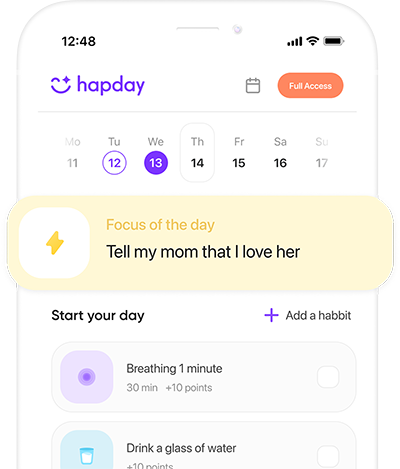
- Leverage Handy Tools: With a wealth of meditation apps and services, Hapday included, you can find AI coaching, mood tracking, and sleep-oriented programs to amplify meditation’s rewards.
- Grant Yourself Grace: Expect gradual progress. Meditation is about practice; benefits accumulate over time. Start small, ease in gradually.
Onward: A Journey with Steady Support
Absorbing meditation into your sleep ritual not only amplifies rest but spreads well-being’s tendrils further. For a hand on this journey, consider tech-driven consistency. Grappling with late-night insomnia? Platforms like Hapday extend 24/7 support, nurturing a meditation habit customized to your life.
Enhancing sleep isn’t overnight magic—it’s a fulfilling trek. Embracing meditation for rest’s sake lets you reclaim what’s rightfully yours. Curious about how AI might bolster this endeavor? Explore Hapday’s evidence-backed guidance, tailored for sleep wellness, at hapday.app.
Key Takeaways
- Meditation can significantly improve sleep quality by reducing stress and anxiety.
- Practices such as mindfulness, body scan, and guided imagery can enhance your pre-sleep routine.
- Regular meditation may promote better sleep architecture and increase melatonin levels.
- Sticking to a meditation routine can pave the way for lasting benefits.
- Use meditation apps for guidance and support throughout your journey.
The Bottom Line
Incorporating meditation into your nightly routine can be a transformative journey towards better sleep and overall well-being. Embrace this practice not just as a means to fall asleep but as a way to enhance your daily resilience and mental clarity.
References
- American Academy of Sleep Medicine
- Centers for Disease Control and Prevention
- JAMA Internal Medicine
- Harvard Medical School