



Table of Contents
- The Science of Sleep and Its Spotlight in Today’s Conversations
- Why Meditation Works for Sleep: Navigating the Mind-Body Tapestry
- Tailoring Your Meditation Routine: Tools and Techniques
- Crafting the Ideal Meditation Space: Design Your Sanctuary
- Tackling Meditation Hiccups: Insights from the Gurus
- The Transformative Power Over Time: Building a Lasting Routine
- Seeking Comprehensive Assistance
- Diving into Meditation: Your Pathway to Enhanced Sleep
- References
Key Takeaways
- Meditation can significantly improve sleep quality by reducing stress and enhancing relaxation.
- Personalizing meditation routines helps cater to individual needs and preferences for better results.
- Creating an ideal meditation space in your bedroom fosters relaxation and a stronger connection to sleep.
- Patience and persistence in meditation practice lead to long-lasting benefits for sleep and overall well-being.
It’s the witching hour again—3 a.m., and Maya, our spirited 28-year-old graphic designer, finds herself transfixed by the lazy rotation of her ceiling fan. A tide of unfinished work tasks, neglected chores, and tomorrow’s daunting checklist swirls in her mind. Sound familiar? Like the many sleep-deprived souls today, Maya is grappling for that elusive uninterrupted sleep. Could the answer lie not in a prescription bottle or abstaining from late-night coffee, but within the serene refuge of meditation?
The Science of Sleep and Its Spotlight in Today’s Conversations
Sleep—it’s more than just rest, isn’t it? According to the Centers for Disease Control and Prevention, a whopping one in three adults fails to get quality shut-eye. The fallout? An increased risk of chronic issues like heart disease, diabetes, and even depression. This unsettling panorama has nudged mental health professionals to dig deep into natural remedies. Meditation has emerged as a frontrunner among these solutions, capturing newfound attention.
By design, meditation embodies focused attention and self-awareness. The American Psychological Association mentions how mindfulness meditation significantly boosts mental well-being, including stress management, a crucial player when it comes to sleep. Eastern philosophies have championed this art for centuries, and finally, Western science is catching up—proving that consistent meditation might just be the antidote to those restless nights.
Why Meditation Works for Sleep: Navigating the Mind-Body Tapestry
Imagine trying to park a car amidst relentless traffic. That daunting parking spot is the tranquility your mind seeks for restful sleep. Without meditation, your thoughts are like speeding cars, jostling for space. But with meditation? It’s like a skilled parking attendant, coaxing each thought gently into place.
“Meditation activates the parasympathetic nervous system—the ‘rest and digest’ mode—coaxing your body to unwind, setting the stage for sleep.”
— Dr. Sarah Chen, Clinical Psychologist
Essentially, the practice pacifies the mind while also triggering a slew of physiological responses conducive to sleep.
Evidence suggests that meditation ramps up melatonin production—the hormone overseeing our sleep-wake cycle. A study from the Journal of Pineal Research claims that routine meditative practice can hike melatonin levels by nearly 98%. Harvard University was involved in this illuminating research, underscoring meditation’s potent influence.
Tailoring Your Meditation Routine: Tools and Techniques
Whether you’re dipping your toes in or diving deep, meditation for slumber is all about customization. So, wondering which style suits your rhythm and routine? Let’s unpack a few effective methods:
Guided Sleep Meditations
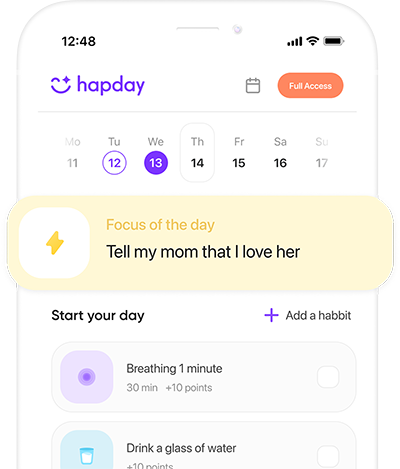
Imagine it’s 2 a.m., your mind’s a whirlwind—guided meditations, often featuring soothing audio, steer you through relaxing visualizations. Sessions might last minutes or extend to half an hour, ideal for unraveling the day’s stress. Hapday, a live AI coach, is a handy ally here, offering real-time support whenever restlessness strikes.
Mantra Meditation
A calming mantra or word chanted silently can clear distractions.
“Repetition centers you, slowly unfurling the fist of attention into an open hand.”
— Dr. Chen, Clinical Psychologist
Mindfulness Meditation
Mindfulness draws you to the present. Focusing on real-time feelings and thoughts without judgment gently pivots attention from sleep-disrupting chatter. The NIH discovered that such meditation alleviates insomnia and fatigue.
Crafting the Ideal Meditation Space: Design Your Sanctuary
Your bedroom—a fortress of relaxation. Dim the lights, draw those blackout curtains, and let aromas of essential oils or candles waft through the space. When Maya revamped her space with salt lamps and chamomile aromas, the shift toward deeper meditative states seemed almost natural. It’s about fine-tuning your environment to echo your personal comfort.
Silence or Sound?
Some cherish silence; others thrive with auditory companions like white noise or nature sounds. Play with different soundscapes to see what speaks to your tranquility. Hapday’s app blends technological advancements with timeless relaxation sounds to fortify your peace.
Tackling Meditation Hiccups: Insights from the Gurus
Like any skill worth having, meditation comes with its speed bumps. Intrusive thoughts are a common roadblock.
“It’s not about mind emptying but acknowledging thoughts without holding on to them.”
— Dr. James Patel, Behavioral Scientist
Picture distractions as passing clouds—fleeting and benign. Embrace patience; meditation’s focus isn’t eliminating thoughts but gently anchoring back to your practice.
The Transformative Power Over Time: Building a Lasting Routine
Repetitive meditation delivers tangible benefits. Yet, the true beauty lies in seeing this practice as a long journey where small strides lead to profound changes. Meditation becomes more than a habit; it’s woven into daily existence—far beyond designated sessions.
Take Alyssa, a marketing strategist whose chronic insomnia slowly bowed to meditation’s power.
“Small changes—waking up more refreshed, feeling less anxious about the day ahead.”
— Alyssa, Marketing Strategist
Meditation cemented her nights in peace, evolving into a solid habit etched in routine.
Remember, change takes time. Offer yourself patience, for nurturing a new habit is like tending to a delicate flower—time and care yield bloom.
Seeking Comprehensive Assistance
If sleep remains elusive, a blend of solutions—meditation, therapy, and tech apps—might hold the key. Platforms like Hapday, embraced by over 3 million people, offer AI coaching, mood tracking, and personalized stress relief—singerly woven into sleep enhancement strategies.
Diving into Meditation: Your Pathway to Enhanced Sleep
Starting your journey towards restful nights means taking small steps—allocating a few moments before bed for meditation. Gradually, this blossoms into a rewarding experience underscored by self-knowledge and patience.
Discover the wonders sparked when meditation synchronizes with sleep, mankind’s timeless asset. With tools like Hapday at the helm, paving the way towards restorative slumber is just a download away, embraced by a global community of over 3 million users.
References
- Centers for Disease Control and Prevention
- American Psychological Association
- Harvard University
- National Institutes of Health
The Bottom Line
Meditation offers a natural and effective approach to improving sleep quality. By understanding the interplay between mind and body, tailoring your mediation practice, and creating a conducive sleep environment, you can embrace tranquility and restful nights.