



Table of Contents
- The Symbiotic Dance of Movement and Mental Health
- Why Does Moving Matter to Your Brain?
- Finding Your Fit: Molding Movement to Suit You
- Movement’s Mental Health Superpowers
- Crafting Your Movement Blueprint for Mental Health
- Hapday: Partnering in Movement-Driven Mental Health
- Concluding Reflections: Embrace Movement, Embrace Mental Clarity
- References
The Symbiotic Dance of Movement and Mental Health
Ever felt a tingle of joy after a light jog or a casual stroll? Trust me, you’re not in solitude. Research wholeheartedly backs up the idea that staying active physically isn’t just a trend; it’s a cornerstone of mental health. Take, for example, a game-changing study from the Harvard T.H. Chan School of Public Health. They’ve highlighted that even a mere 15-minute run or an hour of walking each day slashes the risk of major depression by 26%. Quite the kicker, isn’t it?
What’s happening under the hood? Physical activity, especially the aerobic kind, morphs our brain’s structure. Those beloved endorphins—our inbuilt mood lifters—are released, while that pesky cortisol, the stress villain, is kept at bay. Dr. Jack Raglin from Indiana University spins it as exercise being a lifeline for those battling anxieties, stresses, or the relentless pull of depression. Movement, then, isn’t just a physical act but a lifebuoy in a sea of mental chaos.
Why Does Moving Matter to Your Brain?
The human brain—it’s nothing short of a marvel, right? This control center of ours governs thoughts, feelings, and, yes, movements. Regular exercise doesn’t just tone muscles; it burgeons new blood vessels and forges fresh neural paths. This magic enhances cognitive sharpness and emotional sturdiness. Did you know that the University of British Columbia discovered how regular aerobic workouts can actually enlarge the hippocampus? It’s this brain segment tasked with memory and learning.
But that’s not all. Fitness isn’t just a mind boost—it’s a spirit elevator. Exercise even lends a hand in polishing memory, uplifting mood, and boosting mental prowess. Plus, who can overlook its prowess in alleviating PTSD or ADHD symptoms?
“For trauma victims, movement therapies offer solace, bypassing verbal struggle and harmonizing the nervous system, fostering a calm over turmoil.”
— Dr. Sarah Chen, NYU
Finding Your Fit: Molding Movement to Suit You
Who said exercise must be grueling? Your choice should resonate with you, more than ticking a checklist. Whether yoga, tai chi, dance, or simply tending a garden, you do you. It’s the regularity and comfort that count.
“Think of Maya, 28, finding solace post-divorce in gentle yoga. For her, it was a lifeline amid the emotional gale, a chance to reconnect.”
— Dr. Chen
Picture this: 2 a.m. and your mind’s on a rampage. An app like Hapday—or its AI coach—comes to the rescue with calming breath exercises and serene soundtracks. No therapist’s appointment necessary. But what should guide you in picking a movement style for mental health? Here’re some nudges:
- Mindful Movements like Yoga: A boon against anxiety or depression. Yoga, by merging poses, breaths, and meditation, cultivates awareness. A Journal of Clinical Psychology review even found it greatly aids in reining in general anxiety.
- Endurance Workouts: Activities like jogging, swimming, or cycling are double-edged—they boost heart health and liberate mood-enhancing chemicals, serotonin and dopamine.
- Team Sports: Beyond the physical grind, team sports foster camaraderie—a buffer for emotions while enhancing social networks.
- Creative Dance: Expressive arts therapist Karlissa Roy vouches,
“Dance articulates emotions words fail to reach. It’s creativity that liberates and delights.”
— Karlissa Roy, Expressive Arts Therapist
Movement’s Mental Health Superpowers
While movement has broad benefits for mental health, some specific techniques work wonders for certain conditions:
- Depression: Consistent cardio cuts stress hormones, boosting mood and energy, breaking the negative thought cycles.
- Anxiety: Low-impact exercises, focusing on breath and presence, steer the mind away from fretting.
- Stress Relief: Activities like swimming or walking reduce cortisol. Their rhythmic, meditative nature transmutes stress into a serene flow.
- Sleep Disorders: Movement increases adenosine, promoting sleep and aligning internal rhythms for deeper, quality sleep cycles.
Crafting Your Movement Blueprint for Mental Health
Knowing the why is one thing but taking that step is transformative:
- Begin Nourishingly: Just five minutes of walking spurs accomplishment. Consistency remains the pillar.
- Tune Into Yourself: Post-activity, heed emotional shifts, pepped-up energy, or mental clarity. It’s your activity compass.
- Self-Compassion Acts: Missed workout? No sweat. Celebrate the days you moved, not gaps.
- Accountability and Camaraderie: A workout buddy or class adds a social zing and commitment.
- Mindful Integration: Blend mindfulness, say with progressive relaxations, reinforcing the mind-body commune.
Hapday: Partnering in Movement-Driven Mental Health
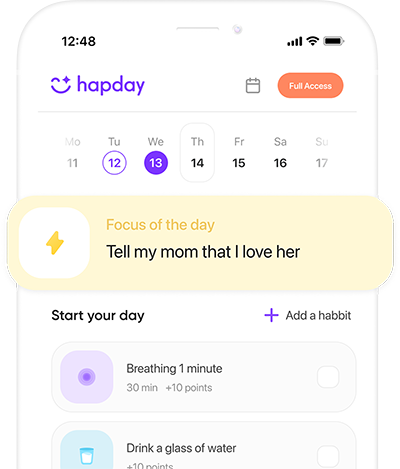
Digital tools can revolutionize our mental health journey. Harness Hapday’s advances for mental wellness. With its AI mentor, over 3 million find solace in its programs—comprised of habit trackers, breath work routes, and more. It stands as your ever-ready partner, bolstering resilience and balance.
Key Takeaways
- Physical activity is crucial for mental health, reducing the risk of depression significantly.
- Movement fosters brain health by creating new neural pathways and enhancing cognitive function.
- Finding enjoyable forms of exercise can lead to better mental wellness outcomes.
- Specific exercises can effectively alleviate symptoms of anxiety, PTSD, and depression, promoting better sleep.
Concluding Reflections: Embrace Movement, Embrace Mental Clarity
Movement offers a tailor-made path to mental fortitude. A conscious engagement of body and mind lays a fertile ground for health. To bolster this foundation, consider Hapday’s evidence-backed direction. Join the 3 million journeying towards mental clarity and resilience.
The Bottom Line
Movement is not just a physical act, but a profound pathway to mental resilience. Engaging consistently with activities you enjoy can transform not only the body but also the mind, fostering a marked improvement in overall mental health.
References
- Harvard T.H. Chan School of Public Health
- University of British Columbia
- Journal of Clinical Psychology
- CDC: Physical Activity and Health