

The first time I told a friend about the mistake that kept waking me at 3 a.m., I braced for recoil. It didn’t come. Instead, a steady hug, a joke just sharp enough to puncture the dread, and a quiet line I still hear: “You’re still you.” Nothing about the past changed in that moment. My body did—shoulders dropping, breath returning, the room a little wider. If you’re spiraling now, you may be asking if a grounded, platonic friendship can actually undercut shame. The short answer, backed by decades of research and what clinicians see in rooms every day, is yes. And in my view, we chronically underestimate just how much.
Image alt: platonic friendship to beat shame — two friends walking and talking on a city sidewalk
Table of Contents
- Why Shame Shrinks You—and How Platonic Friendship Interrupts It
- The Science: Why Platonic Friendship Helps Beat Shame
- Building a Platonic Friendship Ritual That Chips Away at Shame
- What to Say to a Friend When Shame Hits
- Boundaries: Safe Platonic Friendship vs. Co-rumination
- When You’re Starting From Lonely: Rebuilding Platonic Friendship
- Case Files: How People Use Platonic Friendship to Beat Shame
- Turning Household Ties into Shame-Resilient Teams
- If Trauma or Social Anxiety Makes This Hard
- Toolbox: Scripts and Structures You Can Borrow
- What to Watch For: Red Flags and Green Lights
- Why This Works for Gen Z and Millennial Women
- The Portable Plan
- Summary + CTA
- The Bottom Line
- References
Key Takeaways
- Shame thrives in secrecy; steady platonic friendship interrupts it through connection, reappraisal, and compassion.
- Simple rituals—predictable check-ins, graded disclosure, and clear asks—teach your nervous system that being seen is safe.
- Boundaries prevent co-rumination; consent, time limits, and values-focused shifts keep support effective.
- Scripts and structures (facts → shame story → kinder story → next step) make reframes easier in the moment.
- If social anxiety or trauma makes sharing hard, use gradual exposure, neutral presence, and body-based safety cues.
Why Shame Shrinks You—and How Platonic Friendship Interrupts It
Shame is heat in the face, a stomach drop, a reflex to disappear. In clinical terms, it’s a self-conscious emotion rooted in the belief that you are fundamentally flawed—more “I am bad” than “I did something bad,” as the American Psychological Association describes it. When shame arrives, many people retreat, convinced isolation will protect them. It usually does the opposite.
“Shame tells you to close the door, but healing happens when someone safe sits with you on the other side of it. A good platonic friend holds up a fuller mirror—your strengths, your context, and yes, your misstep.”
— Dr. Lena Ortiz, PhD, Clinical Psychologist
The health data, though often cited for physical outcomes, points in the same direction. The CDC has reported that weak social ties—loneliness or isolation—track with higher risks of heart disease and stroke; even dementia risk rises in older adults who are cut off. Connection regulates stress. And because shame is, physiologically, a stress response, the presence of a steady friend is not just comforting. It’s corrective. My take: if shame’s superpower is secrecy, a safe friend is the antidote.
The Science: Why Platonic Friendship Helps Beat Shame
Underneath the felt sense—cheeks burning, thoughts circling—there are known processes that make friendship a potent counterweight. A few you can count on:
- Social buffering of stress. Supportive contact helps dampen the stress response. Harvard Health has repeatedly linked strong relationships with better stress coping, and Mayo Clinic notes that friendships bolster resilience and emotional well-being. Shame thrives in isolation; proximity softens it.
- Cognitive reappraisal. Reframing—changing the meaning you give an event—reduces emotional intensity. The APA defines cognitive reappraisal as a core emotion-regulation tool. Friends supply an outside lens: “You made an error; that’s not your entire character.”
- Self-compassion by proxy. Treating yourself with warmth rather than contempt correlates with less anxiety and depression, according to Harvard Health. Hearing compassion voiced by a friend gives your brain a script. Over time, you can internalize it.
- Exposure with support. Avoidance fuels fear. Gradual, supported disclosure—naming a tolerable slice of the story and staying in connection—functions like a light-touch exposure exercise. As the APA describes in exposure-based approaches, repeated contact reduces distress. In friendship, the contact is relational.
“People assume they have to solve the problem before they ‘deserve’ support. It’s the other way around. A competent platonic friend lowers the threat level so your nervous system can learn.”
— James Patel, LCSW, Trauma Therapist
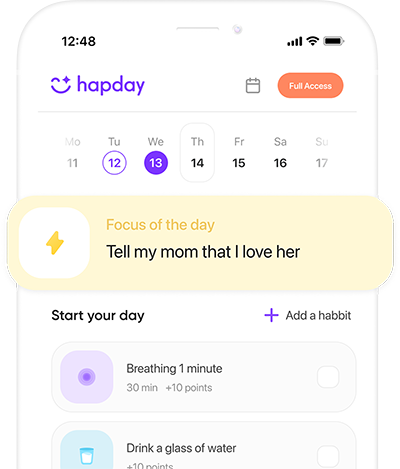
Real-world hint for the off-hours: at 2 a.m., you may not want to wake anyone. A tool like Hapday can walk you through a compassionate reframe via 24/7 live coaching; you can decide what to bring to your person later. I’m cautious about tech fixes, but as a bridge—especially in the middle of the night—it’s useful.
Building a Platonic Friendship Ritual That Chips Away at Shame
You don’t need a dozen confidants. One reliable friend—and a repeatable ritual—can shift an entire shame story. Here’s a way to structure it, and why each step matters.
- Choose your anchor friend. Look for small, boring proofs: replies returned, dates remembered, laughter that doesn’t sting. Reliability builds the safety your body needs before it risks honesty. In my experience, this is the nonnegotiable.
- Set the frame out loud. Shame feeds on vagueness. Try: “Can we be each other’s truth check when shame spikes? A quick share, a 1–10 distress rating, then a reminder that the story isn’t the self.”
- Create a cadence. A Wednesday walk; weekly voice notes; a “two-minute truth” text rule. Predictability lowers the barrier to reaching out. NIH’s News in Health has underscored that accessible support is the kind that helps.
- Practice graded disclosure. Begin with headlines, not the whole saga. “I messed up at work and my brain is calling me a failure.” Let your physiology register safety. This is graduated exposure, just applied to memory and meaning.
- Use a reframe recipe. Agree on a simple template: the facts, the shame story, the kinder counterstory. It’s cognitive reappraisal in plain language.
- Debrief and adjust. Once a month, ask what worked. What language soothed? What made reaching out easier? Iteration builds buy-in.
“When Maya, 28, went through her divorce, she and her college roommate, Zoe, created a ‘ten-minute Tuesday.’ Maya’s shame said she’d ‘failed at love.’ Zoe asked for evidence, named the values Maya protected—honesty, safety—and the intensity started to fall. Over about three months, fewer spikes, quicker recovery.”
— Dr. Lena Ortiz, PhD, Clinical Psychologist
What to Say to a Friend When Shame Hits
Words vanish when shame is loud. Keep simple lines at hand:
- The truth opener: “My brain is telling me I’m unworthy because of X. Can I reality-check with you for five minutes?”
- Permission to be seen: “I want to hide, which probably means I need to do the opposite. Can I sit with you or send a voice note?”
- Distress scale: “I’m at a 7 out of 10. I just need human contact and a kinder take.”
- Clear ask: “Please don’t fix it yet. Can you reflect back what you’re hearing and remind me I’m more than this?”
Why it works: you label shame (that alone eases intensity), name the need (connection over solutions), and invite reappraisal. The APA notes that self-disclosure builds intimacy and trust—two conditions in which shame has less room to run. My bias: clarity saves friendships.
Boundaries: Safe Platonic Friendship vs. Co-rumination
There’s a difference between processing and drowning together. The APA defines co-rumination as repetitive, problem-focused talk with no movement toward action; it can deepen closeness but also anxiety and depression. Particularly in young women, the loop is common—and costly.
How to avoid it:
- Time box the spiral. Ten minutes, then a values-based shift: a walk, a sandwich, the email you’ve dreaded.
- Balance the lens. For every “What went wrong,” ask “What matters now?” or “What did you protect?” It restores agency.
- Check the ratios. If you both leave heavier, say so. “I love how we show up. Can we try a reframe and one tiny action before we end?”
- Keep consent active. “Do you have space for something heavy?” preserves both nervous systems.
“Support doesn’t mean merging. Strong platonic friendship includes boundaries, humor, and the freedom to say, ‘Not tonight—but I care and I’ll text you in the morning.’ Predictability is medicine.”
— Priya Nanda, MPH, Social Connection Researcher
When You’re Starting From Lonely: Rebuilding Platonic Friendship
If your contacts are thin or you’re new in town, this hurts. You’re not broken; you’re living in a time when loneliness is widespread. The CDC has documented the health costs. The fix isn’t instant best friends; it’s steady, low-stakes touchpoints that accumulate.
Try this architecture:
- Map low-stakes nodes. Classmates. The barista who knows your oat-milk order. Someone from a climbing gym. A coworker who laughs at the same dry jokes. Seeds, not strangers.
- Make the first move easy. “I’m doing a Sunday lap around the lake—want to join? Low-key, 30 minutes.” Specific, finite invitations travel further.
- Stack contexts. See people in more than one setting. A study buddy becomes a lunch buddy becomes “we talk about real things.”
- Share something small early. “I get social anxiety at these mixers.” Watch who handles it with care. You’re auditioning for fit, not approval.
- Anchor one ritual. A monthly potluck; Thursday game night; a coworking hour. Frequency accelerates trust.
Case Files: How People Use Platonic Friendship to Beat Shame
- Maya, 28, post-divorce. Shame script: “I failed at love.” Practice: ten-minute Tuesday with Zoe; reframe to values; gratitude texts after legal appointments. Outcome: fewer 3 a.m. spirals; she returned to a painting class she’d quit. Why it worked: disclosure plus action, anchored in compassion.
- Jordan, 31, new manager. Shame script: “I’m a fraud; the presentation bombed.” Practice: voice-memo swap with friend Tae after stakeholder meetings—facts, story, kinder story; weekly “receipts list” of three things done well. Outcome: steadier self-evaluations; asked for mentorship. Why it worked: evidence-based reappraisal with relational accountability.
- Aisha, 26, sober six months. Shame script: “People only remember my mess.” Practice: Sunday walks with cousin Nia; one win, one hard thing; at 7/10 distress, they switch to a coping plan drafted on a calm day. Outcome: stronger sobriety network; less isolation after cravings. Why it worked: boundary against co-rumination, predictable care.
Turning Household Ties into Shame-Resilient Teams
If you live with roommates—or you’re in a relationship and actively building friendship within it—try a “kitchen table pact.” Post three agreements on the fridge:
- When shame spikes, say “code blue.” That means: sit down, water, five minutes of listening before any advice.
- Reframe together: one fact, one feeling, one value.
- End with a micro-action you can do in the next hour.
Mayo Clinic’s guidance on friendship emphasizes that trust grows from small, repeatable acts like these. The goal isn’t perfect technique; it’s a home culture that says, We face hard things together. In my book, that’s what closeness is for.
If Trauma or Social Anxiety Makes This Hard
If sharing makes your chest race, start smaller. Social anxiety can bring intense fear of embarrassment and avoidance, as NIMH outlines. That isn’t weakness. It’s wiring—and wiring can learn.
- Begin with neutral presence. Sit near a friend while you do tasks. No disclosure yet. Your nervous system learns “seen and safe.”
- Try written disclosure. Journal what you’d like to share, then read it aloud to yourself. Next step: a short text to a trusted person.
- Use graduated exposure. Step 1: name the topic (“work mistake”). Step 2: a high-level summary. Step 3: add one detail. Step 4: ask for a reframe. Stop before overwhelm; repeat later. This follows APA guidance on exposure—gentle and paced.
- Recruit a body anchor. A warm mug, a hand on your chest, a weighted blanket on your lap. Safety cues are physical, too.
- Replace catastrophic predictions with experiments. Swap “They’ll think I’m disgusting” for “Let’s see what this person actually does.” Record the outcome. Most people surprise us, for the better.
Toolbox: Scripts and Structures You Can Borrow
- The two-minute truth text:
“Hey, I’m in a shame spiral about [topic]. My brain says [harsh story]. Can you reflect a kinder story back? I’ll set a two-minute timer so we don’t get stuck.” - The “receipts list”:
Once a week, you each send three things you did that align with your values—especially when shame says you never do anything right. This is counterevidence gathering. - The “body check”:
Before and after a share, rate breath depth, muscle tension, and hand temperature. Notice the shift. It teaches your brain that contact changes state—often toward safety. - The “values filter”:
Ask, “If my best friend told me this, what value would I see them protecting?” Name it for each other. You’re building identity beyond the incident.
If you prefer structured guidance while you build these habits, platforms like Hapday—used by more than 3 million people for daily coaching—offer live, evidence-based exercises (mood tracking, breathing, reframes) so the next conversation with a friend starts from a calmer place.
What to Watch For: Red Flags and Green Lights
Red flags that a conversation might be fueling shame:
- You leave feeling smaller, dirtier, or hopeless.
- Your share becomes gossip, an advice dump, or a one-up story.
- No consent check-in before heavy topics.
- The same incident is rehashed with no new insight or action.
Green lights for shame-resilient platonic friendship:
- Reflections that use your words, not labels.
- Questions that widen perspective: “What else could be true?”
- Gentle humor that honors pain rather than minimizing it.
- Thoughtful follow-up: “Thinking of you—how’s your heart today?”
If you’re the friend listening? Keep it simple:
- “Thank you for trusting me.”
- “Nothing you share makes you less worthy.”
- “What do you need—listening, reframe, or plan?”
Why This Works for Gen Z and Millennial Women
Younger women are often socialized to care for others and to scrutinize themselves. That mix can tip into co-rumination if left unchecked. It can also, with structure, become a precision tool. The APA’s entries on self-disclosure and cognitive reappraisal mirror what close friends already do when they feel safe: tell the truth, then tell a kinder truth that’s still honest. My read: this is one place where cultural strengths—attunement, language for feelings—can be channeled rather than abandoned.
You might be skeptical—maybe your last reveal went badly. That’s real. But with the right person and a clear frame, platonic friendship becomes a lab where you practice being known without losing face. Every experiment chips away at the old code—“I’m only lovable when perfect”—and writes a truer one: I’m still lovable when human.
The Portable Plan
- One person you trust. Invite them into a defined ritual.
- One language for shame. “My brain is telling me a story…”
- One structure. Facts, shame story, kinder story, next step.
- One boundary. Timer, consent, no fixing until asked.
- One action. End with a micro-step you can do.
Repeat weekly. Track how fast your shame peaks fall. Not because you’ve become flawless, but because your nervous system now has evidence that being seen is survivable—and often soothing. Put it on your calendar. Not because you’re weak. Because you’re practicing a skill. Shame won’t love that. You might.
Summary + CTA
Shame urges you to hide; platonic friendship teaches your body that it’s safe to be seen. With small rituals, clear asks, and compassionate reframes, connection becomes a daily practice that loosens shame’s grip. If you want steady support while you build that muscle, consider Hapday—an AI coach with 24/7 sessions and programs that reinforce humane routines—at hapday.app. You don’t have to do this alone.
The Bottom Line
Being known by a safe friend is powerful medicine for shame. Start small, make it predictable, honor consent, and practice kinder stories together. Over time, your body learns that honesty doesn’t cost belonging—it deepens it.
References
- American Psychological Association Dictionary of Psychology — Shame
- American Psychological Association Dictionary of Psychology — Self-disclosure
- American Psychological Association Dictionary of Psychology — Cognitive reappraisal
- American Psychological Association Dictionary of Psychology — Co-rumination
- Centers for Disease Control and Prevention — Loneliness and Social Isolation Linked to Serious Health Conditions
- NIH News in Health — Social Support: How Friends and Family Can Help You Cope
- Harvard Health Publishing — The health benefits of strong relationships
- Harvard Health Publishing — Self-compassion
- Mayo Clinic — Friendships: Enrich your life and improve your health
- National Institute of Mental Health — Social Anxiety Disorder: More Than Just Shyness
- Mayo Clinic — Social support: Tap this tool to beat stress