

The memory arrives like a gut punch: a comment you wish you hadn’t made, a breakup text you still replay, the time you froze and didn’t speak up. Shame floods in and your body tightens as if it’s happening all over again. If you’ve been wondering how to ease shame with meditation—without pretending the past didn’t happen—you’re in the right place. This is a practice of staying with yourself, not abandoning yourself.
As a reporter who’s spent years in clinics and research labs, I’ve heard the same confession from people across ages and jobs: “I know it’s over, but my body won’t let it be over.” The bravest work here isn’t forgetting. It’s learning to remain.
Here’s the quiet revolution of this work: You’re not trying to erase the past. You’re retraining your brain and body to meet shame with steadiness, context, and care—so it no longer runs your life. In my view, there’s dignity in that kind of training.
Table of Contents
- What Shame Does to Your Brain and Body
- Why Meditation Works for Shame (The Science You Can Feel)
- How to Ease Shame with Meditation: A Gentle, Doable Practice
- A 10-Minute “Name It to Tame It” Reset
- Loving-Kindness for Shame (Short Script)
- When Meditation Feels Hard: Common Roadblocks and What to Try
- How to Ease Shame with Meditation in Daily Life
- How to Ease Shame with Meditation Right When It Hits
- The Three Pillars: Attention, Allowing, Affection
- Build a Sustainable Practice (Without Perfectionism)
- Putting It Together: A One-Page Plan
- Summary and Next Step
- The Bottom Line
- References
Key Takeaways
- Shame is a whole-body threat response; mindfulness creates space between “what happened” and “what it means about me.”
- Evidence links meditation and self-compassion to reduced stress, anxiety, and depressive symptoms—common companions of shame.
- Simple practices—labeling emotions, lengthening exhales, and kind self-talk—help downshift the nervous system.
- Consistency beats intensity: micro-practices throughout the day build resilience and self-respect.
- When shame spikes, anchor in the present, name it, soothe the body, and take one values-aligned step.
What Shame Does to Your Brain and Body
Shame is a social emotion with a physical edge. The APA Dictionary of Psychology defines shame as a painful feeling “arising from the consciousness of something dishonorable, improper, ridiculous, etc., done by oneself or another.” It often couples with a threat response—racing heart, tight chest, flushed face—because your nervous system reads social rejection as danger.
In interviews over the past few years, clinicians have told me the same thing in different language: shame is a full-body story.
“Shame needs three things to grow: secrecy, silence and judgment.”
— Brené Brown, PhD
When you’re trapped in that trio, your mind perseverates and your body keeps sounding the alarm. Mayo Clinic notes that stress states like this can activate the sympathetic nervous system and HPA axis, spiking cortisol and keeping you on edge when you most need perspective.
Why this matters for meditation: mindfulness skills help dial down that alarm and create space between “what happened” and “what it means about me.” Over time, that space is where self-respect grows. I’d argue that self-respect, not self-esteem, is the sturdier goal.
Why Meditation Works for Shame (The Science You Can Feel)
Mindfulness isn’t magical thinking; it’s training attention and attitude. The National Center for Complementary and Integrative Health (NCCIH) explains that mindfulness meditation can help with anxiety, depression, and stress, with growing evidence across multiple conditions. Harvard Health Publishing reports that mindfulness-based programs show moderate improvements in symptoms of anxiety and depression—two states that often travel with shame. Realistically, “moderate” is what most of us can sustain.
On a brain level, Harvard researchers (Sara Lazar’s group) reported in 2011 that regular meditation practice can increase gray matter density in areas linked to learning, memory, and emotional regulation. More gray matter in regulation hubs means more capacity to notice a shame trigger, pause, and choose a different response. That’s the opposite of the all-or-nothing “I am bad” loop.
Self-compassion is another key piece. Harvard Health notes that self-compassion practices are associated with lower anxiety and depression and greater emotional resilience. Shame says “you are unworthy.” Self-compassion—delivered through mindful attention and kind phrases—says “you made a mistake, and you are still worthy.” This shift isn’t just feel-good; it’s correlated with better psychological health. In my reporting, the people who heal best from shame are the ones who practice this consistently, even when it feels unearned.
“You can’t stop the waves, but you can learn to surf.”
— Jon Kabat-Zinn, PhD
With shame, surfing means anchoring in the present, naming what’s happening, and offering care to the part of you that’s hurting.
How to Ease Shame with Meditation: A Gentle, Doable Practice
Before you sit, set your expectation: you’re not trying to feel amazing. You’re practicing staying with yourself without collapsing into the story that you are the story. That alone starts to unwind shame. One meditation teacher told me, “We’re not deleting the file, we’re changing how often it auto-opens.” That felt accurate.
- Prep your space
- Choose a posture that feels grounded—sitting with your feet on the floor or lying down if sitting increases tension.
- Soften the eyes or close them. Place a hand on your chest or cheek if that feels comforting.
- Begin with an anchor (2 minutes)
- Attend to your breath, the feeling of the chair, or sounds in the room. Let attention rest on one anchor.
- When your mind wanders (it will), gently return. No commentary.
- Name the experience (2 minutes)
- Bring to mind the trigger lightly, like touching the surface of a pond. Notice sensations (heat, tightness), emotions (shame, sadness), and thoughts (“I messed up”).
- Labeling emotions engages brain regions that help regulate them.
“Name it to tame it.”
— Daniel J. Siegel, MD
- Drop the storyline, feel the body (2 minutes)
- Shift focus from “why” to “where.” Where is shame living in your body right now? Can you breathe into that spot with 5–10 slower exhales?
- Gently lengthen exhalations to cue the parasympathetic nervous system (rest-and-digest).
- Offer self-compassion phrases (2–3 minutes)
- Try: “This is a moment of pain.” “Shame is hard, and it’s human.” “May I be kind to myself.” Choose or adapt phrases that land for you.
- Speak silently, like you would comfort a close friend.
- Close with perspective (1 minute)
- Ask: What matters here? What small action reflects my values? This shifts you from self-attack to aligned next steps.
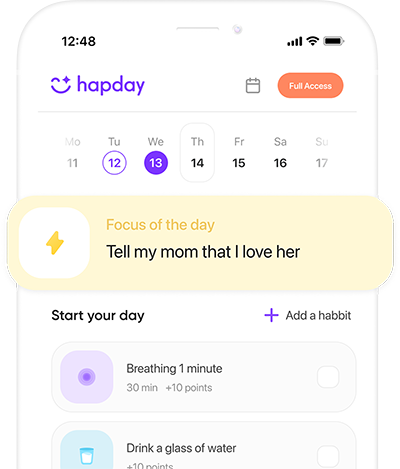
If late-night spirals are common, it helps to have support right when you need it. Platforms like Hapday offer 24/7 AI coaching sessions and guided breathing that can walk you through the steps above in the moment you’re overwhelmed. I prefer any tool that meets people where they actually are—on the couch at 11:40 p.m., not at a perfect sunrise sit.
A 10-Minute “Name It to Tame It” Reset
Try this when shame spikes after a text, meeting, or social scroll:
- 1 minute: Ground your feet. Feel the floor.
- 2 minutes: Follow your breath. Inhale 4, exhale 6.
- 2 minutes: Say internally, “Shame is here.” Notice where it sits in your body.
- 2 minutes: Place a hand there. Imagine warmth flowing into that spot.
- 2 minutes: Repeat: “This hurts. I am not alone. I can learn from this.” Visualize someone you trust looking at you with kindness.
- 1 minute: Ask, “What tiny, respectful step can I take next?” Send the text. Drink water. Step outside. Close the app.
Why it works: Labeling emotions recruits prefrontal networks that dampen limbic reactivity. Slow exhalations stimulate the vagus nerve, supporting regulation. Self-kindness interrupts the “I am bad” narrative, which Harvard Health links to better mood and resilience. Tiny actions reassert agency. In my opinion, agency is the bridge between insight and change.
Loving-Kindness for Shame (Short Script)
Loving-kindness, or metta, is shown to increase positive emotions and social connection. Use it when you feel unworthy:
- Sit comfortably. Bring to mind your hurting self at this moment.
- Silently repeat:
- “May I feel safe.”
- “May I accept myself as I am, and as I grow.”
- “May I forgive what I can, and learn from what I can’t.”
- “May I be kind to the parts of me that feel unlovable.”
Notice whether any phrase softens the edges. Keep the ones that resonate; rewrite the rest. I’ve watched people bristle at these phrases at first, then slowly adopt one or two as a kind of internal handrail.
Real-world example: When Maya, 28, went through her divorce, shame showed up as “I failed at commitment.” She started a five-minute loving-kindness practice before bed, touching the place on her chest that clenched whenever the story arose. Three weeks in, she noticed the same thought felt less electrified. The thought still came, but it no longer defined her. She told me, “I felt like I could hold myself instead of hiding from myself.” That’s the work. And honestly, that’s enough.
When Meditation Feels Hard: Common Roadblocks and What to Try
- “Sitting with shame makes it worse.”
- Why: Early on, attention can amplify what’s already loud.
- Try: Start with grounding practices (sound, touch, walking) before bringing a trigger to mind. Keep sessions short (3–7 minutes) and end with a regulating cue—sip of water, looking out a window.
- My take: pacing is a clinical skill; apply it to yourself.
- “My mind won’t stop judging me.”
- Why: The brain has a negativity bias; it overweighs threats to keep you safe.
- Try: Write down the judgment like a headline: “I ruined it.” Then ask, “Is this 100% fact or a fear?” Even a 5% doubt creates space. Bring in one self-compassion phrase to balance the ledger.
- Opinion: you’re not aiming for zero judgment—just fewer unquestioned ones.
- “Old trauma floods me when I sit.”
- Why: Meditation turns down external input, which can bring up unprocessed material.
- Try: Trauma-sensitive pacing matters. Practice eyes open, keep a light anchor (sounds), and avoid detailed memory recall. If flooding persists, connect with a licensed therapist trained in trauma therapies. Meditation is a support, not a substitute for clinical care.
- I’ve learned: safety first, insight second.
- “I don’t have time.”
- Why: Shame relief feels intangible compared to inbox zero.
- Try: Micro-meditations. Three breaths before you open a message you fear. Hand on heart for 10 seconds after a mistake. A 60-second pause before bed. Consistency beats intensity.
- If you only choose one habit: choose the three-breath pause.
How to Ease Shame with Meditation in Daily Life
Meditation is not only on the cushion. To ease shame, you’re training thousands of tiny moments. The mundane is where it sticks—or doesn’t.
- The three-breath pause
- Breath 1: Notice tension in your body.
- Breath 2: Name the emotion (“shame,” “fear,” “anger”).
- Breath 3: Offer one phrase of kindness. Then act from values, not panic.
- The posture reset
- Shame collapses the chest and narrows the gaze. Gently lift through your sternum, widen your collarbones, soften your jaw. Your physiology talks to your psychology; an open posture signals safety.
- The hand-on-heart cue
- Touch releases oxytocin and calms the threat system. Use a gentle palm on your chest while breathing out slowly. Pair with: “May I give myself the benefit of the doubt.”
- Value-aligned micro-acts
- Ask: “If I weren’t attacking myself right now, what would I do next?” Send the apology. Clean the mug. Step outside. Do the next kind thing.
How to Ease Shame with Meditation Right When It Hits
When the spiral starts, scripts help:
- After a social misstep
- Internally: “This is uncomfortable and human.” Feel your feet. Breathe out longer. Choose one repair step when you’re steadier.
- When body image shame flares in a mirror
- “This body is carrying me through today. May I treat it with respect.” Step away. Do one caring act—water, stretch, change into something comfortable.
- When a work mistake triggers “I’m incompetent”
- “A mistake is an event, not an identity.” Note the factual impact. Plan one fix. Email a brief acknowledgment if needed. Then move.
Why these work: You interrupt rumination with embodiment, you validate the feeling without buying the identity story, and you choose behavior that restores integrity. In my experience, integrity is the antidote shame respects.
The Three Pillars: Attention, Allowing, Affection
If you remember nothing else about how to ease shame with meditation, hold these three A’s:
- Attention (mindfulness)
- Train your ability to notice thoughts and sensations without fusing to them. This is the “I see it” muscle.
- Allowing (acceptance)
- Stop fighting the initial wave. Let the emotion crest and fall. NCCIH notes that mindfulness helps people relate to stressors more flexibly—which reduces suffering.
- Affection (self-compassion)
- Offer warmth to the part of you that’s hurting. Harvard Health links self-compassion with greater resilience and less depression. Affection turns the inner critic into an inner coach.
Two expert voices echo this arc. Kabat-Zinn’s reminder to “learn to surf” speaks to attention and allowing. And Brown’s observation about secrecy and judgment invites affection: speaking to yourself the way you would to a friend breaks shame’s favored habitat. I’d add this: affection is a skill, not a mood.
Build a Sustainable Practice (Without Perfectionism)
- Choose a minimum viable practice: 5 minutes, 5 days a week.
- Pair it with an existing habit: after your first coffee, before opening email.
- Track only what helps: minutes practiced, one sentence about what you noticed.
- Expect dips. Shame often flares as you stop avoiding it. That’s not failure; it’s exposure plus new skills.
- Add gentle structure: a weekly longer session (10–20 minutes), and a monthly reflection—What’s changing in how I respond to hard moments?
A mini case study: Priya, 31, a product lead, felt “crushed” for days after any critical feedback. She tried a 5-minute after-work practice: breathe, label, hand on heart, one kind phrase, one fix. After six weeks she reported fewer evening spirals and shorter recovery time when they did happen. “It’s not that I never feel shame,” she said. “I just don’t drown in it.” I’ve heard that same shift again and again, and I think it’s the most honest measure of progress there is.
Putting It Together: A One-Page Plan
- Morning (2–5 minutes): Breath + phrase. “May I move through mistakes with care today.”
- Midday micro: Three-breath pause before tough messages.
- Evening (5–10 minutes): Shame-focused practice if needed (name it, feel it, soothe it). Jot one learning and one self-kindness act for tomorrow.
- Weekly: Longer sit or guided loving-kindness. If you notice stuck patterns, consider layering professional support.
References you can trust point in the same direction: mindfulness eases stress reactivity (NCCIH), meditation supports mood (Harvard Health), and self-compassion fosters resilience (Harvard Health). That’s a sturdy trio for softening shame. And yes, it’s practical enough to fit into a weekday.
Summary and Next Step
At its core, learning how to ease shame with meditation is learning to stay: to breathe through the first wave, name what’s real, and offer yourself the warmth that shame withholds. If you want steady support while you build these habits, consider Hapday—an AI life coach used by over 3 million people, with 24/7 sessions and guided practices that make these tools stick. My bias? Any tool that keeps you practicing is worth it.
The Bottom Line
Shame loosens its grip when you meet it with mindful attention, gentle allowing, and real affection. Start small, return often, and back your insights with one tiny values-aligned action. Progress isn’t the absence of shame—it’s the growing capacity to stay steady and kind when it appears.
Want a guide in your pocket as you practice how to ease shame with meditation? Try Hapday at hapday.app for compassionate, evidence-based coaching any time you need it.
References
- National Center for Complementary and Integrative Health (NIH) — Meditation: What You Need To Know
- Harvard Health Publishing — Mindfulness meditation may ease anxiety, mental stress
- Harvard Health Publishing — Practicing self-compassion
- Mayo Clinic — Stress management: Understand your triggers
- Harvard Gazette — Meditation study shows changes associated with awareness, stress
- APA Dictionary of Psychology — Shame