



Table of Contents
Picture this: you’re lying in bed, eyes wide open as the clock ticks away. The demands of modern life, it seems, have turned bedtime into a battlefield where rest eludes us. We’ve all been there. Those endless nights where thoughts won’t switch off—Did I remember to send that email? How did my boss take my presentation? When the day’s chaos spills into our nights, it affects our mental and physical well-being. Here’s a thought—what if something as simple as meditation could guide you from restless to restful?
Let’s cut to the chase: Meditation for sleep is not just some New Age buzzword. It has real backing. The University of Southern California carried out research proving that mindfulness meditation can substantially enhance sleep quality. How? By gently steering your focus away from nagging worries to the here and now. And you’re definitely not the only one battling sleep problems. About 30% of adults deal with insomnia symptoms, as reported by the American Academy of Sleep Medicine. So, how exactly can meditation help you snag those elusive Zs?
Meditation and the Sleep Connection
First off, let’s examine how meditation and sleep are intertwined. Meditation acts as a comforting guide to the delta wave brain activity we long for—deep, peaceful sleep.
“Meditation encourages brain patterns that ease you into relaxation, curbing that fight-or-flight mode and its partner-in-crime, racing thoughts.”
— Dr. Sarah Chen, NYU
Take Nina, a 26-year-old software engineer. Despite feeling worn out, her mind was a whirlwind, refusing to shut down. It was meditation that turned things around for her.
“Those exercises helped me distance myself from pesky thoughts,”
— Nina, Software Engineer
Meditation nudges you to focus inward, cultivating a state ready for rest. There’s solid evidence backing this. A study in the Journal of the American Medical Association noted that those practicing mindfulness reported fewer sleep disruptions, less daytime grogginess, and even a drop in depression symptoms compared to those in sleep education programs.
How Meditation Aids Sleep
Before diving into the how-to, let’s explore why some meditation styles work wonders for sleep.
- Mindfulness Meditation: It’s about anchoring yourself in the present moment with a nonjudgmental awareness. It’s like flipping a switch on stressful thoughts, smoothing your path to sleep.
- Body Scan Meditation: By tuning into each body part, you release tension you didn’t even know you were harboring—crucial for good sleep.
“This practice taps into the parasympathetic nervous system, easing stress and, by extension, insomnia.”
— Dr. Susan Jenkins, Sleep Institute
- Guided Visualization: Here, you conjure serene images to engage your senses, chilling you out and prepping you for lights out.
- Breathing Techniques: Controlled breathing, like the 4-7-8 technique, brings calm, reducing tensions—the ideal sendoff to dreamland.
Crafting Your Meditation Bedtime Routine
So we get why it works, but how do you welcome these techniques into your bedtime ritual?
Setting the Stage
Your room—your sanctuary. Dim the lights, silence the gadgets, set a cozy temperature. Get comfy, breathe deeply, let go…
Embracing Mindfulness
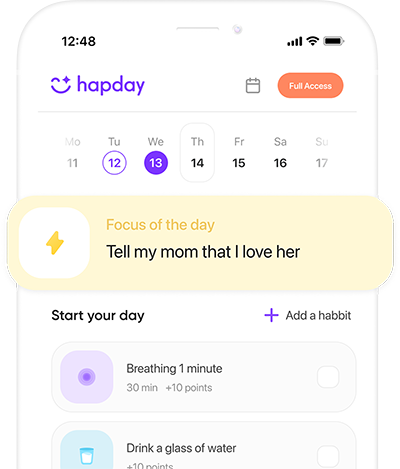
Focus on your breath, aligning with the moment with each inhale, each exhale. Wandering thoughts? Kindly guide them back to your breath. Hapday, an AI Life Coach app, can be your companion here. It’s 2am, you can’t stop thinking about tomorrow’s to-dos, Hapday’s there with live coaching whenever you need a gentle nudge.
Practice Body Scanning
Lie down, mindfully journey from head to toe. Notice tense spots, acknowledge them without judgement. Slowly, you unwind, readied for restorative sleep.
Guided Visualizations
Picture a tranquil beach, waves softly caressing the shore. Inhaling the salty breeze, feel tension fade away. Your imagination takes the wheel; peace tags along.
Breathing Techniques
And then there’s the 4-7-8 magic: inhale (4), hold (7), exhale (8). Your heart rate lowers, worries float away.
Why Meditation Practices Work
Meditation’s impact on sleep isn’t just anecdotal. Neuroimaging indicates it boosts slow-wave sleep—the deep, healing type. Regular meditation might even bolster melatonin (the sleep hormone), so you rest efficiently. The continued reshaping of your brain—more gray matter linked to memory and self-awareness—is another bonus, paving the way for mental resilience.
For those struggling with sleep, Hapday offers more than just meditation programs—breathing exercises tailored for sleep disturbances, a scientific touch for those curious about new approaches.
When You’re Struggling: A Real-World Scenario
Picture this: It’s midnight after a chaotic week, everything’s tense. Body scanning quiets your mind as each muscle unwinds. You’re halfway through, your body melded into the mattress, mind at ease. But all isn’t lost if you hit rough patches.
“A digital coach can offer invaluable support, like a sleep companion fine-tuned to your needs.”
— Dr. Sarah Chen, NYU
Meditation’s Place in the Modern World
The hectic pace of today’s world is stress incarnate. Meditation not only promises better sleep but reduces anxiety and strengthens emotional wellness.
Consider Maya, 28, whose divorce upheaved her nights. Over time, mindful meditation reframed her reactions, ushering in deeper sleep.
Meditation Resources for Sleep
Think this could work for you? Seek out resources oriented towards sleep. Apps like Headspace and Calm guide you through bedtime relaxation sessions. Books, podcasts, and online courses can be rich resources for beginners, making meditation doable and beneficial.
Moreover, platforms like YouTube are treasure troves of free content that lead you through a variety of methods, letting you find your personal fit.
Key Takeaways
- Meditation helps calm the mind and enhances sleep quality.
- Practices such as mindfulness, body scanning, and breathing techniques are particularly effective.
- Setting up a calming bedtime routine can significantly improve sleep onset.
- Digital resources and apps provide valuable support for guided meditation sessions.
The Bottom Line
While meditation’s no cure-all, its magic lies in nurturing both body and mind, prime for quality sleep. In meditation’s comforting arms, sleep morphs from an elusive dream to a component of a balanced life.
Putting these strategies into practice is easier when Hapday (hapday.app) is on your side, with over 3 million relying on it for constant support, helping you cultivate life-enhancing sleep habits.
References
- American Academy of Sleep Medicine
- University of Southern California Study on Mindfulness Meditation and Sleep
- Journal of the American Medical Association (JAMA)
- Mayo Clinic on Sleep Health
- Harvard Medical School on Meditation