



Flashbacks can feel like time travel you didn’t choose—sights, sounds, or sensations dragging you back to a past threat. If you’ve lived with them, you know the jolt: it’s abrupt, and not always logical. This guide shows how to use meditation for flashback control in a practical, science‑informed way. You’ll learn brief, body‑based skills you can use in the moment, plus a simple plan to build resilience between episodes. One editor’s note: these are not abstractions; they’re drillable skills that, with practice, change the feel of your day.
Image alt: Quiet breathing practice at home — how to use meditation for flashback control
Table of Contents
- Why meditation helps with flashbacks (and how to use it for flashback control)
- Core practices to use meditation for flashback control
- A 90-second micro-practice during a flashback
- A 4-week plan: how to use meditation for flashback control consistently
- Troubleshooting common snags
- What not to do
- Safety notes and when to seek more help
- Closing thought
- Summary
- References
Why meditation helps with flashbacks (and how to use it for flashback control)
- What’s happening: Flashbacks are memory fragments stored alongside high arousal and sensory detail. Under stress, the amygdala alarms and the hippocampus’ time‑stamping falters, so the past feels present—then slams into now. Cognitive models of PTSD describe this as poorly contextualized memory reactivation (Ehlers & Clark, 2000). It sounds clinical until it happens in a grocery line. My view: naming the mechanism can take 5% of the sting out of it.
- Why meditation helps: Mindfulness practices train attention to anchor in the body and present cues, reducing limbic reactivity and improving emotion regulation. Imaging studies have linked training to shifts in the hippocampus and prefrontal control networks (Hölzel et al., 2011). Harvard‑affiliated teams have written about this for more then a decade; the pattern keeps repeating. In a randomized trial with U.S. veterans, mindfulness‑based stress reduction led to greater reductions in PTSD symptom severity than an active control (Polusny et al., 2015). It isn’t magic—just consistent reps that recondition the alarm system.
- Scope: Around 6–7% of U.S. adults meet lifetime PTSD criteria (Kessler et al., 2005). That’s not a fringe problem. Meditation isn’t a cure‑all, but in a broader care plan it’s a steadying lever you can actually pull when it counts. I’d argue it’s underused between therapy sessions.
Core practices to use meditation for flashback control
Think “orient the body, then the world, then the mind.” Simple sequence, practiced often.
-
1) Breath anchoring (physiology first)
- How: Inhale through the nose for 4, exhale for 6–8. Let your belly move. Do 6–10 cycles. If you need a cue, count on your fingers in your lap—quiet, portable.
- Why: Slightly longer exhales boost vagal tone and heart rate variability, a proxy for a flexible stress response (Lehrer & Gevirtz, 2014). This lowers threat arousal quickly. If you pick only one skill, start here; breath is the fastest door back to baseline.
-
2) Sensory orienting (prove you’re safe now)
- How: Eyes open. Name 5 things you see, 4 feel, 3 hear, 2 smell, 1 taste (the 5‑4‑3‑2‑1). Gently turn your head and look left–right to “map” the room; let the neck move. Add a neutral touch point—cool mug, key ring, sleeve seam.
- Why: Grounding recruits present‑tense sensory input, helping your hippocampus re‑time‑stamp the moment and de‑condition triggers. It’s hard to argue with what your eyes actually see in 2026, right here, right now.
-
3) Labeling and allowing (mind follows body)
- How: Softly name what’s here: “tight chest,” “heat,” “fear.” Pair with the breath: “inhale—here; exhale—safe.” Keep the tone factual, like a field note.
- Why: Affect labeling measurably reduces amygdala activation and increases prefrontal control (Lieberman et al., 2007). In plain terms, language steadies physiology. I find a quiet, almost reporter‑like voice works best.
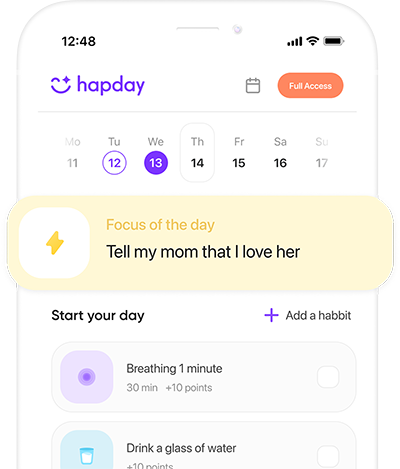
Some people also lean on structured AI coaching tools—apps such as Hapday, with 24/7 coaching, mood and habit tracking, and brief breathing exercises—when flashbacks surge at odd hours or when a quick check‑in lowers the threshold to practice. Use judiciously; if it keeps you practicing on hard days, that’s a win.
A 90-second micro-practice during a flashback
- Step 1: Name it: “A flashback is happening; my body thinks it’s then, but it’s now.” Out loud helps.
- Step 2: Breathe 4 in, 6–8 out (10 cycles). One hand on chest, one on belly. Hands anchor attention when thoughts scatter.
- Step 3: Eyes open; identify 3 colors and 3 sounds in the room. If outside, add temperature or wind.
- Step 4: Label 1–2 sensations (“tingling hands,” “pressure”). Say, “I can feel this and stay here.” Short, clear sentences—your nervous system hears them.
- Step 5: Re‑orient: state the date, your name, and one safe object you can touch. The Guardian reported during the early pandemic that simple time–place cues cut through stress fog; it tracks with clinical experience.
A 4-week plan: how to use meditation for flashback control consistently
-
Week 1: Safety‑first setup (5–7 min daily)
- Practice breath anchoring with eyes open. Choose a consistent chair and time. Predictability matters more than duration.
- Between episodes, rehearse the 90‑second script so it’s automatic under stress. Muscle memory beats willpower here. My bias: morning reps set a floor for the day.
-
Week 2: Sensory orienting (8–10 min daily)
- Add 3 minutes of 5‑4‑3‑2‑1 after breathwork.
- Place “anchors” (smooth stone, calming photo) where flashbacks tend to strike. Tiny environmental edits often do more than heroic effort.
-
Week 3: Labeling and compassion (10–12 min daily)
- After breath + orienting, label sensations/emotions for 2–3 minutes.
- End with a compassionate phrase: “I’m safe enough in this moment.” This reduces self‑blame and avoidance, which maintain symptoms. If it feels awkward, that’s fine; say it anyway.
-
Week 4: Real‑life reps
- Insert 2–3 planned “micro‑practices” (60–90 seconds) during routine stress (email backlog, commute). Generalization is key: RCTs show skill use in everyday contexts predicts symptom gains (Polusny et al., 2015). Proof lives in your calendar, not your intention.
Troubleshooting common snags
- “Breathing makes me dizzy.” Slow it down; keep exhales only slightly longer. Try 3‑second inhale, 4‑second exhale. Or switch to tactile grounding (hold an ice cube; name textures). No prize for suffering—change the lever.
- “Closing my eyes triggers images.” Keep eyes open and lightly focused on a stable object. A wall corner, a book spine, your own hands.
- “Meditation amplifies memories.” Shift to “contact and redirect”: feel both feet, label 1 sensation, then engage a neutral task (fold laundry, walk). Even visuospatial tasks like Tetris soon after a trauma cue can reduce intrusive imagery load (Holmes et al., 2009). I’ve seen this surprise people; it looks too simple until it works.
- “I feel numb.” Start with movement‑based mindfulness (walking, swaying) to wake up interoception before seated practice. Sometimes the body needs motion before attention will cooperate.
What not to do
- Don’t force prolonged exposure to trauma images during solo meditation. Evidence‑based trauma therapies (e.g., trauma‑focused CBT, EMDR) dose exposure carefully within a safe container (NICE, 2018). Going it alone can backfire.
- Don’t aim for “erasing” flashbacks. Target faster recovery time and lower intensity. Track those metrics weekly. Chasing zero symptoms often prolongs distress.
Safety notes and when to seek more help
- Adverse effects are possible (e.g., dissociation, panic) for a minority of practitioners; proceed trauma‑sensitively and titrate (Van Dam et al., 2018). If your practice spikes distress twice in a row, adjust the method or the dose.
- Pause if you feel detached or overwhelmed; return to orienting and movement. It’s a sign the system is saturated, not that you failed.
- If flashbacks are frequent, violent, or linked to self‑harm, connect with a clinician trained in trauma therapies. Mindfulness is a complement, not a substitute, for care. If you’re in immediate danger, contact local emergency services or a crisis line.
Closing thought
Learning how to use meditation for flashback control is like strength training for your nervous system: brief, repeated reps that make “now” louder than “then.” It takes fewer minutes than most people think. With breath anchoring, sensory orienting, and skillful labeling, you can reduce intensity and rebound faster—while keeping options open for therapy and community support.
Summary
Meditation won’t delete the past, but practiced wisely, it can steady your body, re‑anchor your attention, and soften the emotional charge of flashbacks. Start small, keep eyes open, and build the habit between episodes so it’s there when you need it. Track what works, refine weekly, and loop in a trauma‑informed professional when needed.
CTA: Choose one micro‑practice above and schedule it today—your future self will thank you.
References
- Ehlers, A., & Clark, D. (2000). A cognitive model of PTSD. https://pubmed.ncbi.nlm.nih.gov/11059327/
- Hölzel, B. et al. (2011). Mindfulness practice and brain changes. https://www.ncbi.nlm.nih.gov/pmc/articles/PMC3004979/
- Polusny, M. A. et al. (2015). MBSR for PTSD among veterans (RCT). https://jamanetwork.com/journals/jama/fullarticle/2441261
- Lehrer, P., & Gevirtz, R. (2014). HRV biofeedback review. https://www.frontiersin.org/articles/10.3389/fpsyg.2014.00756/full
- Lieberman, M. D. et al. (2007). Affect labeling reduces amygdala response. https://journals.sagepub.com/doi/10.1111/j.1467-9280.2007.01916.x
- Holmes, E. A. et al. (2009). Tetris and flashback reduction. https://journals.plos.org/plosone/article?id=10.1371/journal.pone.0004153
- Kessler, R. C. et al. (2005). Lifetime prevalence of PTSD. https://pubmed.ncbi.nlm.nih.gov/15939837/
- NICE. (2018). PTSD: diagnosis and management guideline NG116. https://www.nice.org.uk/guidance/ng116
- Van Dam, N. T. et al. (2018). Mind the Hype: Limitations and risks of mindfulness. https://journals.sagepub.com/doi/10.1177/1745691617709589