



Introduction
If you’ve ever noticed you bounce back faster after a rough day once you’ve texted a close friend, you’re not imagining it. The evidence is unusually consistent: platonic friendship works as a buffer against stress and a quiet predictor of long-term health. Back in 2010, the Holt-Lunstad meta-analysis pooling data from more than 308,000 people found that strong social ties were linked with a roughly 50% higher likelihood of survival—on par with, and sometimes beating, classic health interventions. In my view, that still counts as one of the most underreported public-health stories of the last decade.
Table of Contents
- Introduction
- Why Platonic Friendship Matters for Resilience
- 7 Signs Platonic Friendship Boosts Resilience
- Make Your Platonic Friendship a Resilience Engine
- How to Test These Signs in Your Life This Month
- Bottom Line
- Summary
- Call to Action
- References
Why Platonic Friendship Matters for Resilience
- Stress buffering is real. Decades after Cohen and Wills proposed the “buffering hypothesis,” study after study has shown supportive relationships soften the blow of everyday stress—by offering emotional validation, concrete help, or simply a witness who says, “I see it.” Frankly, few findings in psychology travel as well from lab to life.
- Your body feels it. Closeness operates below words. Holding a trusted hand reduces threat-related brain activity and calms physiological arousal—an elegant demonstration that safety is social as much as it is biological. I’d argue that what we call “chemistry” often begins as co-regulation.
- Women-specific patterns count. Under load, many women recruit a “tend-and-befriend” response—seeking connection that releases oxytocin and helps modulate stress systems. It’s an evolutionary story with modern stakes: when connection is stable and platonic, recovery can come sooner and steadier.
7 Signs Platonic Friendship Boosts Resilience
-
Your mood rebounds faster after stress
If a hard day still feels hard but you’re less likely to spiral after a call with your closest friend, that’s a resilience marker. Daily-diary research finds that perceived support predicts better next-day mood and fewer depressive symptoms during hassles. The practical takeaway is simple and, to me, persuasive: a steady friend helps you regulate in real time rather than ruminate in overtime.
-
Your body’s stress reactions come down
Heart rate settles. Shoulders unclench. The stomach knots ease after a walk-and-talk. Social connection lowers cortisol and tamps down sympathetic activation; even symbolic closeness—texting during a medical appointment—can echo the hand-holding effect seen in imaging studies. I suspect many of us underestimate how quickly our nervous systems borrow calm from people we trust.
-
You ask for help before things explode
People embedded in resilient networks tend to intervene early: asking for notes when ill, delegating a task before a deadline swallows them, or booking a brisk walk to sort out a conflict with a partner. Small repairs prevent big breaks. One caution: co-rumination—dwelling at length on problems without moving to solutions—tracks with higher anxiety in girls and young women. My rule of thumb: feelings first, then one concrete step.
-
Your sleep and routines stabilize
When friendship strengthens a sense of safety, nights change. Social connection is linked with better sleep quality and fewer disturbances, in part because stress reactivity at night comes down. Friends also anchor predictable rhythms—an evening text that nudges lights-out, a morning meet-up that gets you to yoga. In 2023, the U.S. Surgeon General labeled loneliness a public-health concern; it’s not lost on sleep researchers that consistent connection often steadies circadian habits too. I’d call that resilience by routine.
-
You stick with healthy habits longer
Accountability works—especially when it’s mutual. In a classic trial, participants who joined a weight program with friends were far more likely to maintain their losses at 10 months (66% versus 24% for solo joiners). A reliable platonic bond can scaffold workouts, therapy attendance, even a spending reset. My bias here: systems beat willpower, and a friend is a living system.
-
You reframe setbacks more flexibly
Flexible thinking fuels resilience. A good friend helps you decatastrophize, test reality (“What’s the most likely outcome?”), and name what you can control. Social baseline theory suggests the brain assumes cooperation is available—making challenges feel lighter and less threatening. Sometimes a single line—“You’ve done this before; I’m with you”—reshapes the whole appraisal. I’ve seen that sentence carry people through exams, layoffs, and hospital waiting rooms.
-
You feel more meaning, not just less stress
Beyond buffering crisis, strong friendships amplify purpose and growth. High-quality ties correlate with eudaimonic well-being—things like autonomy, mastery, values alignment. The long-running Harvard Study of Adult Development has said as much for decades: relationships are a durable predictor of health and life satisfaction. If you can say, “That was hard, but I’m proud of how we handled it,” you’re not only coping—you’re deepening your story. I’d argue meaning is resilience’s best friend.
Make Your Platonic Friendship a Resilience Engine
- Build “microbuffers.” Try two-minute check-ins, a quick voice note on tough days, or a “walk while we talk” norm to keep debriefs from turning into marathons. In my experience, frequency beats length.
- Co-design repair rituals. After conflict, use a repeatable script: share impact, own your part, state a need, set a next step. Confidence in repair—not the absence of conflict—predicts stability. That’s a hill I’m willing to stand on.
- Create a coping menu you both know. Pick five options: paced breathing, a 10-minute tidy, a nervous-system reset (cold splash, stretch), a values check (“What matters here?”), and an “email to future us” plan. The menu is the point; memory fades under stress.
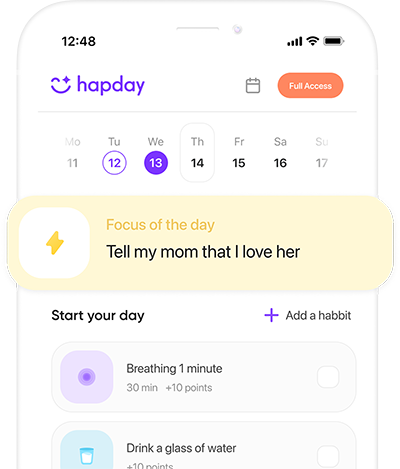
- Consider structured supports alongside human connection. Some people find structured AI coaching tools like Hapday helpful for 24/7 check-ins, mood and habit tracking, or brief breathing drills between hangouts. Tools assist; people heal—both can help.
- Watch for energy leaks. If every conversation circles the drain, name it kindly: “Can we switch to solutions after 10 minutes?” Boundaries protect stamina. My view: limits are a gift, not a wall.
- Pair joy with mastery. Resilience isn’t only soothing; it’s strengthening. Try new skills together—climbing, improv, coding. Novelty plus social reward reliably lifts confidence and positive affect. Curiosity is underrated medicine.
- Audit your circle. You don’t need many ties; quality matters. One reliable platonic friendship can deliver more resilience than a dozen thin connections. If it’s mutual, it counts.
How to Test These Signs in Your Life This Month
- Track “time to emotional baseline.” After a stressor, note hours until your mood steadies—with and without friend contact. If contact reliably shortens recovery, your friendship is acting as a buffer. My hunch: the pattern will appear within two weeks.
- Measure sleep and energy. Across 14 nights, compare evenings with friend connection versus evenings without. Watch for fewer wake-ups or steadier morning energy.
- Run a “coping menu” experiment. For two specific challenges, use your menu; rate perceived control before and after. Even a one-point shift is meaningful in real life.
- Habit buddy check. Choose one measurable habit (for example, three walks per week). Set mutual check-ins and see if adherence rises. If it does, keep the protocol; if not, adjust, don’t abandon.
Bottom Line
When a platonic friendship truly boosts resilience, you don’t just feel better—you adapt better. Your body calms faster, your thinking clears, routines hold, and meaning expands. It’s not magic; it’s the science of humans buffering stress together.
Summary
A resilient life is rarely a solo project. When friendship reduces stress reactivity, shortens recovery time, steadies sleep, and strengthens habits, it’s doing profound psychological work. Watch for the seven signs, build microbuffers, and co-create a coping menu so your bond becomes a genuine resilience engine. In my book, that’s prevention of the highest order.
Call to Action
Share this with a friend you rely on, name one habit you’ll co-pilot this week, and schedule a 10-minute check-in to build your resilience toolkit together.
References
- Holt-Lunstad, J., Smith, T. B., & Layton, J. B. (2010). Social relationships and mortality risk. PLoS Medicine. Link
- Cohen, S., & Wills, T. A. (1985). Stress, social support, and the buffering hypothesis. Psychological Bulletin. Link
- Coan, J. A., Schaefer, H. S., & Davidson, R. J. (2006). Lending a hand: Social regulation of the neural response to threat. Psychological Science. PDF
- Taylor, S. E. (2000). Tend and befriend: Biobehavioral bases of affiliation under stress. Psychological Review. Link
- Uchino, B. N. (2006). Social support and health: A review. Journal of Behavioral Medicine. Link
- Troxel, W. M., et al. (2010). Social relationships and sleep. Social and Personality Psychology Compass. Link
- Rose, A. J. (2002). Co-rumination in friendships of adolescents. Child Development. Link
- Wing, R. R., & Jeffery, R. W. (1999). Benefits of recruiting participants with friends to a weight-loss program. Journal of Consulting and Clinical Psychology. Link