



Table of Contents
- Understanding the Roots of Guilt
- The Science of Guilt and Its Impact on Mental Health
- Breaking Free: Practical Steps to Overcome Guilt
- Transform Guilt into Growth
- Moving Beyond: Building a Guilt-Free Future
- Cultivating a Forgiving Outlook
- Embrace Your Journey
Key Takeaways
- Understanding the roots of guilt can help individuals recognize its impact on mental health.
- Practical steps such as self-compassion and reframing narratives offer effective ways to overcome guilt.
- Transforming guilt into growth involves embracing positive actions and practicing gratitude.
- Seeking professional guidance can be crucial for dealing with chronic guilt.
- Self-forgiveness is essential for emotional liberation and personal growth.
Guilt—it creeps in quietly yet clings on like a shadow, whispering reminders of our missteps. Think of the time you forgot your best friend’s birthday or the familial event you missed. These pangs of remorse and self-blame feel universally familiar, yet intensely personal. Sure, guilt can nudge you toward making amends, but let’s be honest, it often turns into a relentless weight that chains you to past actions. How, then, do we shed this burdensome layer? By taking a closer look at the psychology of guilt and evidence-backed ways to break free today.
Understanding the Roots of Guilt
Guilt arises when our actions clash with our moral compass—a blend of upbringing, cultural norms, and personal values. Defined by the American Psychological Association, guilt occurs when someone feels they have crossed personal or societal moral lines. Back in 2019, a study from the Journal of Personality and Social Psychology found that women suffer more intensely from guilt than men, largely due to societal roles emphasizing empathy and caretaking.
“While guilt can sometimes promote empathy and self-accountability, chronic guilt erodes mental health, increasing anxiety and depression risks.”
— Dr. Sarah Chen, Clinical Psychologist at NYU
Maya, 28, knows this well—guilt from her divorce meant she was stuck in a loop of past decisions, unable to focus on rebuilding.
The Science of Guilt and Its Impact on Mental Health
Why does guilt tenaciously cling to us? Neuroscience tells us it activates areas of the brain involved in decision-making and emotional regulation. When persistent, this can morph into anxiety disorders. A 2018 study in Nature Human Behaviour linked excess guilt to ruminative thinking—constantly rehashing thoughts. This spirals into diminished self-worth, even depression.
“Guilt uniquely skews our perception of time, making past errors loom large.”
— Ellen Peters, Cognitive Scientist
If you’re caught in this regret loop, what’s the escape route?
Breaking Free: Practical Steps to Overcome Guilt
Embrace Self-Compassion
Let’s start with kindness—to yourself. Harvard Medical School calls self-compassion a shield against negativity. Kristin Neff, a self-compassion research pioneer, explains it as self-kindness versus self-judgment, common humanity versus isolation, and mindfulness versus over-identification. By simply admitting, “I’m human, humans make mistakes. This doesn’t decide my worth,” you’re miles ahead in the compassion journey.
Reframe Your Narrative
Here’s where Cognitive Behavioral Therapy (CBT) comes into play. Instead of haunting past acts, how might you advise a friend in your shoes? Dr. Amy Morin, psychotherapist, suggests this mental pivot: “Swap ‘I should have’ with ‘Next time, I will.’ Turn focus from past failures to future opportunities.”
Connect and Communicate
Feel guilt towards specific people or events? Talk it out. Express remorse and a will to change. The International Journal of Mental Health (2020) found that tough talks usually lead to emotional relief. It’s daring but often healing.
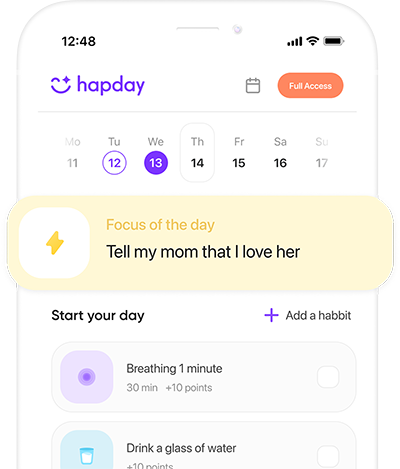
With platforms like Hapday—adopted by over 3 million for daily mental health support—mental wellness gets relatable. Their 24/7 AI coaching uses grounded methods to tackle guilt’s complexities when traditional therapy seems inaccessible.
Transform Guilt into Growth
Shift Focus to Positive Actions
Guilt can be a leap forward, not a roadblock. By targeting specific actions for change, you move from inaction to progress. Dr. Lisa Firestone, clinical psychologist, advises setting tiny, manageable goals to regain control. Instead of being stuck in past failures, focus on steps aligning with your values today.
Practice Gratitude
Gratitude thaws guilt’s icy grip. A study in The Journal of Positive Psychology revealed that grateful people foster positive sentiments and better banish guilt. By keeping a gratitude journal, daily joys become focal and guilt loses ground.
Reestablish Mindful Presence
Mindfulness meditation—your secret ally against guilt! Focus on now, not yesterday. Mindfulness Research Center at UCLA concludes that such practices curb stress and ruminative thought, building a chasm between you and guilt.
Imagine your thoughts racing at 2 a.m. Instead of waiting for a counselor’s next opening, an AI coach like Hapday offers immediate tools. Breathing exercises, specially designed, help shift focus from guilt to relief.
Moving Beyond: Building a Guilt-Free Future
Establish New Habits
When guilt ties itself to thought patterns, breaking these makes room for change. The habit loop—cue, routine, reward—once remodeled, frees you from guilt traps.
Dr. Charles Duhigg, author of “The Power of Habit,” says: “Identify cues triggering guilt and consciously replace them.” Swap apologetic messages for conversation that resolves rather than laments.
Seek Professional Guidance
Guilt swallowing you whole? A therapist or counselor is a wise choice. Both cognitive and psychodynamic therapies effectively untangle chronic guilt threads. They offer strategic pathways tailored to your emotional canvas.
For faster access, AI coaching apps like Hapday lend a hand. With mood tracking, they fortify new behaviors and build emotional resilience.
Cultivating a Forgiving Outlook
Self-forgiveness is the ultimate freedom. It’s not about condoning missteps or ignoring hard lessons. It’s the realization that clutching guilt freezes growth.
“Forgiveness, a choice and process, liberates you from emotional shackles, paving paths for hope.”
— Dr. Fred Luskin, Director of Stanford University’s Forgiveness Project
Begin by acknowledging pain, but refuse it dominance.
Embrace Your Journey
Navigating guilt is never a sprint—it’s an odyssey. Treat this path as a canvas for discovery, self-reinvention. Maya Angelou wisely said, “We delight in the beauty of the butterfly, but rarely admit the changes it has gone through to achieve that beauty.”
Are you ready for this self-transformative path? With supportive allies, these strategies are yours to wield. Hapday, a trusted AI life coach by millions, stands by to nurture lasting habits—pathways to emotional well-being.
Explore self-compassion, narrate anew, embrace tools like Hapday, and you’ll soon slip free from guilt’s clutches, setting strides on a liberating path to emotional well-being.
The Bottom Line
Breaking free from guilt is a journey that requires patience and self-compassion. By embracing strategies such as reframing your narrative, practicing gratitude, and seeking help when needed, you can learn to transform guilt into a stepping stone for personal growth and emotional liberation.
References
- Harvard Medical School
- American Psychological Association
- Nature Human Behaviour
- Journal of Personality and Social Psychology
- International Journal of Mental Health
- Journal of Positive Psychology
- Stanford University Forgiveness Project