
Table of Contents
- Understanding the Essence of Mindfulness
- Techniques to Embrace Mindfulness in Daily Life
- Breathing Exercises
- Mindful Walking
- Delving Deeper: Meditation and Body Scans
- Mindfulness in a Digital World
- Creating a Mindful Environment
- Techniques for Mindful Communication
- Empowering Forward Movement
Key Takeaways
- Mindfulness helps reduce anxiety and reshape our brains for better emotional regulation.
- Simple techniques like breathing exercises and mindful walking can foster tranquility amidst chaos.
- Meditation and body scans are effective tools for diving deeper into the mind and alleviating stress.
- Creating a mindful environment and engaging in mindful communication can enhance personal relationships and well-being.
- Consistency in mindfulness practices is key to achieving long-term benefits.
In the chaos of last year’s busiest workweek, Mia lay awake—staring at the ceiling, her mind spiraling with a maze of deadlines and to-dos. You know that feeling, right? It’s like being trapped in a loop of endless anxiety. And just when it seemed overwhelming, a friend mentioned mindfulness. One simple breathing exercise became her lifesaver, pulling her from stress’s strict grip. Sure, this is Mia’s story, but doesn’t it echo a struggle that many of us deal with today?
Many of you might be nodding in agreement—life’s frantic pace can feel like a storm sometimes. But here’s the light at the end of that tunnel: mindfulness. It’s not a new concept; it’s rooted in ancient practices and backed by solid science. Why so popular, you ask? Perhaps because it works. But let’s delve into how, much like Mia, you too can find calm in the eye of life’s storm.
Understanding the Essence of Mindfulness
Mindfulness, in a nutshell, is all about being present, truly experiencing the moment without passing judgment. Sounds easy, but it peels away layers of stress clouding your thoughts.
“Mindfulness is about paying attention with purpose and acceptance.”
— Dr. Jon Kabat-Zinn, Pioneer of Mindfulness Movement
Why is this important? Look, a study in the Journal of the American Medical Association reported that those practicing mindfulness saw reductions in anxiety, depression, and even pain. And if Harvard’s work tells us anything, it’s that these practices do more than soothe—they reshape our brains, boosting those areas tied to positive vibes and self-regulation. Now that’s pretty compelling, right?
Techniques to Embrace Mindfulness in Daily Life
Breathing Exercises
Let’s start with something straightforward: breathing. Yes, it’s that anchor in the storm—keeping you present.
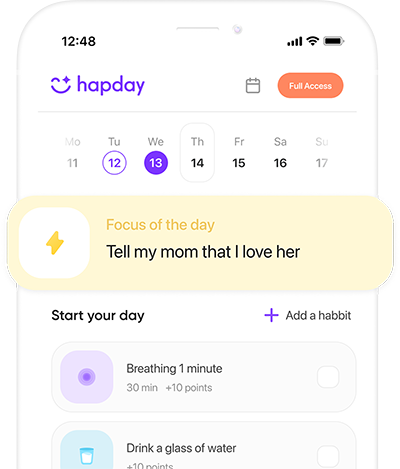
Glimpse this scenario: it’s 2 a.m., and your thoughts are running a marathon. Ever happened to you? Here’s where an app like Hapday steps in, offering on-demand breathwork guidance. Just a few deep breaths can signal your brain to chill out, triggering that all-important parasympathetic response to slow your heart rate and curb stress hormones.
How to Practice:
- Find comfort. Sit or lay down comfortably, spine aligned.
- Inhale through your nose. Let your belly rise as your lungs inflate.
- Pause, then slowly exhale through your mouth.
- Focus on your breath. Wandering thoughts? It’s OK—just bring it back to your breathing.
Five minutes a day of this grounding practice can turn the tide against stress.
Mindful Walking
Then there’s walking—not for exercise, but peace. It’s transformative.
Think of Karim, a lawyer who, during the pandemic, swapped destinations for observations. Mindful steps became his sanctuary, helping him find calm in chaos. Each step, each breath, each sound—backdrop to his newfound sense of normal.
How to Practice:
- Pause and stand. Feel your feet firmly connected to the earth.
- Step mindfully. Move slowly, noticing each motion.
- Soak in your surroundings—colors, temperatures, sounds that usually slip by unnoticed.
- Channel your inner Karim, finding tranquility with every deliberate stride.
Delving Deeper: Meditation and Body Scans
Meditation Basics
Meditation varies from simple breath awareness to vivid mental voyages.
Take Maya, post-divorce, heart-wrapped in storm clouds. Guided meditation helped her navigate these emotional waters.
“Meditation can cut anxiety symptoms by nearly 30%.”
— Research from Johns Hopkins University
How to Practice:
- Find your sanctuary. A quiet spot free from interruptions.
- Set a conducive time—begin with ten minutes if you’re new.
- Close your eyes, focus on your breath, image, or mantra.
- Thoughts will come—let them. Don’t engage; simply observe, returning to your focal point.
Body Scan for Stress Relief
Another gem is the body scan, heightening awareness and offering a release of tension.
How to Practice:
- Lie flat, eyes shut. Start with a few centering breaths.
- Shift focus through your body, pinpointing areas without altering them.
- As focus shifts, imbue each tense area with the imagined breath of relief.
Performing this promotes a peaceful awareness akin to meditation.
Mindfulness in a Digital World
In our digital ecosystem, mindfulness needn’t stop—it adapts. Hapday embodies this merge, proffering on-the-go stress management whenever you need it.
Creating a Mindful Environment
Mindfulness transcends meditation. Imagine crafting a haven around you—calm spaces, gratitude reminders—keeping digital noise at bay for your soul’s tranquility.
Techniques for Mindful Communication
In communication, it’s transformative. Listening intently—being there without crafting your reply as you “listen”—fosters deeper, less stressful interactions.
“It’s not about perfect responses, but meeting others devoid of judgment.”
— Dr. Sarah Chen, NYU
Relationships thrive under this approach.
Empowering Forward Movement
With insights and techniques, you’re now armed to wield mindfulness against stress. Remember, this isn’t about flawlessness—consistency, that’s your ally. Sometimes, stress feels like scaling Everest, but with mindfulness, it becomes a step towards peace and self-discovery.
And if continuous guidance calls your name, Hapday awaits, integrating mindfulness seamlessly into daily life. Let it be the ally you turn to in pursuing wellness.
The Bottom Line
Mindfulness is a valuable tool for managing stress effectively. Through daily practices such as breathing exercises, mindful walking, meditation, and creating a supportive environment, you can enhance your mental well-being. Remember, consistent practice is key to transforming your life. For more guidance, explore Hapday at hapday.app.
References
- JAMA Network
- Harvard University
- Johns Hopkins University
- Mayo Clinic