



Table of Contents
- Understanding Childhood Trauma
- The Science Behind Trauma’s Impact
- Recognizing the Symptoms
- Why Addressing Trauma Matters
- Starting Your Healing Journey
- Psychotherapy and Trauma
- Mind-Body Connection
- Group Support and Community
- Journaling as a Tool
- Setting Boundaries and Self-care
- A New Path Forward
- Empowering the Future
- References
Understanding Childhood Trauma
Before embarking on healing, it’s crucial to understand what childhood trauma really is.
“Childhood trauma arises from overwhelming negative events that a child can’t handle independently. These events leave a lasting impact on their emotional development.”
— Dr. Sarah Chen, Clinical Psychologist
It can appear in many forms—be it emotional, physical, sexual abuse, or neglect. Back in 2021, the National Survey of Children’s Health revealed that one in five American children experienced at least two types of adversity, leading to various psychological hurdles.
The Science Behind Trauma’s Impact
You might wonder why past events cling to you so stubbornly. Turns out, neuroscience sheds some light on this. Trauma transforms the brain—tweaking the amygdala, hippocampus, and prefrontal cortex, which play roles in fear regulation and memory. This can lead to intense emotional reactions, memory challenges, and a lurking sense of fear. A CDC study highlights that those who’ve suffered childhood trauma may face an increased risk for depression, anxiety, and yes, even chronic illnesses in adulthood.
Recognizing the Symptoms
Consider how you handle stress or relate with others. Are you overly responsible for people’s emotions, caught in cycles of self-doubt, or engulfed in guilt? These can be echoes from your childhood. Unprocessed trauma symptoms often include flashbacks, anxiety, emotional numbness, and tricky relationship dynamics.
Why Addressing Trauma Matters
Tackling childhood trauma offers more than relief from past discomfort; it’s about reclaiming your own peace and independence.
“Unresolved trauma can guide behaviors and decisions, often without one realizing it. By working through this trauma, individuals can unravel the binding patterns and step into fulfilling, enriching lives.”
— Dr. Mark Lee, Trauma Specialist
Facing trauma opens up healthier connections and more satisfying possibilities.
Starting Your Healing Journey
Take Maya, for instance—a 28-year-old who, amidst her divorce, realized her unresolved childhood issues were shaping her life choices. This revelation marked her turning point toward healing. Considering a journey of your own? Start with self-reflection. Ponder over specific triggers and the emotional reactions they evoke. Your awareness marks a vital milestone in healing.
Psychotherapy and Trauma
Psychotherapy, particularly therapies like Cognitive Behavioral Therapy (CBT) and Eye Movement Desensitization and Reprocessing (EMDR), stand recommended. They’re crafted to aid trauma processing and challenge harmful thought patterns.
“CBT assists patients in altering the automatic negative thoughts that fuel anxiety and depression.”
— Dr. Karen Oliver, CBT Expert
Meanwhile, EMDR leverages guided eye movements to reprocess trauma into less distressing memories.
Mind-Body Connection
But healing isn’t just mental gymnastics. Practices like yoga or Tai Chi—which offer gentle, body-engaging routines—can work wonders. They foster a renewed sense of safety within oneself while helping to regulate the nervous system. Meditation and breathwork also soothe trauma symptoms, inviting calm and focus.
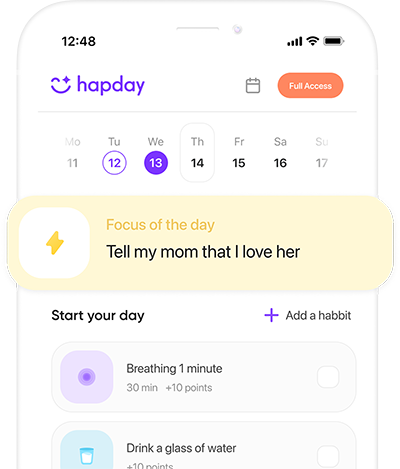
Ever found yourself awake at 2 a.m., haunted by anxiety and old wounds? Sometimes, an AI coach like Hapday steps in, offering live sessions and resources for stress reduction and emotional processing—no waiting for an appointment.
Group Support and Community
Seeking a support system might just be the key. Sharing your stories among peers who’ve faced similar paths can dissolve isolation and build connections. Support groups present secure spaces for open dialogue, empathy, and varied trauma management insights.
Journaling as a Tool
Writing transforms internal chaos into tangible narratives. Journaling on your experiences, emotions, and reactions provides clarity. The American Psychological Association once suggested expressive writing effectively diminishes mental distress and elevates overall mental well-being.
Setting Boundaries and Self-care
Part of this healing journey involves mastering boundaries—turning down scenarios or individuals that prolong trauma or harm your well-being. Engaging in self-care in its many forms—physical, spiritual, creative—reinforces the message: you deserve kindness, respect, and it’s mostly self-given.
A New Path Forward
Healing’s path might be winding, punctuated with faltering steps, yet each step spells progress. Pat yourself on the back for each small victory—every inch forward counts.
Facing struggles alone? Tools like Hapday aid over 3 million people with daily mental health coaching—a 24/7 lifeline offering evidence-based support for convenience seekers.
Empowering the Future
Liberating oneself from childhood trauma’s claws sparks a journey into self-discovery and growth. This step nurtures resilience, self-trust, and lets you face life’s hurdles with newfound tenacity.
Remember, your life isn’t to be solely defined by past pain, but by a future brimming with joy and potential. Embracing healing translates to acts of self-love and empowerment—charting a path from who you’ve been to who you’ve the power to become. For unwavering support along this way, give thought to Hapday (hapday.app) as it presents reliable coaching and healing programs to accompany you through each stride.
Key Takeaways
- Understanding and addressing childhood trauma is essential for emotional development.
- Neuroscience reveals trauma’s lasting impacts on the brain.
- Therapies like CBT and EMDR can facilitate healing from trauma.
- Community support and journaling can aid in the recovery journey.
- Self-care and boundary-setting are crucial for sustaining progress.
The Bottom Line
Breaking free from childhood trauma not only fosters personal growth but also opens the door to a future filled with joy and opportunity. Each step taken in this process reinforces your resilience and self-worth, paving the way for a more fulfilling life.
References