



Table of Contents
- Understanding the Roots of Guilt
- Why Persistent Guilt Can Be Detrimental
- Psychological Strategies to Transform Guilt
- The Power of Self-Compassion
- Cognitive Restructuring
- Emotional Release Techniques
- How to Foster Forgiveness
- Discovering Mindfulness as a Path to Freedom
- Adopting Practical Solutions
- Building a Supportive Environment
- Embrace Future-Oriented Change
Key Takeaways
- Guilt can weigh heavily on our mental well-being, impacting sleep and stress levels.
- Self-compassion and mindfulness are vital tools in mitigating guilt’s effects.
- Cognitive restructuring can help challenge negative thought patterns fueling guilt.
- A supportive community can facilitate healing and offer perspective.
- Forgiveness promotes emotional clarity and aids the journey to overcoming guilt.
Picture this: You wake up, and something feels off. There’s this invisible weight pressing down on your chest, not physical, but heavy enough to drag your spirits lower than they should be. That, my friends, is what guilt can bring into your life. It’s like running a marathon with a chain tied to your legs. Every step—harder, slower. If this resonates with you, remember you’re far from alone, and more importantly, there are steps to lighten that load.
Let’s dive into Maya’s story. She’s 28, sorting through the aftermath of a tumultuous divorce. As she’s signing off on each legal document, the guilt creeps in, whispering doubts about her role in the marriage’s demise. Sleepless nights follow, each one a mental replay of arguments past, decisions made, moments she wished she’d been better. Familiar feeling? Probably. Over 12% of folks, according to some study from the Journal of Clinical Psychology, wrestle with intense guilt on a regular basis. It’s high time we question this emotion and find ways to transform it into a source of empowerment. What if… we started today?
Understanding the Roots of Guilt
Guilt — it’s not just a modern headache. It’s got deep roots, digging back through our evolutionary history.
“Guilt has been humanity’s way of keeping social order — a reminder that empathy and community standards aren’t just buzzwords; they’re survival tools.”
— Dr. Samantha Anders, Stanford
But what if they’re outdated in today’s world, more chain than chair for those tired feet?
Recognizing guilt’s many faces is crucial: unmet expectations at work, saying no to that friend, or even something as simple as prioritizing self-care. According to the experts over at Harvard Health Publishing, such feelings often sprout from cognitive distortions—a fancy term for negative thinking patterns that blow guilt out of proportion. Understand where your guilt comes from, and you’re already unlocking the first door to your freedom.
Why Persistent Guilt Can Be Detrimental
“Chronic guilt is no trivial matter.”
— Dr. Sarah Chen, NYU
It can spark mental health problems like anxiety or depression, often arising from an inability to forgive oneself. Holding onto guilt doesn’t just twist your mind; it can mess with your sleep and stress levels—and that’s just for starters. The American Psychological Association even links it to elevated cortisol levels screaming murder on your immune system.
So, what, you ask, keeps guilt hanging around like unwelcome company? It’s often those sneaky ingrained beliefs, norms hammered into us by society’s insistent standards of perfection. Once you start recognizing and challenging these beliefs, that’s when you can trade self-blame for understanding and growth.
Psychological Strategies to Transform Guilt
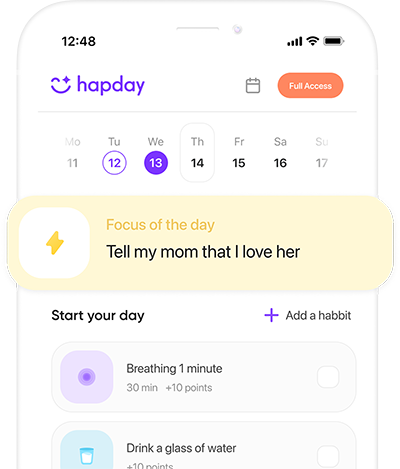
Picture those nights when you’re wide awake, stabbing thoughts of something you said kicking around. You’re exhausted, it’s late, and peaceful sleep is nowhere in sight. This is where accessible tools, like AI life coaching apps, can work wonders. Over 3 million folks have turned to platforms like Hapday for their daily mental health tune-ups. These tools, built on evidence-based strategies, can help you work through guilt—especially when traditional support lines are busy.
The Power of Self-Compassion
And here’s a neat trick called self-compassion.
“Treat yourself with the same kindness you’d extend to a dear friend.”
— Dr. Kristin Neff
Many psychologists agree—it can dampen guilt’s fiery grip. Her research shows that self-compassionate folks tend to sidestep the usual pitfalls of anxiety and depression linked with guilt.
This isn’t just theory—self-compassion entails self-kindness, acknowledging our shared humanity, and staying mindful. Next time guilt knocks, pause and offer yourself a bit of the understanding and encouragement you deserve.
Cognitive Restructuring
Now, here’s a tool with teeth—cognitive restructuring. This approach, pioneered by Dr. Aaron Beck, involves identifying and disputing those pesky negative thoughts fueling your guilt. You’re literally teaching yourself to view the world through a balanced, realistic lens. The practice? Write down those trigger thoughts, and dispute them by evaluating the evidence on both sides. Over time, this reshapes your inner dialogue from punitive self-talk to something far kinder.
Emotional Release Techniques
Let’s circle back to Maya. She found solace in emotional release practices like journaling and expressive writing. Scientists agree that even 15 minutes of writing about emotional experiences can chip away at your guilt and distress levels. Expressive writing isn’t just about jotting down events—it’s digging into your feelings for a true emotional catharsis.
How to Foster Forgiveness
Forgiveness—it’s vital, especially when guilt chains you to past actions affecting others. This isn’t about erasing the past. Instead, it means acknowledging mistakes and learning from them.
“Forgiveness can slash stress and enhance mental clarity.”
— Dr. Frederick Luskin, Stanford Forgiveness Project
Start small—try guided meditations or acts of kindness focused on you and your journey of growth.
Visualize forgiveness as a soft blanket enveloping your hurt, reducing guilt’s sharp edges. You’re not just dismissing lessons learned; you’re embracing them as part of your ever-evolving story.
Discovering Mindfulness as a Path to Freedom
Ever heard of mindfulness? This isn’t just trendy—Harvard Medical School finds it a solid game-changer for reducing emotional distress and boosting resilience. By tethering yourself to the present, not the guilt-ridden past or anxious future, you cultivate acceptance. It’s as simple as pausing to observe your breath whenever guilt looms.
Mindfulness teaches that while emotions like guilt will pass through your experience, they don’t carve out your identity. You are more—infinitely more—than your worst moments.
Adopting Practical Solutions
Picture it’s past midnight, your mind racing and peaceful sleep elusive. With AI coaches, like Hapday, offering a steady stream of soothing advice, new paths to peace may unfold. It’s something worth considering alongside traditional techniques like therapy.
Building a Supportive Environment
Community matters. Tapping into networks of friends, family, or professionals can radically reshape guilt and foster healing. Surround yourself with folks offering nonjudgmental ears and open hearts.
Opening up might be daunting, but a trusted circle can provide vital perspective, empathy, and strength. This rich interconnection is crucial for emotional well-being and offsets isolation often born from guilt.
Embrace Future-Oriented Change
Apprehensive about leaving guilt behind? You’d not be alone. If guilt’s gripped you for awhile, change feels risky. Yet with change comes the opportunity to deepen your understanding and discover your authentic path.
You’re not meant to hold onto guilt forever. Liberation is within reach—an opportunity to understand the masterpiece you already are. The toolkit? Empathy-driven guidance backed by tools and techniques designed to dissolve guilt and steer you toward fulfillment.
The Bottom Line
Breaking free from guilt is a transformative journey. By adopting self-compassion, mindfulness, and practical strategies, you can reframe your experiences and embrace a healthier narrative. Remember, you are not defined by your guilt; instead, focus on your growth and the positive changes you can cultivate in your life.
References
American Psychological Association – apa.org/monitor
Harvard Health Publishing – health.harvard.edu
Journal of Clinical Psychology – apa.org/news
National Institutes of Health – ncbi.nlm.nih.gov
Stanford University – wellmd.stanford.edu
Harvard Medical School – health.harvard.edu
Beck Institute – beckinstitute.org