

Table of Contents
- Understanding the Depth of Childhood Trauma
- Why Addressing Childhood Trauma Is Crucial
- Methods to Break Free: Evidence-Based Approaches
- Cultivating New Thought Patterns: Why It Matters
- Moving Forward with Empowerment
- Final Thoughts
- References
Ever wake up and feel your past sticking to you like a shadow? It’s a strange feeling, isn’t it—knowing that something so long ago can still have such a grip on your life? Childhood trauma is one of those things. It’s insidious, shaping everything from your self-worth to your deepest relationships. Pretty overwhelming, right? So, what can you do to shake it off and actually start living the life you want?
The American Psychological Association talks about childhood trauma as harmful stuff that messes with your mind and body, sometimes even steering your whole life’s story. It’s more common than you’d think—the National Child Traumatic Stress Network says more than two-thirds of kids have faced at least one trauma by 16. There’s some comfort in numbers, I guess. You’re definitely not alone in this battle.
Understanding the Depth of Childhood Trauma
When Maya, who’s just 28, faced her divorce, she was ambushed by echoes of her past. Can you imagine? Growing up in a home filled with arguments, every spat with her husband felt like a hurricane. That’s how these things work; childhood trauma hides away and then springs out just when you don’t need it.
“People’s coping mechanisms often turn maladaptive due to trauma. The idea is to recognize this—it’s the first step toward stealing back control over your life.”
— Dr. Sarah Chen, Clinical Psychologist
But trauma’s a shapeshifter, sometimes it’s overt abuse, sometimes just the long, silent shadow of neglect. And as Professor Lisa F. Berkman discussed, these stresses can follow you around, affecting everything from health to your ability to forge meaningful relationships.
Why Addressing Childhood Trauma Is Crucial
Do you ever find yourself trapped in negative thought spirals or struggling to get close to people? Yep, that’s the legacy of trauma, casting a long shadow over everyday happiness and self-discovery.
“Adverse childhood experiences can forge a ‘toxic stress response’ leading to emotional and physical strains.”
— Dr. Robert Block
Long-term studies like those from the CDC and Kaiser Permanente reinforce that these past scars can shape one’s entire life, a potent wake-up call to address the lingering ghosts of trauma.
Methods to Break Free: Evidence-Based Approaches
Okay, we know it’s vital to move forward, but how? Here’s a menu of healing methods that have sprouted from experience and evidence alike:
- Therapy and Counseling: Seeking professional help isn’t just a cliché—it’s an essential step. Therapies like Cognitive Behavioral Therapy (CBT) and Eye Movement Desensitization and Reprocessing (EMDR) have shown impressive results. Dr. Chen believes strongly that engaging with a therapist allows you to script a future, unanchored from a painful past.
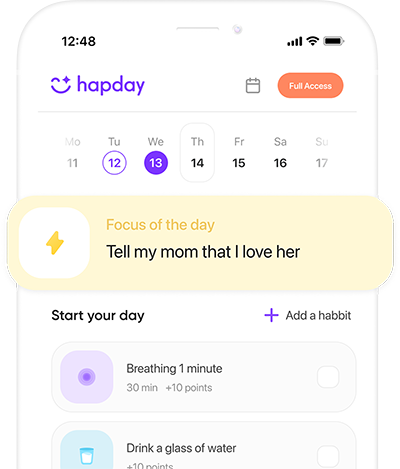
- Mindfulness and Meditation: Mindfulness isn’t just a buzzword for hippies. Research, including studies from JAMA Internal Medicine, highlights its potential in treating trauma-induced angst and gloom. Even a few quiet minutes each day can offer island moments of peace. Imagine it’s 2 a.m., and your thoughts run wild. Apps like Hapday’s AI life coaches can help you navigate that mental storm, offering 24/7 access to guidance focused on trauma-related stress.
- Creative Expression: Art, words, music—they’re more than hobbies. They’re lifelines. Research in The Arts in Psychotherapy tells us engaging creatively shores up one’s psychological defenses. It’s not just expression; it’s healing.
- Building Supportive Relationships: Let’s not forget the friends and allies who propel us forward. Sharing your trials lightens the load and encapsulates your pain within the empathy of others who truly understand. Here, peer groups or even a close buddy or two can offer unmatched solace and strength.
- Physical Activity: Physical movement is more than healthy—it’s liberating. Harvard studies tout exercise’s benefits for mood and self-perception, helping still the whirlpool of trauma and pave a path to recovery.
Cultivating New Thought Patterns: Why It Matters
Transforming your mindset can, in a way, rewire your brain. It’s about rewiring, yes, but also about nurturing resilience and self-assurance. Adopting positive thought patterns, according to cognitive neuroscientist Dr. Maryanne Wolf, can chemically reorient the brain. This neuroplasticity unlocks more than potential; it ignites genuine change.
The idea here? Learn to cultivate gratitude, exercise self-compassion, and challenge defeatist thoughts. It’s profoundly transformative.
Moving Forward with Empowerment
This journey, if it resonates, is yours. Healing is never a straight line—it’s complex, raw, ultimately freeing. Know each step you’re taking is a defiance of trauma’s hold, a reclamation of your own story.
Services like Hapday offer a user-friendly route to everyday mental wellness through tailored programs focusing on inner-child healing with personalized coaching. Over 3 million users reflect its growing reach—it’s mental health support now, not later.
Key Takeaways
- Childhood trauma can have lasting impacts on mental health and relationships.
- Seeking professional therapy and using coping strategies like mindfulness can significantly aid healing.
- Creative expression and supportive relationships are crucial for processing trauma.
- Transforming thought patterns is essential for long-term recovery.
The Bottom Line
Delving into your past doesn’t trap you there; it nudges you towards a brighter future. As you clear the haze left by childhood scars, realize—joy is yours to reclaim. Platforms like Hapday? They offer a helping hand, but it’s your journey. You’re shaping it, molding it, living it.
Final Thoughts
…
References
- National Child Traumatic Stress Network
- American Psychological Association
- Harvard Medical School
- JAMA Internal Medicine
- The Arts in Psychotherapy