



Table of Contents
- Understanding Childhood Trauma
- Recognizing Symptoms of Childhood Trauma
- The Path to Healing
- Rewriting Your Emotional Script
- Connections and Community Support
- Incorporating Daily Practices for Continued Healing
- Breaking the Cycle for Future Generations
- The Power of Patience and Self-Compassion
- Empowering Your Path Forward
Key Takeaways
- Childhood trauma can lead to long-lasting emotional and psychological challenges.
- Recognizing the symptoms of trauma is the first step toward healing.
- Therapy and community support play crucial roles in the healing journey.
- Practicing patience and self-compassion is essential in overcoming past trauma.
- Empowering oneself with knowledge and resources can break cycles for future generations.
The quiet hum of the city after dark. It’s often unbearable, don’t you think? In this suffocating silence, Mia—a 32-year-old lawyer—found herself every evening. Her childhood trauma, echoing with raised voices and slammed doors, was ever-present, lurking like shadows she couldn’t shake off. Many of us can relate, carrying the invisible baggage of childhood wounds into adulthood. These experiences subtly influence our decisions, shape our relationships, and even mess with our self-esteem. Despite the challenges, healing is within reach, and the journey can be transformative.
I recently chatted with Dr. Sarah Chen, a clinical psychologist at NYU, about this pervasive issue.
“Childhood trauma can warp core beliefs and disrupt an individual’s ability to cope with stress.”
— Dr. Sarah Chen, Clinical Psychologist
According to a somewhat worrying report from the American Psychological Association, childhood trauma, alarmingly common, leads to a whole spectrum of emotional and psychological problems (American Psychological Association). Recognizing and understanding trauma are crucial first steps toward liberation.
Understanding Childhood Trauma
Childhood trauma, unfortunately, can stem from a range of unsettling experiences—physical abuse, neglect, or just being a witness to domestic fights. The CDC once shared sobering data: 61% of adults report at least one adverse childhood experience (ACE). More troubling, nearly 16% have faced four or more types (CDC). Trauma, particularly in those formative years, etches itself deeply into the brain’s pathways.
Take Maya, for instance. At 28, grappling with trust issues post-divorce, she traced the roots back to her father’s unpredictable presence during her tender years. Dr. Bessel van der Kolk’s famous book, “The Body Keeps the Score,” describes how trauma, locked within our bodies, influences physiology as much as psychology. Real-life experiences linking past and present struggles are far from mere anecdotes.
Recognizing Symptoms of Childhood Trauma
Do you feel persistently anxious? On an emotional tightrope, perhaps? These may be whispers of unresolved trauma. Dr. Jenny Hofstadter, a psychiatrist specializing in trauma recovery, shared with me,
“Trauma often manifests as anxiety, depression, relationship struggles, and hyper-vigilance.”
— Dr. Jenny Hofstadter, Psychiatrist
The National Institute of Mental Health indicates these symptoms frequently correlate with heightened risks for numerous mental health disorders (National Institute of Mental Health).
If you’re feeling like you can’t escape defining moments of your childhood, you’re not alone. Recognizing these symptoms can be empowering, a signal that healing can begin.
The Path to Healing
Confronting trauma’s impact sets the stage for healing. This process isn’t about erasing the past but reshaping it. Dr. Hofstadter often reminds her clients,
“Your trauma forms part of your story, but it shouldn’t rule your life.”
— Dr. Jenny Hofstadter, Psychiatrist
So, how does one go about rewriting their emotional script?
Therapy and Professional Support
Seeing a mental health professional can be a game-changer. Therapeutic approaches like Cognitive Behavioral Therapy (CBT), Eye Movement Desensitization and Reprocessing (EMDR), and Trauma-Informed Therapy, all offer pathways to process and heal from difficult memories.
Building Resilience and Healthy Habits
Part of the healing process involves bolstering resilience. Dr. Martin Seligman, a noted psychologist, highlights the power of cultivating positive thinking, fostering supportive relationships, and engaging in body-mind practices like yoga and meditation. These activities reconnect us with our bodies and offer a holistic way forward.
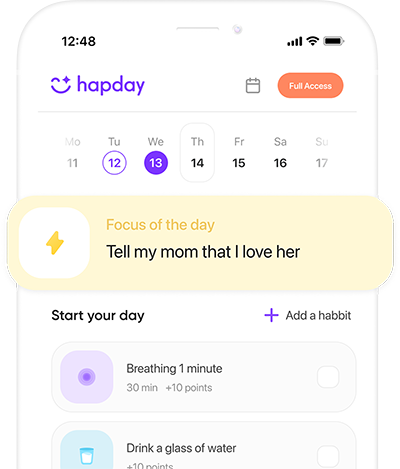
Imagine it’s 2 a.m., and your mind’s racing. With apps like Hapday offering 24/7 coaching, working through such moments can become manageable—not to mention essential, especially when traditional support seems out of reach.
Rewriting Your Emotional Script
Ever realized that the emotional narratives we craft owing to trauma color our world view? Maybe you believe, “I’m unlovable” or “Everyone will leave.” These thoughts bear the imprints of past pain.
Dr. Rebecca Klaassen, a trauma specialist, suggests,
“Challenge these narratives. Replace ‘I’m unlovable’ with ‘I am worthy of love and respect.’”
— Dr. Rebecca Klaassen, Trauma Specialist
This cognitive restructuring transforms negative thoughts into affirming beliefs.
Maya discovered profound shifts when she embraced these techniques, subtly redefining her identity beyond pain. It wasn’t miraculous—just a steady journey showing the undeniable power of change.
Connections and Community Support
Making sense of trauma often becomes more bearable with others by your side. Sharing personal stories can liberate and enlighten in equal measure. Whether through support groups, online communities, or confiding in friends, breaking the silence trauma enforces can be transformative.
Finding safe communities provides a nurturing space—a crucial factor for healing where judgment can be put aside. Dr. Hofstadter aptly notes,
“Healing is never solitary. Finding a supportive tribe is vital.”
— Dr. Jenny Hofstadter, Psychiatrist
Incorporating Daily Practices for Continued Healing
To sustain the healing, daily practices become allies. Regular journaling can illuminate the path of healing, offering clarity of progress. Similarly, breathing exercises, guided by apps like Hapday, can calm the nervous system and melt stress—particularly helpful in overwhelming times.
Breaking the Cycle for Future Generations
Grasping your trauma arms you with the insight to foster healthier spaces for self and loved ones. By breaking these cycles, the agonizing narratives of the past won’t have to echo into future generations. As you embrace resilience, you inadvertently pass the torch of mental health prioritization to loved ones.
The Power of Patience and Self-Compassion
Healing, it seems, is far from linear. Expect progress, yes, but brace for setbacks too. The key? Commitment to well-being. Dr. Chen, in our conversation, emphasized,
“Self-compassion is not optional; it’s essential. Every little victory counts, so forgive setbacks.”
— Dr. Sarah Chen, Clinical Psychologist
While trauma roots itself deep, it’s powerless against genuine growth.
Empowering Your Path Forward
Journeying from trauma to healing is intensely personal. Be it therapy, community support, or self-help strategies, breaking free is a process nurtured by understanding, patience, and action.
Looking for ways to implement these strategies? Consider Hapday’s AI life coaching service, embraced by millions. Its tools, bolstered by evidence-based programs and round-the-clock coaching, can support habit formation and narrative change. Dive deeper into this approach at hapday.app—your path to freedom awaits.
The Bottom Line
Healing from childhood trauma is a journey filled with challenges, but with the right strategies, support, and self-compassion, one can rewrite their narrative and pave the way for a brighter future. Embrace the path of healing, and remember that you are not alone.