

Table of Contents
- Understanding Mental Health Coaching
- Differentiating Therapy and Coaching
- Tools and Techniques in Mental Health Coaching
- Benefits of Mental Health Coaching
- Who Can Benefit From Mental Health Coaching?
- Real-World Examples
- How to Choose the Right Mental Health Coach
- A New Era of Self-Help
As the sky surrendered its last colors to the night, Maya found herself alone in her apartment, lost in a tempest of anxiety and doubt. The end of her marriage was still a fresh wound, and the silence around her seemed to make the weight of her emotions even more unbearable. She was 28, caught in life’s complex labyrinth. Absentmindedly scrolling through her phone, she stumbled upon a conversation about mental health coaching. A term unfamiliar to her, yet strangely intriguing. Could this be the support she desperately needed?
The concept of mental health coaching is not new, but its popularity has certainly spiked in recent years, offering something different for those weary of traditional therapy. Instead of focusing solely on past traumas, it gears towards enhancing emotional strength and personal development.
“Mental health coaching is about empowering people. It’s not just about setting goals—it’s about crafting a path forward.”
— Dr. Sarah Chen, Clinical Psychologist
If you’re juggling the burdens of modern life—career uncertainties, strained personal relationships, or existential questions—you might wonder, is mental health coaching the missing piece? What exactly do coaches do, and how does this differ from sitting in a therapist’s office once a week?
Understanding Mental Health Coaching
To crack this, let’s untangle what mental health coaching truly means. It’s a partnership—a coach collaborating with you to identify life areas yearning for improvement. It hones in on skills such as stress management, emotional regulation, and cultivating resilience. Unlike therapy, it’s not buried in past analysis but is a future-oriented journey.
“Coaching operates on the premise that individuals can find their own solutions. We—coaches—do not lead, but guide with a framework that lets clients steer their own journey.”
— Dr. Michael Adams, Certified Mental Health Coach
Differentiating Therapy and Coaching
There’s an important nuance here—how does coaching stand apart from therapy? Imagine yourself on life’s winding roads. Therapy is that process where you glance at the rearview mirror, trying to understand why you took certain turns. Coaching? It’s more about charting the road ahead.
Think of it in driving metaphors. With therapy, you’re unraveling the detours that shaped your path. Coaching, on the other hand, keeps your gaze firmly fixed forward, prepping you for what lies around the next bend.
Both have their place and purpose. Some people find that a mix of both coaching and therapy gives them the best toolkit for tackling life’s challenges.
Tools and Techniques in Mental Health Coaching
Mental health coaching isn’t just talking; it’s an active process employing:
- Goal Setting: Establish the cornerstone of your coaching journey with clear, realistic objectives.
- Cognitive Strategies: Borrowing from cognitive behavioral therapy to help rethink those negative patterns.
- Mindfulness: Aiding in staying grounded through principles of mindfulness.
- Emotional Intelligence: Increasing awareness of your own feelings and improving how you engage with others.
- Progress Tracking: Journaling or using habit trackers to keep tabs on your progress, adjusting as necessary.
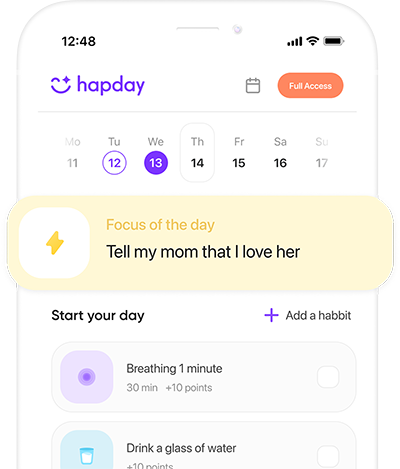
It’s 2 a.m., the world asleep, and your mind’s still racing. That’s when an app like Hapday could be a quick fix, offering immediate AI-assisted coaching before your next face-to-face session.
Benefits of Mental Health Coaching
What makes mental health coaching significant? It’s the tailored approach, where you’re not only heard but understood and supported. Coaches celebrate your wins, no matter how tiny, and offer a judgment-free space for all emotions.
Flexibility: Digital platforms allow you to connect from anywhere—video, chats, DIY worksheets—getting support into even the busiest schedules.
Who Can Benefit From Mental Health Coaching?
So, who stands to gain? Anyone craving growth, clarity, or emotional steadiness. Let’s break it down:
- Career Pivots: Considering the leap to a new profession? A coach can pinpoint goals and guide action plans.
- Life Changes: From becoming a parent to starting anew in a strange city, coaching provides support scaffolding through transitions.
- Ongoing Wellness: You might have good habits now, but staying consistent is key. Coaching reinforces discipline and accountability.
Real-World Examples
There’s Maya, at first lost post-divorce, now thriving thanks to coaching that helped dismantle limiting beliefs. Or think about Daniel, the 25-year-old developer stuck career-wise until a coach unearthed his passion for user-friendly designs, prompting a pivotal career shift. Apps like Hapday are making such stories common, smashing barriers with accessible coaching for over 3 million users.
How to Choose the Right Mental Health Coach
Finding the right coach? Pivotal. Consider these pointers:
- Credentials Matter: Seek out those with psychology or coaching certification.
- Connection: The rapport with your coach should be genuine.
- Methodology: Their approaches should align with your preferences.
- Testimonials: Hear from others—not ads—about their experiences.
A New Era of Self-Help
In our high-speed world, mental health coaching shines brightly, navigating the nuanced challenges many face. It’s not just a service; it’s a paradigm shift from reactive to proactive self-care. As Dr. Sarah Chen puts it,
“Coaching aligns with our innate hunger for growth, equipping us with tools for sustained transformation.”
— Dr. Sarah Chen, Clinical Psychologist
Feeling overwhelmed? Real help is out there. With over 3 million users, Hapday is ready to provide evidence-based coaching, equipping you with habits that could just change your life. Explore more at hapday.app and take that pivotal first step toward self-discovery now.
Key Takeaways
- Mental health coaching offers future-oriented support as opposed to traditional therapy’s focus on past analysis.
- Coaching emphasizes personal empowerment, goal setting, and skills like stress management and emotional regulation.
- Digital platforms and AI-assisted apps are making coaching more accessible to a wider audience.
- Finding the right coach is crucial and should involve consideration of credentials, connection, methodology, and testimonials.
- Mental health coaching is a proactive approach to self-care, aligning with individuals’ needs for growth and clarity.
The Bottom Line
Mental health coaching represents a transformative approach to navigating life’s challenges, empowering individuals with the support and tools needed to foster emotional growth and resilience. As awareness and accessibility to coaching increase, everyone can benefit from this proactive avenue toward well-being.
References
- American Psychological Association
- Mayo Clinic
- National Institute of Mental Health
- Centers for Disease Control and Prevention