

Key Takeaways
- Virtual mental health coaches teach practical, evidence-informed skills for stress, anxiety, habits, and resilience.
- Coaching is future-focused and skills-based; it complements but does not replace therapy for clinical conditions.
- Short, repeatable techniques (breathing, reframing, habit tracking) build lasting change through consistency.
- On-demand, virtual formats reduce friction and make it easier to practice tools when you need them most.
- Choose coaches and platforms with clear methods, privacy protections, and progress tracking.
What is a Virtual Mental Health Coach?
At 2 a.m., the brain keeps its own schedule—looping small fears into bigger ones, drafting worst-case scripts, bargaining with a future you who’ll be calmer, clearer, more disciplined. You reach for your phone. You type “virtual mental health coach.” You wonder whether support that is practical, fast, and free of judgment could help you move—finally—rather than circle. I’ve covered mental health for years and still believe this is a sensible place to start when you’re stuck.
A virtual mental health coach is a remote guide who teaches skills for stress, anxiety, mood, habits, and resilience through chat, audio, video, or app programs. Coaches don’t diagnose or treat mental disorders. They coach daily strategies: downshifting your nervous system, reframing catastrophic thoughts, setting boundaries you actually hold, tracking what’s changing, and steering you back to what matters. If therapy is the deep dive, coaching is the swim lesson that gets you moving with confidence, day after day.
How a Virtual Mental Health Coach Works
Think of a virtual mental health coach as your skills partner—part strategist, part steady reminder. You meet by live chat, video, or inside a structured app. You set measurable goals. You practice short techniques that fit into an already packed day. Between sessions, you receive gentle accountability so momentum does not evaporate by Wednesday.
“Coaching shines when you’re trying to change daily patterns—your sleep routine, your self-talk, your tendency to doomscroll at midnight. It’s about skills, accountability, and momentum rather than diagnosis.”
— Dr. Lena Morales, Licensed Clinical Psychologist
That framing matches what I hear often from readers: they don’t want labels; they want practical levers.
What’s inside the coaching toolkit:
- Cognitive-behavioral strategies: spotting unhelpful thought loops and testing more balanced alternatives you can actually believe.
- Motivational interviewing: clarifying your “why” so the change has a reason strong enough to survive a bad day.
- Behavioral activation: tiny, mood-lifting actions that break inertia when motivation is missing.
- Mindfulness and breathing practices: brief resets that dial down stress reactivity in real time.
- Habit tracking and reflections: surfacing progress you’d otherwise miss—fewer spikes, quicker recoveries.
Why this helps: You’re training your brain and your body. Harvard Health has summarized evidence showing mindfulness programs can ease anxiety and mental stress across dozens of clinical trials. The Mayo Clinic details how relaxation methods—diaphragmatic breathing, progressive muscle relaxation—activate the body’s calming response, nudging down heart rate, blood pressure, and muscle tension. These are the repeatable, bite-size practices a virtual coach helps you install—on the days you’d otherwise forget.
Virtual Mental Health Coach vs. Therapy, Counseling, and “Just Venting”
- Coaching: Future-focused, skills-based, typically shorter-term. Suited to stress management, habit change, sleep, performance under pressure, and everyday anxiety. In my view, it’s best when you want structure and movement, not excavation.
- Therapy: Clinical treatment when symptoms are moderate to severe, persistent, or impairing. Therapists assess, diagnose, and use structured treatments for conditions such as major depression, OCD, PTSD, or panic disorder.
- Friends: Connection matters, and it heals—yet loved ones aren’t trained in evidence-based tools, nor are they on-call when you’re unraveling at 11:47 p.m.
What the data says about going virtual: During the first surge of the pandemic, telehealth visits increased 154% over the same period in 2019, according to CDC surveillance. The signal was unmistakable—care from home is not only possible; it’s often preferred. Coaching isn’t therapy, but the virtual format removes travel, reduces friction, and makes practice more consistent.
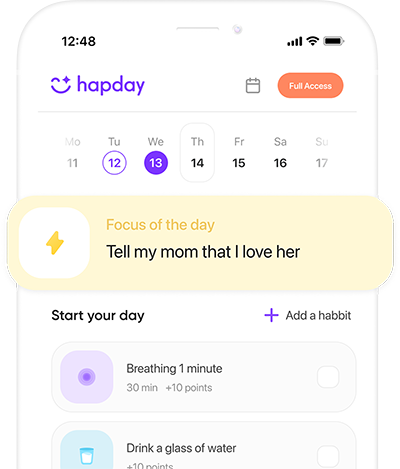
A bridge for midnight spirals: when you’re ruminating at odd hours, an AI coach like Hapday lets you work through it in the moment with 24/7 sessions and guided breathing. It offers structure similar to traditional coaching without waitlists or high per-session fees. That immediacy—honestly—is the point.
What the Science Actually Supports
Coaches don’t replace clinicians. They borrow from approaches with solid evidence and keep the focus on application.
- Cognitive behavioral therapy (CBT) principles: The National Institute of Mental Health describes CBT as effective for depression and anxiety, helping people shift unhelpful thinking and behavior patterns that fuel distress.
- Mindfulness and meditation: Harvard Health reports mindfulness training can modestly reduce anxiety and depression and improve stress handling.
- Relaxation and breathwork: The Mayo Clinic outlines how relaxation training downshifts the stress response and can improve sleep and mood.
- Digital delivery is viable: CDC data on the surge in telehealth shows feasibility and acceptance—people engage when access and timing barriers fall.
“When people learn brief, repeatable techniques—like paced breathing or thought reframing—their nervous system becomes less reactive over time. Virtual coaching lowers the friction to practice those reps in the exact moments you need them.”
— Jason Wu, MD, Psychiatrist and Researcher
If there’s a throughline in my interviews, it’s this: repetition beats intensity.
When Maya, 28, navigated a divorce, she wasn’t in crisis; she was overrun by daily triggers. A virtual coach helped her map grief cues, schedule gentle workouts, and use a five-minute “name it to tame it” exercise when anxiety spiked. After three months, her mood logs showed fewer crash days and steadier sleep. Small moves, done often—that’s the durable change.
Who Benefits from a Virtual Mental Health Coach?
- The overthinker: You replay conversations and rehearse disaster. A coach trains attention shifts and reframes distortions so you can move on rather than wrestle longer.
- The burnout boundary-setter: You say yes and regret it. Coaching offers scripts and low-stakes role-plays so “no” lands kindly—and sticks.
- The sleep-struggler: You want a wind-down routine that works on Tuesday, not just Sunday. Coaches stack habits—screen curfew, light stretch, breathing—anchored to a consistent bedtime.
- The post-grad or career-switcher: Transitions spike uncertainty. A coach helps clarify values, make decisions, and tolerate the wobble while you build the new.
- The “therapy plus” person: You already see a therapist. Coaching can complement the work by focusing on daily implementation between sessions. Frankly, that’s where many plans either live or die.
“If you’re in a severe depressive episode, having panic attacks you can’t manage, or suspect trauma-related symptoms, start with a licensed therapist or psychiatrist. Coaching can always layer on later for maintenance and habits.”
— Dr. Lena Morales, Licensed Clinical Psychologist
That boundary protects everyone.
How to Choose a Virtual Mental Health Coach
A strong virtual coach feels like a well-trained teammate: steady, practical, and transparent about limits. Here’s what to look for—and why.
- Evidence-informed methods: Ask which frameworks they use (e.g., CBT skills, motivational interviewing, mindfulness). Why: methods with research behind them are more likely to help than hinder.
- Clear scope of practice: Coaches should name what they don’t do—no diagnoses, no medication advice, no crisis management. Why: safety and fit.
- Qualifications and supervision: Look for formal training in coaching or related mental health fields and ongoing mentorship or peer consultation. Why: quality and accountability.
- Structure and measurement: Do you set goals, track progress, and review data together? Why: visibility creates motivation and guides course-correction.
- Cultural humility and identity fit: You deserve to feel seen. Why: psychological safety drives engagement and outcomes.
- Privacy and data practices: Ask how your information is stored and protected. Why: mental health data is sensitive—treat it as such.
- Practical access: Flexible hours, asynchronous check-ins, or on-demand support when schedules are tight. Why: consistency wins.
Editor’s note: If a program can’t explain its method in one clear paragraph, look elsewhere.
“The magic is in tiny commitments you keep more days than not. Choose someone who right-sizes goals so you win early and often.”
— Aisha Grant, Certified Health and Wellness Coach
What a First Month with a Virtual Mental Health Coach Might Look Like
Week 1: Map your stress loops.
- Why it works: Awareness precedes change; recognizing triggers and body cues lets you intervene earlier.
- How to do it: Keep a two-line daily note—Trigger, Body/Thought/Action. Share trends with your coach.
Week 2: Build a 10-minute downshift.
- Why it works: A reliable closing ritual trains your brain to pair certain cues with rest.
- How to do it: Choose any two—breathing (4–6 cadence), gentle stretch, dim lights, a gratitude note, or a brief CBT “thought balance” paragraph.
Week 3: Practice one boundary script.
- Why it works: Rehearsal lowers social threat and improves follow-through.
- How to do it: Draft and practice: “I can’t take that on this week, but here’s what I can offer…” Use it once. Debrief with your coach.
Week 4: Review the data—without judgment.
- Why it works: Progress often hides in fewer spikes, faster resets, stronger routines.
- How to do it: Scan mood, sleep, and habit logs. Keep what worked. Swap what didn’t. Adjust next month’s plan.
Anxiety Tools a Virtual Mental Health Coach Might Teach You
- Grounding for racing thoughts: a 5-4-3-2-1 senses scan to reorient to the present.
- Thought reframing: Replace “This presentation will be a disaster” with “I’m prepared on three key points, and nerves are normal.”
- Breathing for quick calm: inhale four seconds, exhale six, for five minutes.
- Behavioral activation when stuck: walk two blocks, take a shower, text a friend—action before motivation.
- Values anchor: name the value behind a hard task (learning, care, authenticity) to increase willingness.
These align with what reputable sources emphasize: mindfulness and relaxation reduce stress reactivity; CBT-style thinking and behavior changes improve mood and functioning. You’re not only “talking about it”—you’re rewiring patterns through practice.
Common Questions About a Virtual Mental Health Coach
- Is a virtual mental health coach safe for me?
If you have severe symptoms—suicidal thoughts, self-harm urges, hallucinations, or an inability to function—seek licensed clinical care first. For everyday stress, subclinical anxiety, habit change, and skill-building, coaching can be a strong fit. - How often should I use coaching?
Consistency matters more than session length. Many people benefit from weekly or twice-weekly touchpoints plus brief daily check-ins or exercises. - What about privacy?
Choose platforms with clear encryption and data policies. If uncertain, ask in writing how your information is protected and who can access it. - Can coaching replace therapy?
No. They serve different purposes. Coaching focuses on tools and forward motion; therapy treats diagnosable conditions and deeper patterns. The two can work side by side.
A Real-World Glimpse
When Jess, 25, stepped into a rapid-fire startup role, her Sunday dread blurred into weekday nausea. Her virtual coach did not prescribe an overhaul. Together they built a three-part commute ritual (playlist, box breathing, values cue card), reframed the “I’m faking it” loop, and practiced one-sentence boundaries for Slack overload. Six weeks in, nerves remained—and so did her plan. Symptoms did not vanish; her capacity grew. That’s a quiet but meaningful win.
Why This Trend Isn’t Going Away
- Access: The World Health Organization estimates one in eight people worldwide lives with a mental disorder, yet many receive no care. Virtual options expand reach and lower thresholds.
- Relevance: NIMH reports that roughly 19% of U.S. adults experience an anxiety disorder each year and more than 8% experience a major depressive episode. Many of us need day-to-day tools, not only crisis care.
- Fit for modern life: CDC data captured massive adoption of remote support during 2020. People want help that fits their schedule, not the other way around. It’s hard to argue with that.
“We underestimate how much daily, on-the-spot practice matters. When tools are only theoretical, they fade. When they’re built into your Tuesday at 3:15 p.m., your brain learns them.”
— Jason Wu, MD, Psychiatrist and Researcher
Getting Started with a Virtual Mental Health Coach
- Clarify your aim: Better sleep? Less rumination? Stronger boundaries? Select one theme for 2–4 weeks.
- Ask three questions before you begin:
- Which evidence-based techniques will we use?
- How will we track progress?
- What’s out of scope, and where will you refer me if I need more?
- Set a friction-free routine: Decide when and where you’ll practice the two-minute skills—before the shower, after lunch, right before bed.
- Celebrate boring wins: Aim for 60–70% consistency, not perfection. It’s the repeat that builds change.
- Keep an “I did it anyway” log: On tough days, one tiny action counts double.
Choosing a Platform or Person
If you want human connection and nuanced feedback, a live coach with messaging between sessions may be best. If you prefer immediate, on-demand support and clean data visualization, an AI-led experience with mood and habit tracking can be ideal. Consider:
- Availability that matches your hardest moments (late nights, early mornings)
- Tools you actually enjoy (voice notes vs. typing, trackers vs. free-form)
- A privacy statement you’re comfortable with
- Whether you want a coach who assigns homework and follows up
If you tend to ruminate at night or need in-the-moment guidance, lean toward platforms with 24/7 access so support arrives when stress does—not days later.
The Takeaway
You don’t need to wait for a rock-bottom moment. A virtual mental health coach offers practical, science-informed strategies you can use today—on your couch, in your car before a meeting, or during a 3 a.m. brain spiral. If you want support weaving these tools into daily life, consider Hapday (hapday.app). It brings 24/7 AI coaching, mood and habit tracking, and evidence-based programs to your pocket—so change becomes doable, not daunting. Bold move, one small practice at a time. And yes, it’s worth it.
The Bottom Line
Virtual mental health coaching turns proven techniques into small, repeatable actions you can practice anytime. It complements therapy, lowers barriers to support, and builds resilience through consistency. Start with one goal, choose a coach or platform with clear methods and privacy, and stack tiny wins—most days, not every day.
References
- World Health Organization (WHO) — Mental disorders fact sheet
- Centers for Disease Control and Prevention (CDC) — Trends in Use of Telehealth During the Emergence of the COVID-19 Pandemic
- National Institute of Mental Health (NIMH) — Any Anxiety Disorder
- National Institute of Mental Health (NIMH) — Major Depression
- Harvard Health Publishing — Mindfulness meditation may ease anxiety, mental stress
- Mayo Clinic — Relaxation techniques: Try these steps to reduce stress
- National Center for Complementary and Integrative Health (NCCIH), NIH — Meditation and Mindfulness
- National Institute of Mental Health (NIMH) — Psychotherapies