



Table of Contents
- Understanding Procrastination
- Week 1: Setting the Groundwork
- Week 2: Developing New Habits
- Week 3: Building Accountability
- Week 4: Reinforcement and Reflection
- Overcome Procrastination: The Science Behind It
- Common Triggers and How to Manage Them
- Conclusion
- References
Understanding Procrastination
Let’s talk about procrastination—a sneaky little beast that trips up so many of us, especially Gen Z and Millennial women swamped with juggling life’s many hats. But don’t worry, I’ve got a plan to tame that beast: a time-frame solution to whip procrastination into shape in just 30 days. This guide is packed with practical steps, sprinkled with some science-backed tips, to help you boost your productivity and win that ongoing battle.
First off, procrastination isn’t just about being bad with schedules. Nope, it’s more about our psychological wiring—like knowing you should do the task, yet putting it off anyway. The American Psychological Association (not to name-drop, but they’ve done their homework) tells us that one in five adults are chronic procrastinators. Why, though? Fear of failure—nasty perfectionism—sometimes, just zero motivation. I mean, haven’t we all been there?
Week 1: Setting the Groundwork
- Day 1-3: Self-Assessment
Start by playing detective on your own habits. Jot down when you ditch tasks and why. Any patterns screaming at you? Maybe it’s always when faced with a big project. Consider this your roadmap to understanding your procrastination quirks. - Day 4-7: Goal Setting and Prioritization
Next up, lay out some realistic goals. The SMART method (Specific, Measurable, Achievable, Relevant, Time-bound)—heard of it? Well, Locke and Latham in 2002 were all about it, saying it skyrockets performance. Sort tasks by using the Eisenhower Box, which—trust me—makes you face what truly matters—right now and later.
Week 2: Developing New Habits
- Day 8-10: Time Management Techniques
Meet the Pomodoro Technique—work in 25-min spurts, rest for 5. This little method keeps you sharp. Francesco Cirillo, the brain behind it, swears it conquers distractions and amps up focus. Seriously, give it a whirl. - Day 11-14: Breaking Tasks into Smaller Steps
Face it, big tasks freak us out. So, chop them into bite-sized pieces. Anxiety shrinks and suddenly, there’s a clear path. Amabile and Kramer in 2011 support this with their research on making small, meaningful progress. Baby steps count!
Week 3: Building Accountability
- Day 15-18: Find an Accountability Partner
Buddy up with someone who’ll nudge you about your progress. Social accountability is golden. According to a study about relationships, a little nudge from someone can seriously boost your completion rates. - Day 19-21: Use Technology Wisely
Download apps like Trello or Todoist. They’re lifesavers for tracking tasks. A journal on behavioral stuff said these can slice down on digital procrastination. Handy, right?
Week 4: Reinforcement and Reflection
- Day 22-25: Reward Yourself
Who doesn’t love a reward? Set mini-treats for each small win—which, believe it or not, sparks motivation. Cameron and Pierce’s 1994 research found that rewards fire up intrinsic motivation. Try it, you’ll see. - Day 26-28: Reflect on Progress
Scan your journal entries—see how far you’ve come. Spot the winners and tweak the losers. Reflection is key to growth and locking in new habits. - Day 29-30: Plan for the Future
Think long-term. Carve out monthly reviews to ensure ongoing progress—no relapse into old patterns. Double-check and fine-tune your strategies. You’ve got this.
Overcome Procrastination: The Science Behind It
Diving into the brain a bit, procrastination also springs from a tussle between the limbic system (our instinctual part) and the prefrontal cortex (decision-maker). Keep at these strategies and guess what? You help the prefrontal cortex muscle up—making decisions a lot sharper.
Common Triggers and How to Manage Them
Perfectionism: Just accept it—perfection ain’t happening. Mistakes? Part of the process. Focus on improvement, not flawlessness.
Fear of Failure: See failure as learning. It’s easier than it sounds. Alter your mindset, trim the fear.
Lack of Motivation: Dig deep to find your ‘why.’ Connect tasks to bigger dreams—gives even mundane stuff a meaning.
Conclusion
Thirty days. That’s all it takes to beat procrastination with this step-by-step framework. Each phase builds on the last, nurturing fresh habits for boosted productivity. Remember, it’s about getting better, not perfect. Keep at it, and sooner or later, procrastination will fade away.
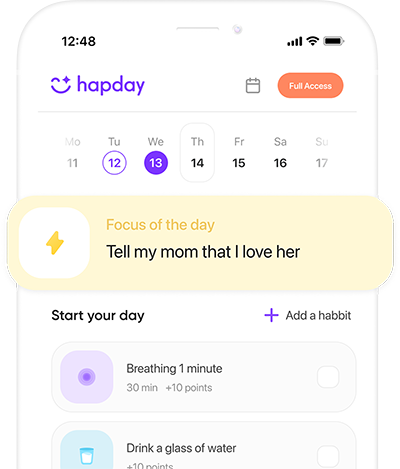
Feeling ready for change? Stay on the ball with Hapday’s productivity tools—they’re great for keeping your progress on track. Start now!
References
- American Psychological Association. (2010). Procrastination finds its way into many young adults’ schedules.
- Locke, E. A., & Latham, G. P. (2002). On the importance of setting challenging goals. American Psychologist.
- Amabile, T. M., & Kramer, S. J. (2011). A nod to small wins: The progress principle.
- Cameron, J., & Pierce, W. D. (1994). Intrinsic motivation & rewards: A complex dance. Review of Educational Research.
- Tuckman, B. W. (1991). Measuring procrastination: New tools for an old problem. Educational and Psychological Measurement.