



Table of Contents
- Understanding Self-Love: Beyond the Hashtag
- The Science: Why Self-Love Matters
- Daily Practices to Cultivate Self-Love
- Mindful Self-Compassion
- The Power of Affirmations
- Practicing Gratitude
- Nurturing Your Physical Well-being
- Setting Boundaries
- Seeking Connection and Support
- The Impact of Self-Love on Overall Wellbeing
- Continuing Your Self-Love Journey
- References
Understanding Self-Love: Beyond the Hashtag
Some people think self-love means narcissism—far from it. It involves nurturing and truly valuing ourselves.
“Self-love means confronting our failures with the kindness and understanding you’d offer a close friend.”
— Kristin Neff, Ph.D., University of Texas
“We need to be gentle with ourselves.”
Psychologists regard self-love as fundamental to mental health. It’s tied to increased life satisfaction, stronger emotional resilience, and less stress, reported a 2011 study in the Journal of Happiness Studies. Yet, in a society that idolizes self-criticism and scorns self-compassion, nurturing self-love can be quite the uphill battle.
The Science: Why Self-Love Matters
What is it about self-love that makes such a difference? Let’s delve into science. Insights from the National Institutes of Health reveal that self-criticism triggers the brain’s threat response system, releasing stress-inducing hormones like cortisol. On the flip side, self-compassion switches on the brain’s caregiving system—think warmth and comfort.
If this strikes a chord, you’re not navigating this solo. Maya, at 28, felt lost post-divorce. Daily journaling three self-affirmations helped her find balance.
“It felt like penning a morning love letter to myself.”
— Maya, personal experience
Her negativity slowly gave way to a more positive self-view.
Daily Practices to Cultivate Self-Love
Just like physical health requires regular workouts, self-love needs daily nurturing. Here are some methods to integrate into your routine.
Mindful Self-Compassion
Recognizing pain and responding with kindness rather than judgment is key.
“The first step is acknowledging your feelings.”
— Dr. Sarah Chen, NYU
“Visualize your heart opening to embrace those feelings warmly.”
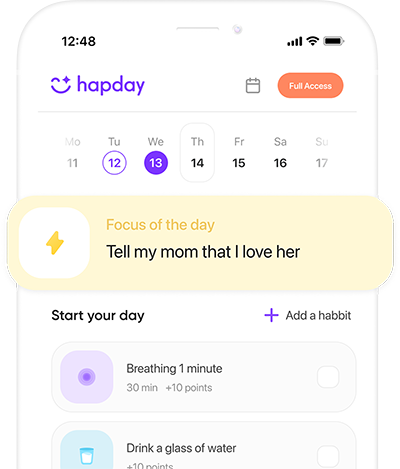
Mindfulness meditations play a vital role here. Studies show mindful individuals report higher self-compassion. So, give yourself 10 minutes daily to sit quietly, breathe, and observe thoughts without judgment—simple, right? Picture yourself awake at 2 a.m., an app like Hapday offers support to navigate that maze of self-doubt.
The Power of Affirmations
Positive affirmations challenge and topple your inner critic.
“Regular affirmations gradually reshape your mental landscape, tilting it toward compassion and positivity.”
— Dr. Melina Tacik, positive psychology advocate
Craft your list of affirmations—”I deserve love and respect” or “I learn and grow every day.” Whisper them each morning or when negativity lurks.
Practicing Gratitude
Gratitude’s magic? Transforming scarcity into abundance. By embracing gratitude, you pivot away from self-criticism. A study in the Journal of Positive Psychology found that writing down daily gratitude boosts well-being by 10%.
Incorporate a gratitude journal into your routine. List three personal qualities you appreciate daily. Maybe it’s handling a dicey meeting or finding time for self-care amidst chaos.
Nurturing Your Physical Well-being
Self-love is echoed in how we treat our bodies. Physical activity isn’t just for muscle—it uplifts the mind too.
“Exercise releases endorphins, nature’s mood enhancers.”
— Dr. Hernandez, fitness psychologist
Dance, walk, whatever moves you… Do it. A study in the British Journal of Health Psychology ties physical activity with greater self-esteem.
Setting Boundaries
Saying no and establishing boundaries are acts of self-love. It’s a testament to valuing your time and energy.
“Boundaries don’t mean isolation but respecting your limits.”
— Dr. Laura Richards
Start small: ignore work emails post-hours or skip energy-draining events. Over time, this boosts resilience and self-worth.
Seeking Connection and Support
While self-love is personal, connections matter. Isolation hits mental health hard.
“Connecting emotionally replenishes you.”
— Dr. Laura Stanley, psychology expert
Platforms like Hapday, with over 3 million users, offer mental health coaching tools for those unable to access traditional therapy. Connections, be they friends or community, enrich life and bolster mental well-being.
The Impact of Self-Love on Overall Wellbeing
Consistent self-love nourishes your entire being. It strengthens confidence, relationships, and even boosts professional performance. Remember, it’s a practice—a tender commitment to the life and self you aspire to.
Continuing Your Self-Love Journey
Self-love isn’t static; it evolves. As you tread this path, remember that missteps are inherent to growth. Meet setbacks with compassion—the very essence of this journey. Cultivating a compassionate self-relationship is a lifelong quest, without one-size-fits-all solutions. Your path is yours to define.
If aiming to deepen your self-love journey, consider Hapday. It empowers over 3 million users, offering a refuge for self-discovery and peace.
Key Takeaways
- Self-love is a fundamental aspect of mental health that can enhance life satisfaction and resilience.
- Daily practices such as mindfulness, affirmations, and gratitude can significantly foster self-love.
- Establishing boundaries is a crucial act of self-love that respects your limits and enhances self-worth.
- Connecting with others can reinforce your journey of self-love and improve your mental wellbeing.
- Self-love is an evolving practice, requiring compassion and patience.
The Bottom Line
Self-love is not merely an act of self-indulgence but a necessary practice for overall wellbeing. By embracing self-compassion, setting boundaries, and nurturing both mental and physical health, you pave the way for a more fulfilling life.
References
- Journal of Happiness Studies, 2011
- National Institutes of Health
- British Journal of Health Psychology
- Journal of Positive Psychology