



Table of Contents
- The Science Behind Meditation and Sleep
- Incorporating Meditation into Your Sleep Routine
- Why Meditation Works for Sleep
- Exploring Different Meditation Practices for Sleep
- Getting Started: Let Meditation Guide You to Better Sleep
- References
It was a crisp autumn evening, and Maya, a 28-year-old architect, found herself lying in bed with eyes fixed on the ceiling. Her mind was a racetrack of scattered thoughts—work deadlines she could miss, phone calls she never returned. Despite feeling worn out, sleep was elusive. Can you relate to Maya’s plight? You’re definitely not alone. Recent stats from the American Sleep Association suggest that about 50 to 70 million adults in the U.S. grapple with sleep disorders. But hold on— there might be a way to silence that mental chaos. Meditation, an age-old practice, now serves modern purposes, especially in improving our sleep patterns.
The Science Behind Meditation and Sleep
Understanding the magic requires some exploration before you dive deep! Sleep is not just downtime; it’s vital for your health. While you’re dreaming, your body does essential repairs, your brain files away memories, and emotions balance out. Interruptions or lack of this critical process can lead to issues—cognitive impairments or worse.
Enter meditation, particularly mindfulness meditation. It’s been catching the eye of researchers globally for its positive impact on sleep. A telling study in JAMA Internal Medicine found that people who meditated on mindfulness had less insomnia, fatigue, and depression than those attending regular sleep workshops. What’s the secret?
“Meditation soothes the nervous system by lowering heart rates, calming breath, and cutting down stress hormones. This mimics the body’s natural process for slipping into sleep.”
— Dr. Sarah Chen, Clinical Psychologist
Biologically speaking, meditation plays tag with melatonin, the hormone that sedates you for sleep. Some studies say meditation might even boost melatonin levels, easing you into a relaxed state fit for deep sleep. Surely, it’s not just about falling asleep faster but staying asleep, allowing your body and mind to recharge.
Incorporating Meditation into Your Sleep Routine
So, how can you make meditation a reliable bedtime aide? It might feel intimidating, but keep this in mind: meditation is a skill you can build, much like acquiring taste for coffee. Remember Maya? She began her journey dedicating only a few minutes a night—her commitment grew, along with her peace.
- Set the Scene: Creating a Sleep-Inducing Environment: Craft an environment that whispers relaxation. Dim the lights, hush ambient noises, or light a soothing candle with scents like lavender. Your meditation spot should be cozy enough to relax but not too snug to lead you into premature slumber.
- Choose Your Meditation Style: Meditation styles abound, each offering unique boons. Mindfulness, loving-kindness, body scans, transcendental—you have options. For sleep, mindfulness triumphs by fixing your focus on the present and letting you observe thoughts non-judgmentally.
- Set a Regular Meditation Schedule: Regularity is crucial. Be it before bed or early evening, pin down a meditation time and stick to it. Such consistency eases meditation into your nightly routine, training your body to embrace it as a wind-down activity before lights out.
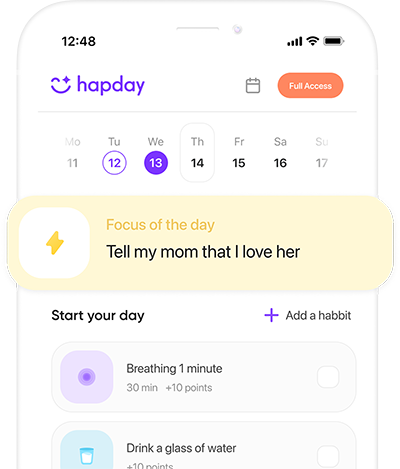
- Guided vs. Unguided Meditation: Start with guided sessions—these recordings, orchestrated by experts, will direct your session’s flow. Apps like Insight Timer or Calm house a rich trove of sleep-centered meditations. For a personalized touch, Hapday’s AI life coach offers a guiding hand whenever you’re in need.
In time, you might transition to unguided meditation, which lets you tailor focus and rhythm, making the practice intimately yours.
Why Meditation Works for Sleep
Meditation’s sleep-enhancing prowess is no abstract theory; it’s grounded in our biology and psychology. Understanding this can deepen your practice and embolden your commitment.
- The Mind-Body Connection: Meditation relies on your breath, nurturing tranquility across mind and body. By slowing heart and breath, you dial down the ‘fight or flight’ response—quelling stress and creating mental space for sleep.
“Engaging the parasympathetic nervous system via meditation effectively tells your body to relax into sleep, instead of staying vigilant.”
— Dr. Linda Hamilton, Neurologist
- Neuroplasticity and Brain Waves: Meditation hikes up alpha brain waves, linked to relaxation and sleep preparation. Routine practice can even alter your brain’s design! A Harvard study showed that eight weeks of meditation thickened gray matter in regions pivotal to awareness, compassion, and reflection. These shifts ease insomnia and elevate sleep quality.
- Reducing Psychological Barriers to Sleep: Meditation promotes tolerance and acceptance—vital for dismantling the fears and stresses that prevent restful sleep. Embrace the moment, unshackle from anxiety, and let peace in.
Exploring Different Meditation Practices for Sleep
Discovering meditation types that align with your sleep challenges can be transformative.
- Body Scan Meditation: A great ally against tension, the body scan method releases stress by focusing sequentially on different body parts. As you identify stress zones, you alleviate them, curbing restlessness.
- Guided Imagery: This leverages imagination—narratives often imbued with serene natural imagery take your mind away from daily chaos, beckoning restful nights.
- Progressive Relaxation: Tense, then relax muscle groups one by one. This diminishes physical tension and sharpens bodily awareness, setting the stage for sleep.
- Loving-Kindness Meditation: It’s all about radiating compassion—to self and others. Psychological Science reports increased positivity through loving-kindness, which inversely correlates with anxiety-led sleep disturbances.
Persistence, not perfection, leads your meditation journey. Engage each night, even when peace is distant. Embark on a path to better sleep through meditation. Armed with understanding various meditation types, backed by science, and aided by resources like Hapday’s AI coaching, you’re on your way to more restorative rest.
Getting Started: Let Meditation Guide You to Better Sleep
Ready to make meditation your ally for sleep? You’re choosing a holistic course that enhances more than just bedtime. It unlocks mental clarity, mitigates stress, and boosts overall well-being.
Experiment with different styles. Notice how they affect you, and fine-tune your approach to discover what truly eases you into nightly peace. Remember, tools like Hapday stand ready, offering round-the-clock support to hone lasting habits.
Key Takeaways
- Meditation can significantly reduce insomnia and improve sleep quality.
- Creating a relaxing environment and setting a regular meditation schedule can enhance your practice.
- Diverse meditation techniques cater to different sleep challenges, expanding your options for relief.
- Expert insights on the mind-body connection highlight the benefits of meditation in preparing for sleep.
- Consistency in practice is key to successfully integrating meditation into your nightly routine.
The Bottom Line
Meditation is a powerful tool for improving sleep, offering physiological and psychological benefits that foster relaxation and restorative rest. By understanding and applying various techniques, you can significantly enhance your bedtime routine and overall well-being.
References
Psych Central – https://psychcentral.com
American Sleep Association – https://sleepassociation.org
Harvard Gazette – https://news.harvard.edu
JAMA Internal Medicine – https://jamanetwork.com/journals/jamainternalmedicine
Mayo Clinic – https://mayoclinic.org
Meditation can be powerful, but if sleep problems are severe, seek a healthcare professional’s help. For regular sleep boosts, though, integrating meditation can usher in tranquil nights. Tonight, unwind—inhale deeply, cast away stress, and step into your meditative journey toward a peaceful slumber.