



Imagine this: It’s 3 a.m. and you’re staring blankly at the ceiling. Everyone else is seemingly asleep, drifting through dreamland, while you’re caught in a whirlpool of thoughts — work assignments, unfinished errands, past memories. Minutes sluggishly transform into hours, your anxiety’s ticking up, and you’re familiar with this tiring pattern. If this scenario resonates with you, you’re far from alone. The grueling battle with insomnia plagues around 30% of people, wreaking havoc on mental and physical well-being. Back in 2021, Harvard shared insights emphasizing this widespread issue. But, what if meditation, often seen as the pastime of monks and mystics, could be the saving grace for your sleepless nights?
These days, meditation isn’t solely the realm of the spiritual elite. It’s gaining ground as an effective remedy for better sleep quality and tackling insomnia. Curious how it works its magic? Let’s unravel the meditation mystery, tailored for Gen Z and Millennial women, eager for science-supported self-care strategies.
Table of Contents
- Understanding the Sleep Puzzle
- The Science Behind Meditation’s Sleep Benefits
- How to Integrate Meditation into Your Nightly Routine
- The Role of Consistency in Meditation Practice
- Overcoming Common Obstacles
- Incorporating Technology and Innovation
- Creating a Sleep-Friendly Environment
- Empowering Future Nights with Rest
- The Bottom Line
- References
Key Takeaways
- Meditation can significantly improve sleep quality and help combat insomnia.
- Mindfulness and Guided Visualization are effective meditation techniques for enhancing sleep.
- Consistency is crucial for deriving the benefits of meditation.
- Creating a conducive sleep environment can enhance the effects of meditation.
- Modern technology can aid meditation practice through apps and guided sessions.
Understanding the Sleep Puzzle
Before we ponder how meditation fits into sleep’s complex jigsaw, let’s decode the importance of slumber. Sleep is much more than the body’s pause button. It consolidates memories, mends our physical health, and rejuvenates the emotional soul. Yet, stress, anxiety, and unending distractions—let’s admit it, our phones bombard us with more blue light than we’d care to acknowledge—can severely disrupt these sleep cycles.
“An overstimulated mind often triggers sleep issues. Our brains function like overtaxed machines; meditation helps to gear them down.”
— Dr. Sarah Chen, Clinical Psychologist at NYU
Her insights underscore a simple truth: finding calm for the mind invites tranquility and inevitably leads to sleep.
The Science Behind Meditation’s Sleep Benefits
Skeptical? Or a science enthusiast, perhaps? Scientific literature often underscores meditation’s positive influence on sleep. One study aired by JAMA Internal Medicine disclosed that participants who ventured into mindful meditation experienced notable sleep improvements—a stark contrast to those who just adhered to generalized sleep practices.
The magic bullet? Meditation’s knack for calming the overactive mind that relentlessly keeps us up. Dr. Chen notes,
“Meditation engages our parasympathetic nervous system, steering us into the rest-and-digest state. The more we embrace cognitive relaxation, the more naturally our brain enters restful rhythms.”
— Dr. Sarah Chen, Clinical Psychologist at NYU
How to Integrate Meditation into Your Nightly Routine
You might think, “This all sounds fantastic, but how do I start?” Fear not—there are different forms of meditation to try, but here’s a nudge toward two promising techniques for sleep: Mindfulness and Guided Visualization.
Mindfulness Meditation
Mindfulness meditation revolves around cultivating present-moment awareness without judgment. Trying to squeeze this into your nightly ritual?
- Set the Scene: Find your haven—a quiet, comfy corner—before retiring for the night. Dim the lights, shoo away distractions. Yes, especially that smartphone.
- Breath Focus: Comfortably sit or lie down. Close your eyes, zero in on your breath. Simply observe as you inhale and exhale. Your mind will wander—it’s organic; coax it gently back to focus on your breathing.
- Body Scan: Begin with your toes and slowly acknowledge each body part. Recognize sensations and tensions, staying on each area for about 30 seconds to a minute.
By embedding this technique into your routine, you’ll ease into a naturally relaxed state conducive to sleep.
Guided Visualization
Guided visualization entails concentrating on calming imagery. Take Maya, 28, who buffered her divorce-induced anxiety, particularly at night, via visualization. A therapist suggested envisioning a serene sunset beach, a tactic that noticeably eased her wakefulness. Fancy trying it?
- Pick a Scene: Settle on an image or locale that instills peace within you. Maybe it’s a lush forest or that sunny beach?
- Immerse in Detail: As your eyes close, mentally transport yourself there. What sounds emerge? Feel the breeze, hear leaves rustling gently.
- Progressive Relaxation: Allow the soothing imagery to envelop you, mentally discarding stressors with each breath. Tension should evaporate as your imagination deepens.
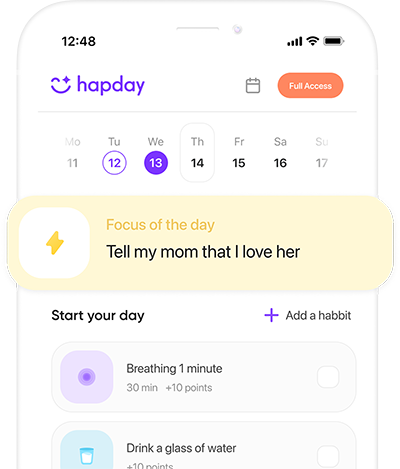
Platforms like Hapday can augment this process, offering round-the-clock live coaching—an AI coach helps guide you through meditative activities anytime those serene images evade you.
The Role of Consistency in Meditation Practice
“Practice makes perfect”; a timeless adage that unquestionably holds for meditation. Consistency is the secret sauce when utilizing meditation for sleep improvement.
“Regularity trumps duration. It’s akin to muscle-building. Consistent meditation breeds mental resilience and stability, naturally translating to healthier sleep rhythms.”
— Dr. Sarah Chen, Clinical Psychologist at NYU
Aim for nightly meditation within your bedtime rites—even a modest five-to-ten minutes devotion enriches your capacity to drift to slumber.
Overcoming Common Obstacles
Enthusiastic to start? Splendid! Let’s be candid (who doesn’t crave honesty?), everyday life throws curveballs. Here’s how to leap over common stumbling blocks:
“I Don’t Have Time.”
Busy as a bee, we live in a world incessantly bustling. But devoting those five-to-ten meditation minutes? They’re fruitful investments yielding enhanced sleep and a more productive following day. Think of it as trading social media scrolling time for improved shut-eye.
“I Can’t Stop Thinking.”
Thoughts racing at the day’s end? You’re not isolated. Enter patience and practice here. Acknowledge rogue thoughts, gently redirect your focus to your breath or inspiration point. With time, you’ll master this skill.
“I’m Not ‘Good’ at Meditation.”
Meditation isn’t an overnight feat—it’s about embracing yourself as you are. If you sit down and shut your eyes, you’re halfway there. Progress is the fruit of perseverance.
Incorporating Technology and Innovation
Embracing technology in our tech-driven age within meditation isn’t a faux pas. While traditional meditation demands only your presence, apps offer guidance, enhancement, and practice tracking. Platforms like Hapday cater to over 3 million daily users, providing substantial advantages through mood tracking and evidence-supported sleep programs addressing stress, healing core issues, and more.
Creating a Sleep-Friendly Environment
Alongside meditation, establishing a conducive sleep environment amplifies your efforts. Essential pointers?
- Darkness advocates: Blackout curtains effectively deny unwelcome light.
- Sound sidekick: Maybe consider white noise or soothing nature sounds.
- Thermal balance: Opt for a cooler room, around 65°F—Cleveland Clinic deems this optimal for sleep.
Empowering Future Nights with Rest
You’ve now encountered meditation’s tranquility, and sleep’s transformative power. Restful nights won’t appear overnight, but courage and perseverance make them attainable.
Incorporating these strategies is simpler with support. If real assistance appeals to you, consider Hapday, an AI life coach, ever-ready to meet your need for calming guidance into restful nights whenever necessary.
Steering into a serene sleep chapter requires valor, and now you’re equipped with meditation as your guide to sweeter dreams and more vivid mornings.
The Bottom Line
Meditation offers an avenue to achieve better sleep, reduce anxiety, and enhance your overall well-being. By integrating practices like mindfulness and guided visualization into your nightly routine and addressing common obstacles, you empower yourself to embrace tranquil nights and vibrant mornings.
References
- Harvard University
- JAMA Network
- Cleveland Clinic