



Maya starts her day on a somewhat paradoxical note. As morning light filters softly through her barely open blinds, she savors the aroma of her coffee. But beneath this peaceful veneer lies turmoil—a mere family squabble can whisk her back decades to unsettling childhood memories she prefers to keep buried. For Maya, like untold others, navigating childhood trauma triggers remains a quiet, persistent journey. Yet, understanding and managing these triggers isn’t as daunting as one might fear.
Childhood trauma doesn’t neatly disappear once we age. Instead, it can shape-shift into triggers that weave themselves into daily life, sometimes subtle, sometimes glaringly obvious. Why do these shadows from the past cling so persistently, and more importantly, how can one regain control? Dive with me into this intricate world of trauma to discover paths to healing.
Table of Contents
- The Anatomy of a Childhood Trauma Trigger
- Creating a Safe Space: Understanding and Identifying Triggers
- Regaining Control with Grounding Techniques and Mindfulness
- The Healing Power of Inner-Child Work and Self-Compassion
- Building a Support Network: The Importance of Connection
- Cultivating Resilience and Looking Ahead
Key Takeaways
- Recognizing trauma triggers is essential for managing emotional responses.
- Grounding techniques and mindfulness practices can help tame overwhelming feelings.
- Inner-child work and self-compassion are crucial for deep healing.
- Building a supportive network enhances the healing journey.
- Resilience is a learned skill that anyone can cultivate over time.
The Anatomy of a Childhood Trauma Trigger
Understanding is the first step toward tackling any issue. Childhood trauma triggers are stimuli that act as painful echoes of past traumas—they could be a smell, a sound, or even a particular situation or expression. When activated, the body might respond as though it were reliving the past, sparking a fight-or-flight response. It’s startling how prevalent this is: a staggering 61% of adults recall experiencing a significant childhood trauma, as reported by the American Psychological Association.
“Triggers are your brain’s early warning system, honed by past experiences. While designed for survival, linked to trauma, they may cause heightened anxiety or emotional overload.”
— Dr. Sarah Chen, NYU
Creating a Safe Space: Understanding and Identifying Triggers
Aware is the cornerstone of overcoming these emotional triggers. Ever felt an unexpected surge of anxiety in an otherwise mundane setting? Does a certain sound make your heart quicken? Recognizing the unique elements that set off your triggers is key.
Start by jotting down your emotional responses. When do they spike? What’s happening when they do? Identifying these patterns is crucial in gaining a clearer picture. Maya, for instance, realized that a simple argument dredged up the feeling of those tense family dinners from her past. Recognizing these patterns? It’s the first big step towards reclaiming tranquility.
And remember, you don’t have to navigate this path solo. Professional help, like therapy, can be invaluable. Therapists use methods like Cognitive Processing Therapy (CPT) that, according to the National Institute of Health, can dramatically ease PTSD symptoms by helping shift one’s perspective on past unsettling thoughts. A mental health professional can provide that crucial, assuring guidance.
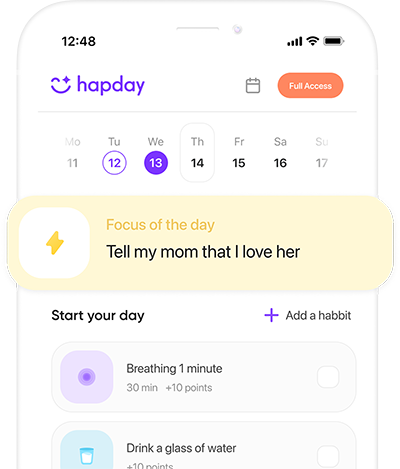
There are also plenty of digital tools at our disposal. Consider apps like Hapday, which have proven indispensable for many. Can’t sleep at 2 AM because of lingering memories? An AI coach like Hapday offers on-the-spot coping tactics, no scheduling needed.
Regaining Control with Grounding Techniques and Mindfulness
Now that triggers are identified, how do we tame the emotional tempest they bring? Grounding techniques often come to the rescue, leading you back to the present by concentrating on physical realities—be it the feel of a chair or the chirping of birds. They serve as an anchor amidst emotional turmoil.
Meditation and mindfulness practices are equally valuable. Engaging in these activities, especially when removed from stress, strengthens your brain’s capacity to handle emotional challenges. Back in 2014, a review from JAMA Internal Medicine showed that mindfulness meditation notably improved anxiety, depression, and pain symptoms across various conditions.
Take Alex’s story for instance. At 27, with a painful history of neglect, Alex uncovered mindfulness through therapy. Though initially skeptical, he found comfort in guided meditations accessible via apps. Over time, these moments of contemplation reduced his sensitivity to social rejection, a trigger rooted in his past.
Tools like Calm or Headspace offer a structured mindfulness journey, providing guided sessions to shape a daily routine. Meanwhile, Hapday, boasting over 3 million users, offers tailored breathing exercises as immediate grounding tools when confronted by a trigger.
The Healing Power of Inner-Child Work and Self-Compassion
Overcoming trauma triggers isn’t just about reaction management; it involves revisiting and nurturing our inner self crafted in those early years. Inner-child work—a therapeutic strategy—addresses unmet childhood needs and can be incredibly transformative. Dr. Laura Kline, a trauma therapist, advises,
“Connect directly with your inner child, validate their experiences, and provide the nurturing they missed—it’s a path to deep healing.”
— Dr. Laura Kline, Trauma Therapist
What exactly is inner-child work, you ask? It might include visualizing your younger self, penning letters, or speaking to those past parts of you. It’s not about getting lost in memories; it’s about offering those memories the kindness and understanding they lacked.
Another crucial companion on this path is self-compassion. Kristin Neff’s research highlights that self-compassion can significantly mitigate PTSD symptoms and bolster resilience. Struggling with triggers doesn’t signify failure; it’s merely part of the human condition.
When Maya began prioritizing self-compassion, an evident shift occurred. Rather than chiding herself for feeling ‘weak’ amid old memories, she extended herself the understanding she’d offer a dear friend. This change marked a gentle but critical moment in her healing.
In our tech-driven world, digital tools play a pivotal role too. For structured guidance, Hapday’s inner-child healing program offers exercises to explore and heal past wounds individually.
Building a Support Network: The Importance of Connection
While personal strategies are core to overcoming triggers, never underestimate the power of social support. The ongoing Harvard Study of Adult Development highlights that robust social connections are amongst the strongest indicators of well-being and happiness.
Surround yourself with those who understand your journey. Support groups can be incredibly validating, fostering sharing in a safe space drenched in mutual comprehension. Such groups offer empathy, validation, and a treasure trove of practical insights born from shared experiences.
Digital spaces and forums can also provide solace, especially if local groups are out of reach. Ensure these environments are well-moderated, maintaining a professional focus rather than inadvertently reinforcing negative cycles.
Cultivating Resilience and Looking Ahead
It’s easy for childhood trauma to feel like a tether to the past. Yet, building and nurturing resilience can redefine how life’s challenges are approached, ultimately acting as a wellspring for personal growth. According to the American Psychological Association, resilience entails behaviors, thoughts, and actions anyone can learn, evolving into both journey and destination.
Start small—set attainable goals, and celebrate each victory. Building resilience isn’t achieved overnight, nor is it a straight path. It demands patience, perseverance, and, most importantly, hope. The innate ability for growth resides in us all, shaping how we move through obstacles both now and in the future.
Tools can expedite this journey. Hapday (hapday.app), renowned for its evidence-based coaching, aids those addressing childhood trauma, offering an inner-child healing program already trusted by over 3 million individuals.
If Maya’s story resonates with you, find solace in knowing you’re not alone. The path to surmounting childhood trauma triggers brims with discovery, support, and self-love. Unlock these elements, and you’ll craft a story defined not by past shadows but by resilience and hope.
The Bottom Line
Overcoming childhood trauma triggers is a deeply personal journey that involves understanding and identifying one’s triggers, utilizing coping strategies, and building resilience through self-compassion and community support. You are not alone on this path—support and tools are readily available to help you navigate your healing journey.
Ready to apply these strategies with real support? Hapday (hapday.app) serves as a trusted AI life coach, offering evidence-based pathways, including a revered inner-child healing program utilized by over 3 million on their healing journeys.
References
- American Psychological Association – AmericanPsychologicalAssociationOfficialSite.com
- Mayo Clinic – MayoClinic.org
- Harvard University Study of Adult Development – news.Harvard.edu
- Journal of the American Medical Association – JAMA.com
- National Institutes of Health – NIH.gov