


Anxiety can feel like a runaway train. The brakes are there—you just can’t reach them when you need to. Here’s the encouraging part: a basic meditation practice can take the edge off, even if you’ve never sat still for more than a minute. The evidence isn’t mystical; it’s grown-up and public. In late 2022, a randomized clinical trial reported that an eight‑week Mindfulness‑Based Stress Reduction course matched a first‑line SSRI for reducing anxiety severity. Meta-analyses have landed on small-to-moderate drops in symptoms, which in clinics looks like real relief for real people. I’d call that a practical win, not hype.
Table of Contents
- Why and how to ease anxiety with meditation
- The evidence snapshot
- A 4‑week plan to ease anxiety with meditation
- Practical techniques to ease anxiety with meditation anytime
- Make it stick: behavior hacks
- Troubleshooting common hurdles
- Measure progress and know when to get help
- What results to expect
- Suggested image alt text
- The bottom line
- Summary
- References
Why and how to ease anxiety with meditation
- Tames threat circuits: Longitudinal MRI work has shown that about eight weeks of regular mindfulness practice can dial down amygdala reactivity—and in some studies, tweak its structure in step with reduced stress. In plain English: fewer false alarms from the brain’s internal siren. I think this “less fuel on the fire” effect is the quiet power most people notice first.
- Quiets rumination: Training attention alters default-mode-network chatter, that self-referential loop that loves worry. When the loop softens, you spend less time stuck to your thoughts and more time moving through them. It’s not silence; it’s perspective—which, to me, is the more durable outcome.
- Builds attention and body regulation: Simple breath-focused sessions sharpen attentional control and can improve heart-rate variability (HRV), a marker of nervous-system flexibility linked with lower anxiety. Better regulation isn’t glamorous, but it’s gold when your body outruns your mind.
The evidence snapshot
- A 2010 meta-analysis of mindfulness-based therapy for anxiety and mood disorders found a medium effect on anxiety (Hedges g around 0.63). That’s not a miracle cure; it is clinically meaningful, the kind of shift patients feel across an ordinary week. In my view, that beats chasing silver bullets that rarely arrive.
- A 2014 JAMA Internal Medicine review reported moderate evidence that mindfulness programs reduce anxiety with small-to-moderate effects compared with active controls. Back then, The Guardian was already noting the rise in mindfulness courses on hospital wards—sometimes trends follow data, not the other way around.
- In 2022, a head-to-head randomized trial showed that an eight‑week MBSR course produced reductions in anxiety severity comparable to escitalopram. That parity surprised more then a few seasoned clinicians and signaled something simple: a structured, time‑limited course can move the needle.
A 4‑week plan to ease anxiety with meditation
Keep it short, specific, and regular. Five to 15 minutes most days beats occasional long sits you dread—consistency is the teacher here.
- Week 1: Learn the anchor (5–7 minutes/day)
- Practice: Sit comfortably. Let the breath do what it does. Rest attention on sensations at the nostrils or belly. When the mind wanders (of course it will), note “thinking” and come back to the breath. The work isn’t in staying perfectly focused; it’s in returning—again and again.
- Tip: Set a five‑minute timer. Mark each return as a small success. I’d argue celebration is a better motivator than self-critique.
- Week 2: Add body scan (8–10 minutes/day)
- Practice: Move attention slowly from toes to head, noticing pressure, temperature, or tingling. Meet tension by softening your hold on it 5–10% on an exhale. Learning your body’s early signals gives you a head start on calming—before arousal spikes.
- Micro‑reset: Three breaths at roughly six seconds in, six seconds out (around six/minute). This pattern supports HRV and a steadier baseline. It’s simple physiology doing it’s quiet work.
- Week 3: Label and allow (10–12 minutes/day)
- Practice: When anxious thoughts appear, label them softly—“worry,” “planning,” “imagining.” Redirect to breath or ambient sound. Allow sensations to be present without fighting them. This de‑centering loosens worry’s grip just enough to choose your next move. My take: naming things kindly is smarter than wrestling them.
- Real‑life drill: During email or scrolling, pause for three breaths; label the urge; proceed intentionally. A minute here saves an hour later.
- Week 4: Kindness and resilience (12–15 minutes/day)
- Practice: Loving‑kindness (metta). Offer phrases like “May I be safe. May I be peaceful.” Extend to a friend, a neutral person, and back to yourself. Training compassion can nudge down self‑criticism and buffer stress reactivity. Some people resist this; many end up relying on it.
- Optional: One longer 20‑minute session on the weekend to deepen. Think of it as cross‑training for attention.
Practical techniques to ease anxiety with meditation anytime
- The 60‑second reset: Inhale for four, exhale for six, repeat for a minute. Feel your feet on the floor. Note one sound, one sight, one body sensation. A pocket practice—good between meetings, before a call, while the kettle boils.
- 5‑4‑3‑2‑1 with breath: Notice 5 things you see, 4 you feel, 3 you hear, 2 you smell, 1 you taste; pair each with a slow exhale. When panic threatens, orienting to the senses can cut through the fog. I’ve seen this outrun spirals more than once.
- STOP method: Stop. Take a breath. Observe thoughts, feelings, body. Proceed with one kind action. Useful before tough conversations; it buys you a beat of agency.
- Guided audio: Use a trusted 10‑minute anxiety practice from reputable apps or academic centers. Guidance removes guesswork at the start, and early ease matters.
Make it stick: behavior hacks
- Tie it to a cue: Sit right after brushing your teeth or brewing coffee. Habit stacking removes debate—no willpower wrestling match at 6 a.m.
- Track tiny wins: Check off practice days and jot a 1–10 anxiety rating. Over two weeks, many people notice 10–20% dips; small shifts compound. Harvard researchers have long emphasized “small wins” as behavior fuel—I agree.
- Environment: Sit where your spine feels supported. Eyes open or closed—choose what feels safest. Comfort isn’t indulgence; it’s infrastructure.
Troubleshooting common hurdles
- “My mind won’t stop.” Minds think; yours is alive. Each return is a repetition. Benefits accrue from noticing and returning, not from spotless focus. I’d keep this expectation front and center.
- Restlessness or panic: Practice with eyes open. Name three colors in the room. Lengthen the exhale. Try movement‑based mindfulness (walking, gentle yoga) so attention anchors to motion rather than stillness.
- Trauma history: If closing eyes or scanning the body spikes distress, skip them. Use external anchors (sounds, sights) and shorter, frequent practices. A trauma‑informed teacher can help tailor safely—your comfort sets the pace.
Measure progress and know when to get help
- Use the GAD‑7 weekly. A four‑point drop is often clinically meaningful.
- If scores rise or panic, insomnia, or impairment persist, pair practice with evidence‑based therapy (CBT) or speak with your clinician. Meditation is a strong tool, not a solo cure‑all; knowing that boundary is wise.
What results to expect
- Timeline: Many trial participants report noticeable calming within 2–4 weeks of near‑daily practice. Expect variability—some days feel flat; the gains are cumulative. That’s training, not magic.
- Size of benefit: Average effects in research are small to moderate. Modest, yes—and meaningful when combined with steady sleep, regular movement, and therapy as needed. I’d take reliable and modest over flashy and fleeting any day.
Suggested image alt text
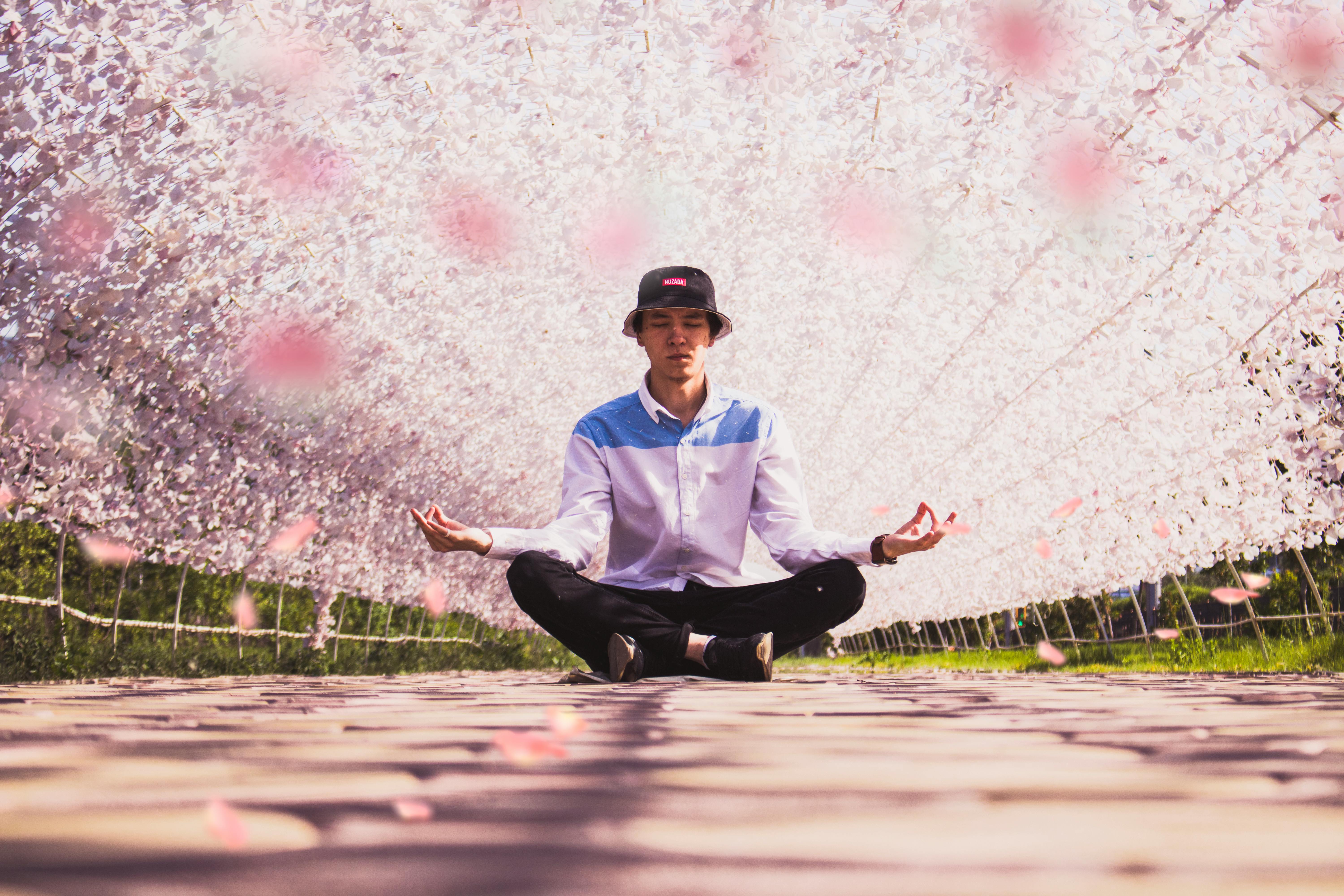
Young adult pausing at a sunlit window, hands on heart and belly, eyes soft—settling the body with a brief meditation.
The bottom line
Train attention, befriend the body, meet thoughts with curiosity. Start small, practice most days, pair it with sensible self‑care. Over time you’ll build a steadier baseline—and a way to meet hard days without being carried off by them.
Summary
Meditation reduces anxious reactivity by quieting threat circuits, sharpening attention, and strengthening HRV. With 5–15 minutes a day—breath focus, body scan, labeling, and compassion—you can feel changes within weeks. Track progress, troubleshoot gently, and add therapy when needed. Consistent and kind beats intense and brief. Start now: set a five‑minute timer, follow the breath, and begin.
References
- Hoge EA et al. (2022). Mindfulness-Based Stress Reduction vs Escitalopram for the Treatment of Anxiety Disorders. JAMA Psychiatry. https://jamanetwork.com/journals/jamapsychiatry/fullarticle/2798510
- Hofmann SG et al. (2010). The effect of mindfulness-based therapy on anxiety and depression: A meta-analytic review. J Consult Clin Psychol. https://psycnet.apa.org/record/2010-02208-001
- Goyal M et al. (2014). Meditation programs for psychological stress and well-being: A systematic review and meta-analysis. JAMA Intern Med. https://jamanetwork.com/journals/jamainternalmedicine/fullarticle/1809754
- Hölzel BK et al. (2010). Stress reduction correlates with structural changes in the amygdala. Soc Cogn Affect Neurosci. https://academic.oup.com/scan/article/5/1/11/1654598
- Zaccaro A et al. (2018). How breath-control can change your life: A systematic review on psychophysiological correlates of slow breathing. Frontiers in Human Neuroscience. https://www.frontiersin.org/articles/10.3389/fnhum.2018.00353/full