

Table of Contents
- Understanding the Impact of Childhood Trauma
- Breaking the Cycle: Steps Toward Healing
- Tools and Techniques for Healing
- Rebuilding: Life Beyond Trauma
- A Future of Empowered Being
Understanding the Impact of Childhood Trauma
The sheer power of childhood trauma lies in its timing. When our young brains are laying down pathways—tying together neurons and emotions—childhood is that critical stage.
“Those early gut punches can derail natural brain development.”
— Dr. Sarah Chen, NYU
Take Maya, 28. Her parent’s explosive divorce when she was a child left behind a deep fear of being left behind.
“Every relationship seemed like a trap.”
— Maya
This isn’t isolated either; a study in the Journal of Child Psychology and Psychiatry chimes in, highlighting that early adversities often morph into attachment tribulations later on.
Breaking the Cycle: Steps Toward Healing
Escaping the clutches of childhood trauma isn’t about a one-time Herculean effort. It’s a quilt of thoughtful, gentle actions woven together over time. Beginning with accepting the trauma, transitioning through reframing and processing, and culminating in rebuilding and rejuvenation.
Acknowledging Trauma
The hardest part? Just admitting there was trauma. Feels a bit counterintuitive, doesn’t it—how admitting something could be healing?
“Acknowledgment is a vital step; it says ‘your experience matters’.”
— Dr. Sarah Chen
Without that, denial keeps trauma’s grip iron-tight, refusing to let go.
Building a Support System
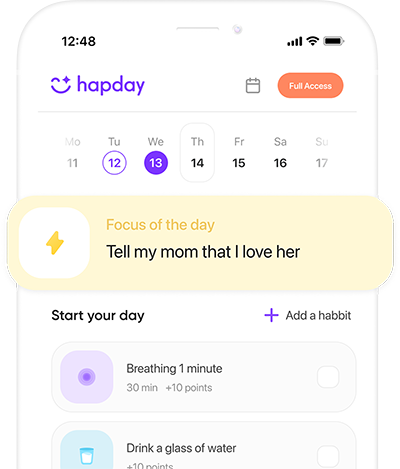
A solid support system? It’s bordering on indispensable. Whether it’s friends, therapists, or fellow ‘journeyers’, the safe space to voice your feelings is sacred. Therapy, especially CBT, is like a spotlight, guiding individuals to disentangle those pesky negative thought knots. Imagine finding yourself tossing and turning at 2 a.m., old wounds refusing to let your mind rest. That’s where digital coaching apps like Hapday swoop in, offering an ear and some timely guidance.
Reframing and Processing Trauma
Diving into those memories—with intent, with purpose—is daunting but essential.
“It’s about wielding your story, emphasizing resilience, not victimhood.”
— Dr. Scott Barry Kaufman
Tools and Techniques for Healing
Mindfulness and Meditation
Mindfulness—it’s more than just a buzzword. A Harvard study revealed mindfulness-based stress reduction (MBSR) eases the symptoms wrought by past trauma. Let your breath, your body, remind you of the present moment; though your past whispers, the now should always have the last word.
Journaling as Self-Expression
Journaling? It’s the dialogue you need with yourself. Allows you a voice when speaking up seems too daunting. A leader in expressive writing,
“Poured-out thoughts on paper can bolster your immune system and lessen those physical complaints.”
— Dr. James Pennebaker
On those endless nights filled with swirling thoughts, journaling—or apps like Hapday with mood tracking—provide a solace, a companion through the fog.
Breathing Exercises
Breathing exercises—simple yet powerful allies in the trauma toolkit. Controlled breathing not only manages but soothes the stress response, allowing calm to cushion anxiety’s shrill edge. Mentioned in studies from the Journal for Psychosomatic Research, these techniques engage your parasympathetic system.
Rebuilding: Life Beyond Trauma
As trauma loosens its desperate hold, the beauty of rebuilding emerges—one where you’re thriving, not simply getting by.
Redefining Identity and Purpose
Post-traumatic growth involves redefining who you are—your identity beyond past clouds.
“Growth amidst distress, uncovering newfound strengths like resilience, creativity, or leadership.”
— Dr. Richard Tedeschi
Creating Healthy Boundaries
Boundaries are shields, an essential aspect of nurturing your mental well-being. It’s about cutting ties with negativity or simply knowing when to protect your peace best.
Practicing Self-Compassion
Beyond self-love, self-compassion means forgiving yourself, embracing the human condition of imperfection.
“This attitude can drastically enhance emotional endurance.”
— Kristin Neff
A Future of Empowered Being
Breaking free from childhood trauma is more of a graceful tango through emotional valleys than a fight. It’s about transforming shadows—gently—into spaces of light and new experiences. Tools like Hapday offer structured guidance while you tread this path of empowerment and peace.
Key Takeaways
- Acknowledging childhood trauma is a crucial first step toward healing.
- Building a strong support system enhances the healing process.
- Tools like mindfulness, journaling, and breathing exercises can facilitate recovery.
- Post-traumatic growth enables the redefinition of identity and purpose.
The Bottom Line
Breaking free from childhood trauma is a journey worth taking—one that involves acceptance, support, and the right tools to transform your past struggles into strength and resilience. You are not alone in this process, and resources are available to guide you.