
Table of Contents
- The Connection Between Sleep and Mindfulness
- Mindfulness Meditation: Your Snooze Button
- The Inner Workings: Why Meditation Hits the Mark
- Crafting a Meditation Practice
- Dive Deeper with Progressive Muscle Relaxation
- Overcoming Setbacks and Embracing Meditation
- Enhancing Meditation with Sleep Hygiene
- Find Support Through Community
- Meditation for Long-Term Sleep Gains
Picture this—it’s 2:30 in the morning. You’re staring at the ceiling, wide awake, your thoughts darting from yesterday’s mess to tomorrow’s chaos. That to-do list’s so heavy it almost crushes you beneath the sheets. You’ve done the rounds: counting sheep, warming up milk, flipping pages until your eyes hurt. Yet, sleep refuses to visit. Sound familiar? For many, this is a nightly saga. However, there’s an ancient remedy, grounded in modern science, that promises to turn those restless nights into tranquil evenings: meditation.
The Connection Between Sleep and Mindfulness
Before diving into how meditation works, let’s unravel the bond between mindfulness and sleep. It’s staggering to know that sleep disorders plague 50 to 70 million Americans, according to the American Academy of Sleep Medicine. A study by Harvard Medical School reveals that mindfulness meditation can notably elevate sleep quality. How? By knocking down stress levels and easing cortisol—a known sleep squasher—while upping melatonin, the hormone tied to your sleep-wake rhythm.
“Through meditation, you disrupt the cycle of stress-driven thoughts. You’re teaching your mind to stay put in the moment, slicing through the mental chaos that’s often a major sleep thief.”
— Dr. Sarah Chen, Clinical Psychologist, NYU
Mindfulness Meditation: Your Snooze Button
Enter mindfulness meditation, a modern-day talisman for better sleep. It’s all about breathing and staying anchored in the present, shedding worries of past missteps and future blunders. You zero in on your breath, nodding to intruding thoughts but not engaging them. Over time, this practice wires your brain to handle stress with a cooler head—which naturally translates to better rest.
Take Maya, 28, as a case study. Her divorce sent her anxiety skyrocketing, introducing insomnia as a nightly guest. Adopting mindfulness meditation nightly, she boosted her sleep from a mere four hours to a solid seven. She shares how refreshed she feels each morning, ready to face the day head-on.
The Inner Workings: Why Meditation Hits the Mark
Yet, what makes meditation so effective? Brain scans offer clues; they show that regular meditation actually reshapes your brain. It beefs up the prefrontal cortex, the hub for decision-making, planning, and personality traits. This fortification empowers you to better navigate emotions and curb stress.
What’s more, meditation nudges the parasympathetic nervous system into play, fostering relaxation while dialing down the fight-or-flight response—the body’s reaction to stress. Balancing these systems smooths the path to sleep, often muddied by the day’s stress and anxiety.
Crafting a Meditation Practice
If you’re ready to explore this ancient art, here’s how you begin. Just a modest five to ten-minute stint before bed will do. Find a serene nook where interruptions won’t find you. Whether you choose to sit or relax fully stretched out, ensure both mind and body are at ease.
Concentrate on your breathing. Notice the way your chest rises and falls, feel the air brushing through your nostrils. When your thoughts stray, gently steer your focus back to your breath. Guided meditations on platforms like Calm or Headspace can offer the handholding beginners often find beneficial.
Dive Deeper with Progressive Muscle Relaxation
The relationship between body and mind is undeniable—stress in one echoes in the other. Enter Progressive Muscle Relaxation (PMR), often paired with mindfulness. It’s a technique where you tense, then slowly release muscle groups around your body. This not only quashes physical tensions but also deepens your meditation.
Starting with your toes, hold the tension for five seconds before releasing. Progress upwards—legs, abdomen, arms, face. As relaxation permeates muscles, your brain gets the memo, letting go of the day’s tight grip, paving the way for peaceful sleep.
Overcoming Setbacks and Embracing Meditation
Is meditation a walk in the park? Hardly. Early attempts might feel stilted or even vexing. You might find yourself asking, “Am I doing this right?” Remember, meditation is about the journey, not the destination. Regularity is the name of the game.
“Like any talent, meditation requires time to mature. Consistency is key—even a brief five-minute practice daily can remarkably affect your life over time.”
— Dr. Tanya Peterson, Psychotherapist
Enhancing Meditation with Sleep Hygiene
While meditation’s a formidable ally, blending it with sleep hygiene practices amplifies its power. Craft a calming nighttime ritual—darken rooms, switch off screens, maybe savor a soothing bath to spark melatonin.
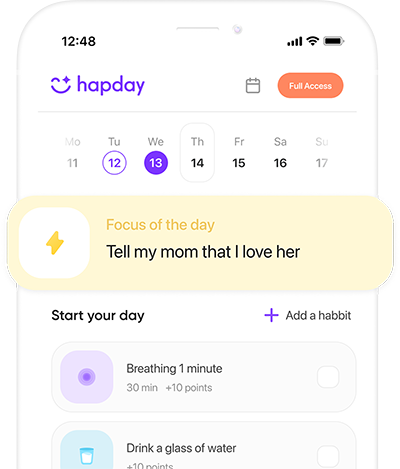
Keep your bedroom cool to mimic nighttime’s natural temperature dip, and reserve the bed for sleep and intimacy only, training your brain to associate your bedroom with rest. Tools like Hapday, enjoyed by over three million users, complement meditation with mood tracking and dedicated sleep programs—a robust approach for those who crave holistic solutions.
Find Support Through Community
Connecting with a community offers reassurance and drive, making the quest for better sleep less solitary. Exploring forums or local meditation groups could reveal others marching in sync. Sharing experiences is both affirming and enlightening.
Take Jamal; recovering from grueling night shifts, he found comfort among other night-shift workers who embraced nocturnal meditation. Their shared stories redefined his routine, significantly enhancing his sleep quality.
Meditation for Long-Term Sleep Gains
Sustained meditation practice unleashes ongoing benefits—like smoother sleep cycles and fewer midnight awakenings. Dr. Aliya Stevenson, a neurologist focused on sleep issues, observes: “Regular meditation practitioners enjoy deep, uninterrupted sleep. Their bodies seamlessly navigate sleep stages.”
As meditation becomes second nature, you’ll find stress’s tight grip loosening, small irritations shrugging off, emotional resilience strengthening. Sleep transforms into a replenishing reset for both mind and spirit.
The Bottom Line
Embarking on a journey with meditation is a promising, science-fueled path to improved sleep. If nudged towards these strategies and on the lookout for personalized support, Hapday’s around-the-clock coaching and tailored programs are at your disposal, trusted by millions. The journey to sound sleep has its bumps, but with mindfulness and a treasure of resources, peace is well within grasp.
Key Takeaways
- Mindfulness meditation can significantly improve sleep quality by reducing stress and enhancing relaxation.
- Consistency in meditation practice is crucial for long-term benefits, even short daily sessions can lead to progress.
- Combining meditation with sleep hygiene practices creates a holistic approach to improving sleep.
- Community support in meditation can enhance motivation and provide shared experiences for improved results.
- Progressive Muscle Relaxation can deepen meditation and facilitate better sleep through body awareness.
References
- Harvard Health Publishing
- American Academy of Sleep Medicine
- Mayo Clinic