



In our turbo-charged world where even grabbing a coffee feels like a race, mental fatigue is creeping up on Gen Z and Millennials. Especially women. Trying to juggle modern life’s never-ending demands? Trust me, you’re not alone. Grasping what mental fatigue really is, spotting its symptoms, and figuring out how to bounce back can help you stay on top of your mental game—because who doesn’t want that?
Table of Contents
- What’s Mental Fatigue, Anyway?
- Red Flags: Key Symptoms of Mental Fatigue
- Why Mental Fatigue Happens
- Tips to Tackle Mental Fatigue
- Let’s Wrap It Up
What’s Mental Fatigue, Anyway?
Mental fatigue hits you over the head when you’ve been riding the “thinking train” for too long or stressing out—mind overworked, emotions frazzled. It’s different from feeling physically beat; think of it as your brain waving a tiny white flag after overdoing it. This kind of fatigue can mess with your attention, memory, and even how you solve the simplest of issues. Suddenly, your productivity hits a dip, along with your sense of well-being.
A while back, in 2008 to be precise, a piece in the Journal of Occupational Health Psychology pointed out that mental fatigue is feeling tired, sure, but it’s also about struggling to think clearly and effectively. Students, busy professionals, and caregivers know this all too well. (Boksem & Tops, 2008… from quite some time ago.)
Red Flags: Key Symptoms of Mental Fatigue
Spotting mental fatigue early on is like finding a lifesaver in turbulent waters. Can’t ignore these telltale signs:
1. Trouble Focusing
Mental fatigue sneaks up like a naughty cat, making focus and concentration slip through your fingers. Tasks you used to breeze through? They’re hard now.
2. The Memory Game
Forgetfulness—like forgetting where you put your phone (again)—is one sign. Memory starts playing tricks on you, making it tough to stash away new information or recall recent happenings.
3. Emotional Rollercoaster
Feeling grumpier than usual? You’re not alone. Mental fatigue makes it tough to keep your emotions in check. A slight thing can tip you off balance—irritability and mood swings amp up without warning.
4. Where’s the Motive?
Here’s the kicker: mental fatigue often saps the joy out of activities you used to love. It’s like someone flipped a switch and turned your interests into chores. Ugh.
5. Physical Signs You Didn’t Expect
Even though it’s all in your head, mental fatigue can show up as headaches, endless tiredness, and even insomnia. Makes it hard to say if it’s only a body thing.
Why Mental Fatigue Happens
Figuring out what pushes you into the fatigue zone is like uncovering puzzle pieces you didn’t know you had. Here’s what’s often at play:
- Stress Overload: Nonstop stress eats away at your mental energy till you’ve got nothing left in the tank.
- Missing Shut-eye: Not grabbing enough Z’s? That sleep shortage makes brains sluggish—the science says so.
- Infosplosion: With screens showing up everywhere, our brains get clobbered with info, leaving a frazzled mess.
Tips to Tackle Mental Fatigue
There’s good news: getting through mental fatigue isn’t mission impossible. You’ve got options to regain vitality and mental clarity.
1. Sleep More, Stress Less
Rest isn’t just for the lazy. According to a Sleep Health Journal study (Hirshkowitz et al., 2015) adults need 7-9 hours of sleep nightly for their minds to tick right. Got a sleep schedule? Make your bedroom a sleep haven, and ditch the phone before bed.
2. Get Your Zen On
Meditation’s not just for the hippies. Acts like mindfulness can quiet the mental frenzy. A 2010 study showed meditation sharpens focus and helps keep emotions in check (Zeidan et al., 2010). Even short sessions do wonders.
3. Take Baby Steps
When tasks look bigger than Mount Everest, break ’em down. Little victories add up—thank goodness for the Pomodoro Technique. Short bursts followed by breaks have saved many from drowning in workload chaos.
4. Eat For Your Brain
Ever heard that saying, “You are what you eat?” Nutrition stands firm as a brain buddy. As noted in a paper by Gómez-Pinilla (2008), nutrients like omega-3s, antioxidants, and vitamins keep your brainy gears turning. Stock up on fish, nuts, and greens.
5. Stay Social
Humans are social creatures, even when they’re running on empty. Chatting with friends or catching up, whether face-to-face or online, can keep isolation at bay and lift your spirits.
6. Cut Back on Screen Time
In this tech age, screens are a trap. Reduce that screen glow and mix in non-digital pastimes like reading or taking a leisurely walk—not everything has to be virtual.
Let’s Wrap It Up
Mental fatigue doesn’t have to be the pesky cousin you can’t shake. Recognize it, tackle it head-on, and regain control. Because after all, mental health is just as vital as being physically fit, right? Taking care of it means heading toward a life that’s not only fulfilling but also brimming with balance.
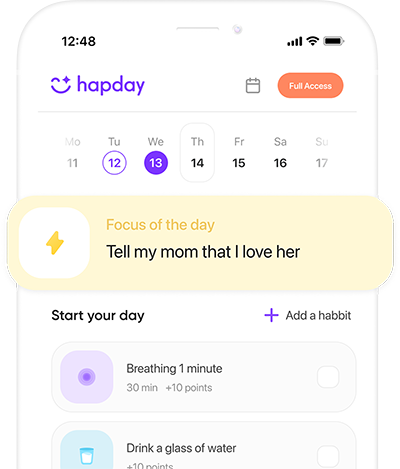
Feeling bogged down by mental fatigue? The Hapday app is here to lend a hand. It serves up daily tips that’ll boost your mental fitness journey.