

Table of Contents
- Uncovering the Roots of Guilt
- The Psychological Toll of Guilt
- Strategies to Dissolving Guilt
- Cognitive Reframing: Embracing Change
- Lifestyle Adjustments for Lasting Change
- The Forgiveness Frontier
- Envisioning a Guilt-Free Future
Key Takeaways
- Guilt can negatively impact mental health and overall well-being.
- Understanding the roots of guilt is key to overcoming it.
- Strategies such as cognitive reframing and lifestyle changes can help alleviate guilt.
- Forgiveness, both of self and others, is essential for emotional freedom.
- Support from others and resources like coaching can provide valuable assistance in managing guilt.
At the end of the day, as silence wraps itself around you like an old, familiar quilt, there it is — that creeping sense of guilt. You know the one: unfinished to-dos swirling in your mind, words spoken in haste that replay in a loop, decisions from the past whispering in your ear. Guilt, an ever-present shadow. It can stealthily infiltrate your life, weaving into your mental fabric, impacting both your mental health and overall well-being. Here’s a thought: what if the way to wellness was not just managing guilt but breaking its chains altogether?
Guilt, a psychological hitchhiker that’s been along for our entire human journey, is deeply rooted in guiding our moral compass. Yet, in our modern, frenetic lives, it can transform into a cumbersome burden. Did you know that studies indicate unresolved guilt is linked with mental health issues like anxiety and depression? The American Psychological Association would agree.
Uncovering the Roots of Guilt
Guilt isn’t just an annoying blip on our emotional radar—it’s a complex tapestry woven from personal histories, societal norms, and our unique psychological makeup.
“Guilt often stems from an internalized code of conduct that’s planted during childhood and grows with cultural and relational inputs.”
— Dr. Sarah Chen, Clinical Psychologist
Take Maya, for instance, a 28-year-old woman navigating life post-divorce. Raised to believe that failure is a no-go zone, Maya’s guilt over her marriage ending was compounded by a perceived personal failure. Even though the divorce was mutual, her sense of self-blame took root, leading to sleepless nights and chronic stress.
Maya’s story isn’t an isolated one. Research suggests that guilt is often outsized compared to the actual events, weighing heavily due to societal pressures and personal narratives. While some guilt is tied to tangible actions, much of it is irrational, lingering without reason.
The Psychological Toll of Guilt
When guilt grabs the steering wheel of your life, its impact can be profound and far-reaching. Chronic guilt can manifest physically as headaches, muscle tension, fatigue, and psychologically as anxiety, depression, and compulsive behaviors. When the mind is looped into guilt, self-criticism or avoidance becomes commonplace, neither of which bodes well for long-term wellness.
“When individuals are ensconced in cycles of guilt, their vision narrows, and their problem-solving creativity takes a hit.”
— Dr. Adam Florez, Cognitive Behavioral Therapist
Stress mounts, self-esteem plummets, and relationships take a backseat on the guilt highway.
Strategies to Dissolving Guilt
Who says guilt is a permanent fixture? It’s more like a tangled string, just waiting for some patient unwinding. Various methods can help you loosen this grip and rediscover a path to wellness.
First things first—acknowledge your guilt without the gavel of judgment. By identifying its source and recognizing what’s triggering, you begin to dismantle its control. Cognitive Behavioral Therapy (CBT) is one such tool that emphasizes addressing those twisted guilt-infused thoughts and reworking them with constructive alternatives. Ever tried journaling? Writing feelings down can act as an external lens on guilt, making its roots clearer. And studies—like those from Harvard Health—show that mindfulness regularly reduces anxiety and stress… pretty convincing, right?
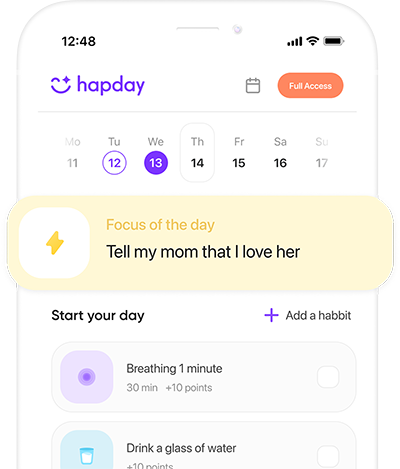
Need to talk? Reach out to someone—be it a friend, family member, or a mental health pro. Sharing can lighten your emotional load and offer fresh perspectives. Over 3 million people have found relief through mental health coaching platforms like Hapday, offering 24/7 access to live coaching—perfect for when guilt decides to visit at 2 a.m.
Cognitive Reframing: Embracing Change
To truly free yourself from guilt’s tight grasp, cognitive reframing is essential—reshaping how you think. Shifting blame from self to understanding that imperfection is simply human.
“Guilt often centers on unmet expectations—both personal and perceived. Reframing challenges these views and expands them.”
— Dr. Adam Florez, Cognitive Behavioral Therapist
Picture this: it’s late at night, and your guilt replays the day’s regrets on a constant loop. That’s where something like Hapday’s real-time AI coaching can step in, offering immediate guidance and a shift towards healthier mental patterns.
Positive affirmations and self-compassion—sounds fluffy, but they’re powerful. When you speak kindly to yourself, those old guilt pathways begin to fade, replaced by new paths of acceptance and growth. Neuroscience backs this up.
Lifestyle Adjustments for Lasting Change
Escaping guilt’s clutches isn’t solely a mental task. Often a lifestyle overhaul is in order. Physical exercise, for example, pumps up serotonin and dopamine—mood regulators essential for emotional resilience, according to the Mayo Clinic. And a balanced diet filled with omega-3s and antioxidants? They stabilize mood swings and boost energy.
Let’s not forget about connections. As Dr. Chen puts it,
“Supportive relationships validate emotions and combat the isolation guilt breeds.”
— Dr. Sarah Chen, Clinical Psychologist
Activities with others can reawaken your zeal for life and erode guilt’s grip gradually.
The Forgiveness Frontier
Ah, forgiveness—the keystone of letting guilt go. This means forgiving others when needed and importantly, forgiving yourself. While human behavior is complex, psychological studies underscore the importance of self-forgiveness for emotional freedom and well-being.
Forgiveness isn’t about excusing harmful actions; it’s about releasing their grip on your psyche. Visualization techniques can cement this practice. Imagine your guilt as a weight you’re finally choosing to set down, creating room for creativity and peace.
Envisioning a Guilt-Free Future
As you navigate this terrain to guilt liberation, expect a few setbacks. Deep-seated change takes time and patience. But each step brings you closer to a guilt-free life, carefully and warmly crafted.
Ready to champion this course of wellness? Seek genuine support to apply these strategies. Hapday (hapday.app) offers round-the-clock AI coaching to assist you in building compassion and mindful living habits, paving your road to inner tranquility.
Releasing guilt is transformative, opening doors to a fuller, richer life. By digging into its roots, reshaping thought patterns, and committing to lifestyle change, you move towards wellness that’s not just felt—it’s lived. Embrace this journey. Each act of self-forgiveness brings you closer to peace.
The Bottom Line
Releasing guilt and embracing forgiveness paves the way for deeper mental wellness. By understanding and addressing the underlying causes of guilt, employing strategies for emotional well-being, and making lifestyle changes, you can create a fulfilling, guilt-free life.
References
- American Psychological Association
- Harvard Health Publishing
- Mayo Clinic