



Table of Contents
- Unpacking the Depths of Guilt
- Steps on the Path to Overcoming Guilt
- Embracing Forgiveness
- Reaching Out for Support
- Taking Progressive Steps
- The Bottom Line
Sarah sighed deeply as she sat in her dimly lit living room, her phone clutched tightly in her hand. She had been scrolling through her Instagram when an old photo of her college friends jolted her memory. There they were, smiling, huddled close—faces she hadn’t seen in ages. Instantly, that familiar knot of guilt twisted inside her. She hadn’t kept in touch, missed too many birthdays, and her absence felt all too palpable. It was like an invisible chain, one she couldn’t quite shake off. Sound familiar? If you find yourself bogged down by guilt, you’re in good company. It’s a heavy emotion, weighing on the heart and dimming life’s joy. But imagine if, just today, you could start breaking free from it?
Let’s face it: guilt isn’t all bad. It acts as our moral compass—nudging us towards what’s right. Yet, when it looms large, always present, it becomes more burden than guide. Back in 2019, a pivotal study from the Journal of Personality and Social Psychology stressed that unrelenting guilt can pave the way to mental health issues, such as anxiety or depression (according to a report from the APA). So, it’s vital to grasp not just the science behind guilt but also the strategies that can relieve it.
Unpacking the Depths of Guilt
Where does guilt begin? It usually springs from a feeling that we’ve done wrong, whether real or imagined.
“Guilt often happens when there’s a disconnect between what we’ve done and our values.”
— Dr. Kristen Neff, Self-Compassion Expert
It’s like a nudge, urging us to mend our ways. But let’s not forget how societal pressures can inflate this feeling unnecessarily. Take Maya, for instance. At 28, she was haunted by the guilt of feeling relief after her divorce.
“It’s bizarre. I felt guilty for embracing the freedom, like I should’ve been miserable.”
— Maya, Individual Experience
Surprisingly, guilt isn’t just in the mind. It tangles with our physiology too. The brain’s limbic system—where emotions dwell—processes guilt and sets off stress responses. It’s a vicious cycle, really. The NIH warns that stress-related ailments often accompany chronic guilt, underscoring the necessity for intervention.
Steps on the Path to Overcoming Guilt
Embrace Self-Compassion
Self-compassion is a vital antidote to guilt. Dr. Neff aptly notes,
“Treat yourself with kindness, just as you would a friend—you’ll see that guilt start to dissipate.”
— Dr. Kristen Neff, Self-Compassion Expert
Accept that imperfection is part of being human. Instead of harsh self-criticism, offer yourself gentle understanding. Begin by reframing your internal dialogue. Replace the self-censure with affirmations that recognize your worth and resilience.
Engage in Reflective Journaling
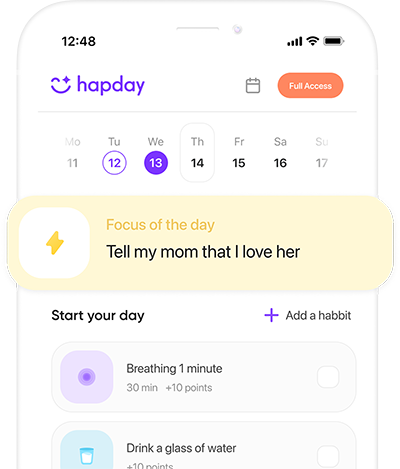
The University of Texas discovered that journaling about emotions can significantly lessen psychological distress. Reflective journaling lets you unravel guilt’s complexity, capturing your thoughts on paper. It’s like looking at your emotions through a clearer lens, making them easier to understand. Imagine it: at 2 a.m., with your mind replaying past errors, jotting down your thoughts helps. Platforms like Hapday, with its millions of users, now even offer instant AI life coaching to assist during those times of self-doubt.
Cognitive Behavioral Therapy Techniques
CBT—or Cognitive Behavioral Therapy—is a trusted ally in tackling guilt. Dr. Sarah Chen from NYU explains that it encourages people to challenge guilt-inducing thoughts, replacing them with healthier beliefs. Start by identifying those automatic negative thoughts linked to guilt. Perhaps you feel guilty for not spending enough time with family. Realize that you’re not solely responsible for maintaining those bonds. Use CBT tools to guide you in reshaping these perceptions.
Set Realistic Expectations
Ever feel crushed by guilt because you’ve set the bar impossibly high? You’re not alone. As Dr. Emily Roberts, a licensed counselor, suggests, evaluate your standards. Aren’t they too steep? Understanding your limits means realizing you don’t have to be flawless to be valued.
Practice Mindfulness and Meditation
Steeped in the present, mindfulness can anchor you away from past slip-ups. A journal dedicated to mindfulness once found that regular meditation curbs self-judgment and guilt. Techniques like guided meditation or simple breathing exercises can help tether your mind to the here and now, reducing those ruminations that fuel guilt. Consider Hapday’s breathing exercises as a practical supplement to meditation for stress relief.
Embracing Forgiveness
Forgiving others—and yourself—is akin to a balm for guilt. It’s not about excusing what happened, but freeing yourself from the emotional chains. As Lewis B. Smedes once wrote,
“To forgive is to set a prisoner free and discover that the prisoner was you.”
— Lewis B. Smedes, Theologian and Author
If forgiveness feels elusive, therapy offers a haven to explore these emotions.
Reaching Out for Support
Guilt thrives in loneliness. Engaging with supportive communities can light the way through this tangled emotion. A Harvard study highlighted that social connections strongly link to mental well-being. Whether it’s group therapy, online communities, or support groups, sharing your journey can be a balm.
Taking Progressive Steps
Unshackling yourself from guilt isn’t just an end goal—it’s an ongoing journey. Patience, practice, and persistence will gradually lift your emotional load. Every small triumph in handling guilt lays the groundwork for profound personal growth.
Sarah puts down her phone and picks up a pen. She decides to jot down one small kindness she offered today. While it might not wipe away her guilt in one swoop, it’s a start—a step towards self-compassion and forgiveness.
So, as we wrap up this exploration of guilt, remember that recognizing it for what it is, combined with smart strategies, can restore your emotional freedom. And if you’re seeking extra support to navigate this path, Hapday’s 24/7 AI coaching stands ready to assist you every step of the way.
Key Takeaways
- Guilt can act as a moral compass, but excessive guilt can lead to mental health issues.
- Self-compassion and reframing negative thoughts are essential for overcoming guilt.
- Reflective journaling helps clarify emotions and understand guilt better.
- Setting realistic expectations relieves pressure and diminishes guilt.
- Seeking support from communities can aid in navigating feelings of guilt.
The Bottom Line
Recognizing and addressing guilt with effective strategies can restore your emotional freedom, paving the way for self-forgiveness and personal growth.