

Table of Contents
- Understanding Guilt: What’s Behind the Emotion?
- The Science of Letting Go
- Steps to Alleviate Guilt
- Reach Out: The Importance of Support
- Embracing Vulnerability and Forgiveness
- Small Steps Lead to Meaningful Change
- Create a New Narrative
- References
Guilt — it sticks like honey but feels heavy as lead. I remember when Sara, this vibrant 27-year-old graphic designer, shared her tale. On paper, she’s living what some might call the millennial dream: a creative gig, a lively social circle, and the pulse of city life at her fingertips. But behind that cheerful facade, she’s dragging guilt around like a leaden anchor. Every missed deadline or canceled plan seemed to grow into a towering fault in her mind.
“Guilt has been my unwanted shadow.”
— Sara, Graphic Designer
Each night, her perceived failures replay like a miserable rerun, and she yearned for an escape, a roadmap, through this tangled emotional web.
Now, guilt? It’s not some slight discomfort—it’s a master of disguise, subtly feeding anxiety, depression, and shaking up our self-image. You’re not solo in this burden either. Recall back in 2019, a jaw-dropping 96% of women reported feeling guilty at least once a day, according to a rather illuminating Harvard study. But there’s light at the end of this tunnel; with conscious effort, it’s entirely possible to break from guilt’s iron grip and reclaim your peace.
Understanding Guilt: What’s Behind the Emotion?
To unlock emotional freedom, understanding guilt is crucial. Dr. Sarah Chen, a clinical psychologist at NYU, describes guilt as
“an emotional response to the perception that we’ve violated our moral or ethical standards.”
— Dr. Sarah Chen, Clinical Psychologist
It’s basically human to feel it, and sometimes it’s even constructive, nudging us towards amends and improvement. Yet when it’s chronic, that’s when it cripples.
Curious why we feel it? Many times, it’s about maintaining social glue, ensuring we stick to norms and nurture connections. But guilt escalates due to upbringing, societal messages, and personal quirks. A 2014 study hints that perfectionists and highly empathetic folks tend to get caught in this intensifying guilt vortex. Intriguing, right?
The Science of Letting Go
Before diving into ways to detach, let’s chat science. Neuroimaging studies? They’ve shown guilt can light up the brain’s reward system—bizarre, right? This essentially reinforces a cycle of self-criticism. Breaking this cycle is key.
One compelling approach is cognitive behavioral therapy (CBT), aiding individuals to reshape negative thought patterns. Dr. Lisa Feldman Barrett, renowned for her emotional research, says,
“Changing the guilt narrative can alter brain responses, easing its intensity and recurrence.”
— Dr. Lisa Feldman Barrett, Emotional Researcher
Steps to Alleviate Guilt
So, the real crux—how do we shun this emotional albatross? By merging cognitive and lifestyle changes, we begin to alleviate its grasp.
1. Cognitive Reframing
Let’s start with a mental pivot. Take Maya, who, post-divorce, fought hard against overwhelming guilt over her marriage’s perceived collapse. Her breakthrough? Cognitive reframing. By recognizing critical beliefs and challenging them, she transitioned from “I failed my marriage,” to “I learned about myself.” Not only did her guilt dissipate, but her growth soared too. Seems transformative, no?
2. Mindfulness Practices
Then there’s mindfulness—being present without judgment—which slashes through those cognitive loops holding us guilt-captive. Like a Mayo Clinic study cites, regular mindfulness meditation brings calm, slashes stress, and fosters resilience.
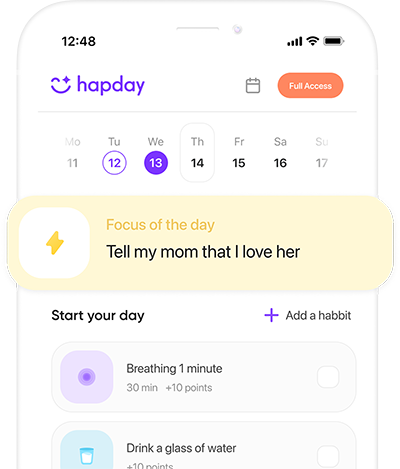
Ever been up at 2 a.m. haunted by a replayed conversation? Platforms like Hapday offer immediate support; with 24/7 coaching, it helps nip intrusive guilt in the bud.
3. Self-Compassion Exercises
Enter self-compassion, a notion championed by psychologist Kristen Neff. Seeing imperfections as shared human experiences, not personal failings, is powerful. Writing compassionate letters to self? It nurtures this mindset, tackling guilt and boosting self-forgiveness.
Reach Out: The Importance of Support
As social creatures, sharing our burdens makes them lighter. When Sara sought therapy, her therapist’s perspective brought clarity and validation. Safe havens like therapy and support groups dismantle guilt-induced shame.
Yet, therapy’s not the sole refuge. Consider the kinship at wellness retreats or in online empowerment clusters. Platforms like Hapday stretch these interactions further, offering an all-in-one option for self-betterment anytime, anywhere.
Embracing Vulnerability and Forgiveness
The art of forgiveness—liberating yet daunting. At heart, vulnerability’s a power, as Brené Brown, a storyteller and researcher, so beautifully illustrates. Embracing imperfections and owning narratives can deepen connections and foster belonging.
Maya’s Journey: After her narrative shift, a forgiveness workshop provided Maya newfound liberation. Writing forgiveness letters to herself and vocalizing them? She described feeling unburdened—proof that self-forgiveness shatters guilt’s hold.
Small Steps Lead to Meaningful Change
Change isn’t a whirlwind affair; it’s a journey of gentle persistence. Small, regular efforts—journaling, embracing gratitude, or carving ‘me-time’—wind into remarkable progress.
Tools like Hapday’s mood and habit tracking foster these practices, providing measurable feedback and motivation to stay committed.
Create a New Narrative
In the end, rewriting your guilt story is about crafting a narrative you’re proud of. It’s not about erasing past errors but integrating them into a vivid life tapestry. Through this, you transform, shifting from enduring guilt to thriving beyond it.
Shedding guilt is akin to peeling back layers; patience will be your steadfast companion. As you tread this path, expect stumbles, doubts, yet remember every step you take towards emotional liberation is profound in reclaiming your life.
For genuine support, consider Hapday. Its evidence-based psychological practices are crafted for emotional transformation, guiding millions along their journeys. Explore more at hapday.app.
Key Takeaways
- Understanding and reframing guilt can lead to emotional freedom.
- Mindfulness and self-compassion are crucial in alleviating feelings of guilt.
- Support systems enhance healing and provide valuable perspectives.
- Forgiveness, both of self and others, can significantly lighten emotional burdens.
- Small, consistent actions foster substantial personal growth over time.
The Bottom Line
Reclaiming your life from guilt is a journey that involves understanding, support, and the courage to forgive yourself. By embracing the transformative steps outlined, you can break free from guilt’s grip and thrive.
References
- Panza et al., 2019, Harvard Medical School
- Tangney et al., 2014, American Psychological Association
- Shin et al., 2015, National Institutes of Health
- Mayo Clinic Study, Mayo Clinic
- Brown, Brené, TED Talks