



The email wasn’t even cold yet when your chest went hot. One curt line from your manager—“We’ll revisit this next quarter”—and your brain wrote a whole script: They hate my work. I blew it. I’m not worth keeping. If you live with rejection sensitive dysphoria (RSD), that avalanche of feeling can arrive in seconds and swallow hours. This is exactly the kind of jagged moment where a mental health coach for RSD can be a lifeline—someone who helps you build tools for the spike, the spiral, and the steadying afterward. I have covered mental health for more than a decade, and I still think the most honest line here is simple: no one deserves to white-knuckle through that alone.
Table of Contents
- What RSD feels like—and what the science says
- How a mental health coach for RSD helps in the moment
- Set up a plan with your coach: step by step
- Skills your coach will practice with you (and why they work)
- Real people, real adjustments
- Measuring progress with a coach
- When you also need therapy or medical care
- Choosing the right mental health coach for RSD
- What to do between sessions
- Why these strategies work
- A quick word on cost and access
- What your first month can look like
- If you’re neurodivergent and masking
- If you lead or manage
- A final reframe
- Summary and next step
- The Bottom Line
- References
Key Takeaways
- RSD isn’t a formal diagnosis, but the pain is real; coaching gives you practical tools for triggers, surges, and recovery.
- Stack body, thought, and behavior strategies to interrupt spirals in real time.
- Track frequency, intensity, and duration to see progress and refine your plan.
- Choose coaches with ADHD/rejection-sensitivity experience, clear methods, and solid ethics.
- Tech and AI tools can bridge off-hours gaps, but don’t replace clinical care when needed.
What RSD feels like—and what the science says
RSD is a community term, not a formal diagnosis. Still, the pain is real: it’s the intense, fast, sometimes overwhelming emotional reaction to perceived rejection, criticism, or failure. Psychologists have studied “rejection sensitivity” for decades—essentially, the expectation and quick perception of rejection, often followed by outsized distress (APA Dictionary of Psychology). In practice, this looks less like theory and more like Tuesday afternoon—your Slack pings, your throat tightens, and suddenly the future narrows. Many people who identify with RSD also live with ADHD, where big, fast emotions and mood swings are common in adulthood (Mayo Clinic; NIMH). I’ve seen that overlap again and again in reporting since 2018, as adults finally sought ADHD evaluations during the pandemic.
“What people call RSD is really a pattern—threat detection turned up high, then a cascade: racing thoughts, body alarm, and protective behaviors like people-pleasing, rage, or retreat. Coaching gives you playbooks for every step of that cascade.”
— Dr. Lena Ortiz, Licensed Psychologist
The key here is function. Why do feelings hit so hard, so fast? From a science lens, your nervous system flags social threat like physical danger. Heart rate spikes, breathing shallows, and your thinking narrows to worst-case scenarios—classic stress physiology. Interventions that target both body and thoughts can dial down the alarm. That’s where a mental health coach for RSD comes in. Think tactical, not theoretical; you need moves you can execute in a hallway or a Zoom window.
How a mental health coach for RSD helps in the moment
Therapy treats diagnosable conditions, past wounds, and complex patterns. Coaching is different: it’s future-focused, practical, and built around skills, experiments, and accountability. With RSD, a coach helps you intervene at three crucial points. I favor this distinction; muddling therapy and coaching helps no one.
- Pre-spiral: spotting micro-triggers and preparing scripts and boundaries
- During the surge: quick body-based resets and cognitive tools
- Aftercare: repair conversations, reflection, and habit tweaks so next time lands softer
“Coaching shines in the ‘now what?’ phase. We map your personal RSD pattern like a weather radar, then pre-build steps that shorten the storm—from 90 minutes of collapse to 9 minutes of recovery.”
— Alex Morgan, PCC, ADHD Coach
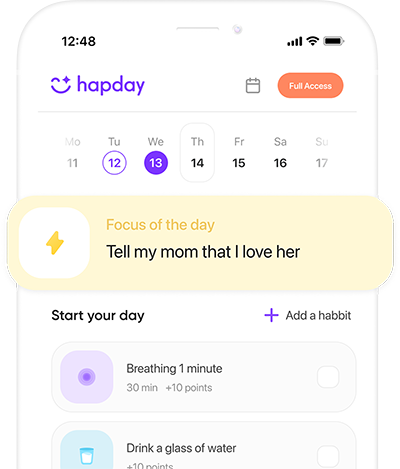
If your worst episodes hit at odd hours, platforms like Hapday can be useful because you can talk to an AI coach on demand when rumination spikes at 1 a.m., rather than waiting days for an appointment. The 24/7 access means you can practice your plan in the exact moment you need it. I’m cautious about tech solutions, but in acute moments, immediacy beats perfection.
Set up a plan with your coach: step by step
You’ll get the most from a mental health coach for RSD if you treat it like a training program. Here’s how to structure it. Consider printing this section—the repetition helps wire the skills.
-
1) Name your personal pattern
Why it works: Awareness changes the brain’s prediction. When you label a trigger early, your amygdala calms and your prefrontal cortex can grab the wheel. In everyday terms: name it so it does not name you.
How to do it: In your first sessions, list your top five triggers (e.g., “slow text replies,” “manager edits”). Rate the intensity (0–10), the body cues (jaw, gut, chest), and the typical behavior that follows. Your coach will turn this into a “RSD Map” you’ll revisit weekly. My bias: if it is not written down, it is not real enough to change.
-
2) Design a 3-layer response
Why it works: Stacking tools—body, thought, behavior—hits the system from multiple angles, increasing the chance you interrupt the spiral. Multimodal beats single-shot almost every time.
How to do it:
- Body: 60–90 seconds of paced breathing (e.g., inhale 4, exhale 6), which research links to a calmer stress response (Harvard Health).
- Thought: a 3-line reframe (“I noticed a trigger; my body is loud; I’ll check facts before I decide what this means”). CBT-style reframes have strong evidence for reducing anxiety and catastrophic thinking (APA).
- Behavior: a 5-minute delay before replying, or a prewritten “holding” message: “Got your note—processing and will circle back by 3.” In my experience, this one sentence has saved more relationships at work than any elaborate speech.
-
3) Build “scripts with spine”
Why it works: People-pleasing and over-explaining are RSD safety strategies. Scripts protect relationships without sacrificing your needs. Boundaries read cold on paper; in real voices, they are care with edges.
How to do it: Draft two versions with your coach for common landmines—one gentle, one firm. Practice aloud. “Thanks for the feedback. For clarity, what’s the one change that would make this a yes?” or “I can’t take that on this week; I can offer X by Friday.” Record yourself; micro-edits to tone matter.
-
4) Rehearse exposure in tiny doses
Why it works: Gradual exposure retrains threat circuits. You learn you can survive discomfort, and the predicted catastrophe rarely happens. Discomfort is data, not danger.
How to do it: Choose one mild trigger (e.g., send a message with one fewer emoji “softener”). Track your distress before, during, after. Review the data with your coach; adjust and repeat. One small risk per week is sustainable; five is theater.
-
5) Create micro-repairs
Why it works: After an RSD surge, shame often lingers. Repairing is skill-building and identity-building—you become someone who can come back and cleanly close loops. In my view, repair is leadership at any level.
How to do it: Use a two-sentence follow-up within 24 hours: “Thanks again for the notes. I was reactive yesterday; I’m aligned on the next draft and will send it by Thursday.” Done is better than perfect here.
Skills your coach will practice with you (and why they work)
- Interoception drills: Short body scans teach you to notice early physiological cues so you intervene at a 3/10, not a 9/10. Mindfulness has a growing evidence base for stress and emotion regulation (APA). If you ask me, catching the 3/10 is the quiet superpower.
- Cognitive triage: Your coach will help you separate “fact vs. fear” in 60 seconds. The brain loves binary thinking under stress; CBT tools add nuance back quickly. A one-minute audit beats a one-day spiral.
- Self-compassion reps: Gentleness isn’t fluff. A kinder inner voice is linked to better mental health and resilience, which lowers shame-fueled spirals (Harvard Health). I have never seen self-criticism deliver the growth it promises.
- Boundaries in practice: Instead of abstract advice, you’ll role-play an actual “no,” then apply it this week, then debrief. Reps build range.
- Nervous system “bookends”: Open/close your day with regulation (breathing, stretching, a 2-minute check-in). Consistency lowers baseline reactivity over time (NCCIH). Think of this as maintenance—not a makeover.
“When someone with RSD builds even two reliable moves—like a breath pattern and a reframe—their sense of agency jumps. That felt control is a predictor of better outcomes across anxiety-related conditions.”
— Dr. Priya Natarajan, Psychiatrist
Real people, real adjustments
- Maya, 28: A delayed lawyer email sent her into a two-hour blackout scroll. With her coach, she logged cues (clammy hands, tunnel vision), practiced a 90-second exhale drill, and templated a three-sentence boundary for legal updates. Eight weeks later, her “time to steady” after a trigger went from 75 minutes to 8. She kept her job, and her lawyer started sending subject lines with “No Action Needed”—a small environmental tweak her coach suggested requesting. I wish we taught this in high school.
- Jordan, 33: He dreaded code reviews and pre-judged every comment as “You don’t belong here.” His mental health coach for RSD introduced “evidence hour” on Fridays: he copied all compliments, green checks, and shipped features into a running doc. In the next sprint, his distress ratings during reviews dropped from 9/10 to 5/10. The proof wasn’t theoretical; it was on the page. In 2021, The Guardian reported on how online feedback loops sharpen perfectionism; Jordan’s counter-loop is a humane antidote.
Measuring progress with a coach
A mental health coach for RSD will keep score in a compassionate, data-informed way:
- Frequency: How often do spirals hit per week?
- Intensity: Peak distress ratings (0–10)
- Duration: Minutes from trigger to steady
- Recovery actions: Which tools you actually used
- Repair rate: How quickly and cleanly you followed up after a flare
Use simple trackers, not epics. Two numbers and a one-line note per trigger are enough. Over a month, you’ll see patterns—a certain time of day, a specific colleague, the link to poor sleep. Adults who get less than 7 hours are more likely to report mental distress; protecting sleep is part of emotion regulation (CDC). Your coach will help you shift routines accordingly. My take: if you cannot measure it, you cannot reasonably expect it to change.
When you also need therapy or medical care
Coaching isn’t a substitute for clinical care. If RSD reactions tie into trauma, depression, self-harm, or past abuse, therapy with a licensed mental health professional is important. And because many folks with RSD also have ADHD, it’s reasonable to consider a medical evaluation; ADHD treatment can include behavioral strategies and, when appropriate, medication (NIMH). A solid coach will know these boundaries and collaborate. I have a bias toward integrated care—silos help systems, not people.
Choosing the right mental health coach for RSD
- Look for specialization: Ask about experience with ADHD and rejection sensitivity. Request examples of protocols they use for in-the-moment spirals. Specifics beat slogans.
- Ask about methods: Do they teach CBT-informed reframes, mindfulness, and body-based skills? Can they outline a 6–8 week plan?
- Check structure: How often do you meet? What support exists between sessions (messaging, brief check-ins, or structured homework)?
- Ethics and scope: The coach should clearly state when therapy is indicated and how they handle crises.
- Chemistry matters: After the first call, ask yourself, “Did I feel seen? Did I leave with one concrete experiment?” If not, keep looking—fit is not a luxury; it is the work.
What to do between sessions
A mental health coach for RSD is most effective when your week supports your nervous system.
- Pre-load your environment: Pin your scripts and breathing cues where you’ll see them (desk, Notes app, lock screen).
- Protect your basics: Aim for 7–9 hours of sleep (CDC), steady meals, and light daily movement. Your brain spends less time in threat mode when the body is fed and rested.
- Run tiny experiments: One new boundary, one graded exposure, one compassionate check-in. Debrief with your coach; keep what works; ditch what doesn’t.
- Journal the quick facts: What was the trigger? What did you predict? What happened? Your future self will thank you for the receipts. In my view, reflection is the cheapest tool with the highest return.
Why these strategies work
- Physiology: Slower exhales activate parasympathetic pathways, easing the stress response (Harvard Health; NCCIH).
- Cognition: CBT-style reframing interrupts catastrophizing by forcing evidence gathering (APA).
- Behavior: Exposure teaches your brain that discomfort isn’t danger; the predicted rejection either doesn’t arrive or is survivable.
- Identity: Every time you choose a skill over a spiral, you gather proof that you’re capable. That proof sticks. Its grip loosens on future storms.
A quick word on cost and access
Traditional coaching and therapy can be expensive and hard to schedule. If you need accessible, on-demand practice, it’s worth exploring AI coaching tools as part of your stack. For example, when a flare hits outside office hours, a brief guided breathing session or a quick cognitive check with a coach-like tool can stop the mental doomscroll and preserve your night. I would never suggest tech replaces humans; I do suggest it can bridge the 2 a.m. gap.
What your first month can look like
- Week 1: Map your RSD pattern, pick two triggers, build a 3-layer response.
- Week 2: Rehearse scripts, set up environmental cues, do one tiny exposure.
- Week 3: Add a recovery ritual (repair template + 10-minute reset walk), refine your reframes.
- Week 4: Review your data; choose one bigger exposure, celebrate proof points, and adjust the plan.
By the end of the month, expect fewer detonations, shorter storms, and a clearer sense of your own levers. Progress here is rarely linear; it is lumpy and real.
If you’re neurodivergent and masking
Masking—smoothing your edges to avoid judgment—can amplify RSD because it makes rejection feel like exposure of your “real” self. Bring this to coaching. You might practice unmasking in micro-moments: keeping your natural cadence in one meeting, or stating a need plainly once this week. The goal isn’t to never mask; it’s to give yourself choice. Choice, then change.
If you lead or manage
If you manage someone who names RSD or you suspect struggles with rejection sensitivity, you can help:
- Offer process feedback early, not just outcome feedback at the end.
- Use explicit subject lines: “No action needed,” “Request,” “Kudos.”
- Normalize draft culture: “We improve in public here.”
These are healthy for all humans, not just those with RSD. Good management is preventative mental health.
A final reframe
Rejection can’t be eliminated. But its power over your day can be. With a mental health coach for RSD, you’re not trying to become someone who never feels stung—you’re becoming someone who knows exactly what to do next. That is resilience, practiced, not performed.
Summary and next step
You just learned how to pair science-backed tools with a mental health coach for RSD—mapping triggers, stacking body-mind skills, and practicing clean repairs so the spike doesn’t own your day. If you want steady support while you build these habits, consider Hapday. It offers 24/7 AI coaching sessions and mood/habit tracking that make it easier to practice skills in the moment they matter most. As I often tell readers, small tools, used often, beat grand plans that never leave the page.
The Bottom Line
RSD can feel like a sudden storm, but with the right coach and a simple, repeatable plan, you can shorten the surge, steady faster, and repair cleanly. You’re not broken—you’re sensitive, and with structure, sensitivity becomes a strength.
References
- NIMH — Attention-Deficit/Hyperactivity Disorder (ADHD)
- Mayo Clinic — Adult ADHD: Symptoms and causes
- APA — Dictionary of Psychology: Rejection sensitivity
- APA — Cognitive Behavioral Therapy (patient resource)
- Harvard Health — Breathing techniques for stress
- NCCIH (NIH) — Relaxation Techniques: What You Need To Know
- CDC — How Much Sleep Do I Need?
- APA — Mindfulness/Meditation
- Harvard Health — Why self-compassion works