



If you’re not feeling progress, learning how to switch a mental health coach safely can protect your momentum and your mental health. This isn’t “giving up.” It’s stewardship—of time, money, and hope. The working relationship itself strongly predicts outcomes: a meta-analysis of 295 studies found the therapeutic alliance correlates with better results (r ≈ .28) across modalities. And about 1 in 5 clients end therapy prematurely, often due to poor fit—so course-correcting is common and wise. In 2021, the American Psychological Association noted surging demand for mental health services and longer wait lists; moving efficiently isn’t a luxury now, it’s a necessity. I’d argue fit beats any specific technique when you’re trying to get unstuck.
Table of Contents
- Why a safe switch matters
- How to Switch a Mental Health Coach Safely: a step-by-step plan
- Protect your data and continuity of care
- Questions to ask so you switch a mental health coach safely
- Red flags in a new coach
- Mini-scripts you can use
- What progress should feel like
- Summary and next step
- References
Why a safe switch matters
- Your time and money are finite—coaching is most effective when goals, methods, and values align. A mismatch costs more than you think, because drift becomes the default.
- Evidence suggests coaching can improve well-being and goal attainment, but fit moderates those gains. Meta-analyses show positive effects on performance and well-being in coaching contexts, and health/wellness coaching improves mental health markers in many trials. In short: the right relationship amplifies the science. My view: results follow clarity, and clarity follows alignment.
How to Switch a Mental Health Coach Safely: a step-by-step plan
-
1) Define what “better” looks like for you
- Name 1–3 outcomes you want in the next 8–12 weeks (e.g., less Sunday dread, consistent sleep schedule, fewer panic spikes).
- Use simple, validated trackers so you can see change: PHQ-9 for low mood, GAD-7 for anxiety. Most people can complete these in under 2 minutes. Bring scores to your next sessions—old and new. A concrete target—however modest—beats vague hope. I prefer “two fewer panic spikes per week” over “feel calmer.”
-
2) Review your agreement and boundaries
- Re-read your coaching contract for termination clauses, notice periods, and refund policies.
- Ethical coaching includes clarity about scope (coaches don’t diagnose or treat mental illness), confidentiality limits, and referral when needs exceed scope. If the paperwork is murky, that’s data. My bias: clear contracts correlate with clear care.
-
3) Have a closure session (even if it’s awkward)
- Script it: “I appreciate our work. I’m not getting what I need around [X outcome], so I’m going to try a different approach. Could we use today to summarize key insights and plan a clean handoff?”
- Ask for a brief written summary of your goals, strategies tried, and what seemed to help. This protects continuity of care. One meeting, twenty minutes—even a short wrap-up can save weeks later. I’ve seen more regret from silent exits than from honest, courteous endings.
-
4) Build a transition safety net
- Identify your high-risk windows (late-night spirals, Sunday scaries). List 3 coping tools you’ll use in that gap (breathing exercise, brisk walk, journaling prompt, text a friend).
- If you’ve had any suicidal thoughts, make a one-page safety plan (warning signs, coping steps, reasons to live, crisis contacts). The Safety Planning Intervention has been shown to reduce suicidal behavior and increase treatment engagement.
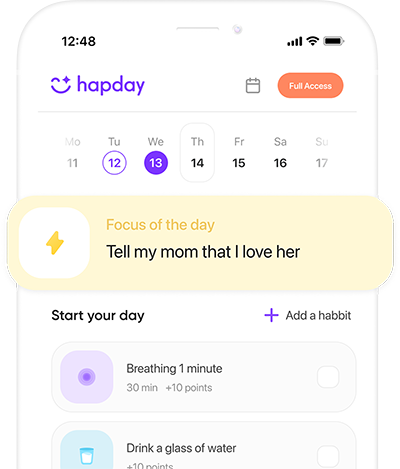
- Real-scenario weave: If anxious thoughts surge at 2 a.m. during the transition, an AI coach like Hapday offers 24/7 sessions plus mood and habit tracking so you can process in the moment and keep your continuity of care between humans. Redundancy isn’t overkill here—it’s wise.
-
5) Vet the next coach with evidence and fit
- Ask about methods connected to outcomes: cognitive-behavioral tools for anxiety, acceptance and commitment strategies for avoidance, sleep restriction/stimulus control for insomnia.
- Interview checklist:
- What outcomes do clients like me usually see by 8–12 weeks?
- How will we measure progress (e.g., GAD-7 changes, habit consistency)?
- What’s your plan if I stall or regress?
- How do you coordinate with therapists if I need both?
- Harvard Business Review has long covered coaching claims and ROI; ask for specifics, not slogans. My take: if you can’t see the method, you can’t trust the promise.
-
6) Start with a 3-session experiment
- Agree on a micro-goal, e.g., “Reduce GAD-7 by 3 points” or “3 bedtime routine nights/week.”
- Review data each session, not just vibes. If there’s no movement by session three, pivot tactics or reconsider the match. Three sessions—enough to test a hypothesis, not enough to sink months. I favor time-limited trials because they keep everyone honest.
Protect your data and continuity of care
- Ask for your records: Even if your coach isn’t a HIPAA-covered entity, request a summary of your goals, exercises, and homework.
- Mind app privacy. A BMJ analysis found many mental health apps shared data with third parties and had unclear privacy practices. Check exactly what’s collected, stored, and shared.
- Use secure channels for any transfer (encrypted email or client portals). Avoid sending personal summaries over DMs.
- Keep your own file: goals, scores (PHQ-9/GAD-7), exercises that worked, relapse triggers. This helps your new coach get you moving fast. I’m firm on this point: you own your story—and its paper trail.
Questions to ask so you switch a mental health coach safely
- Scope: Where do you draw the line between coaching and therapy? When would you refer out?
- Approach: Which evidence-based techniques do you use for my goal?
- Measurement: How will we track change weekly?
- Logistics: Rescheduling policy? Boundaries for texts/DMs? What’s the plan if I hit crisis?
- Values: How do you work with women’s health factors (hormonal cycles, caregiving load, workplace bias) that affect stress and capacity?
Good questions do more than inform; they set tone and boundaries. In my experience, how someone answers is as telling as what they answer.
Red flags in a new coach
- Guarantees of quick cures or one-size-fits-all blueprints
- Discouraging you from therapy or medication when indicated
- Vague outcomes and no measurement plan
- Boundary issues (frequent late cancellations, pushy sales energy, disrespecting pronouns or identity)
One more to watch: disdain for data—or for your lived experience. Either extreme is a miss.
Mini-scripts you can use
- To your current coach: “Thank you for everything. I’m shifting to a different style to better match my goals. Could we do a wrap-up and summary so I can keep momentum?”
- To a prospective coach: “My priority is [X]. In 8–12 weeks, what change would we target, and how will we measure it?”
Scripts aren’t cages; they’re ramps. Edit for your voice, keep the spine.
What progress should feel like
- Within 2–3 sessions: clearer goals, a weekly plan, one or two tools that reduce distress or build capacity
- By 6–8 sessions: measurable shifts (lower scores, more consistent habits), or a thoughtful pivot if something isn’t working
Momentum has a texture—less dread on Sundays, one extra hour of real sleep, fewer 2 a.m. spirals. If it’s all talk and no change, it’s time to recalibrate.
Summary and next step
Switching coaches isn’t quitting—it’s optimizing. The core idea is simple: define outcomes, close well, protect your data, and choose a method-measuring coach so the science can work for you. If you want real support to switch a mental health coach safely and keep momentum, consider Hapday (hapday.app). It offers around-the-clock AI coaching plus tracking, so your transition stays grounded and consistent. And yes, pace yourself; a careful handoff today protects its payoffs tomorrow.
References
- Flückiger C, Del Re AC, Wampold BE, Horvath AO. The alliance in adult psychotherapy: A meta-analytic synthesis. Journal of Consulting and Clinical Psychology. 2018. https://doi.org/10.1037/ccp0000757
- Swift JK, Greenberg RP. Premature discontinuation in adult psychotherapy: A meta-analysis. Journal of Consulting and Clinical Psychology. 2012. https://doi.org/10.1037/a0028226
- Theeboom T, Beersma B, van Vianen AEM. Does coaching work? A meta-analysis on the effects of coaching on individual-level outcomes. The Journal of Positive Psychology. 2014. https://doi.org/10.1080/17439760.2013.837499
- Sforzo GA, et al. Health and wellness coaching works: A review of the evidence. Global Advances in Health and Medicine. 2017. https://doi.org/10.7453/gahmj.2017.061
- Huckvale K, Torous J, Larsen ME. Assessment of mental health app privacy policies and practices. BMJ. 2019. https://www.bmj.com/content/364/bmj.l533
- Kroenke K, Spitzer RL, Williams JB. The PHQ-9: Validity of a brief depression severity measure. Journal of General Internal Medicine. 2001. https://doi.org/10.1046/j.1525-1497.2001.016009606.x
- Spitzer RL, Kroenke, Williams JB, Löwe B. A brief measure for generalized anxiety disorder: GAD-7. Archives of Internal Medicine. 2006. https://doi.org/10.1001/archinte.166.10.1092
- Stanley B, Brown GK. Safety planning intervention: A brief intervention to mitigate suicide risk. Cognitive and Behavioral Practice. 2012. https://doi.org/10.1016/j.cbpra.2011.01.001