



These days, with the pace of life feeling like it’s always on fast forward, keeping motivation alive can seem nearly impossible. Particularly for Gen Z and millennial women—who are busy navigating work ambitions, personal dreams, and social engagements—burnout looms large. The fix? Yep, you guessed it—effective self-care. By really digging into the science of self-care and what makes us tick, you can whip up a routine that not only lasts but fuels those future goals.
Table of Contents
- How Self-Care and Motivation Are Intertwined
- Getting Strategic with Self-Care
- Tackling Self-Care Hurdles
- Crafting Your Own Self-Care Framework
- Wrapping It Up: Your Motivation Pathway
- References
How Self-Care and Motivation Are Intertwined
Motivation is that internal kick that gets us out of bed and moving toward our objectives. It’s a mix of inner satisfaction and outer rewards nudging us along. Remember that old study from Journal of Personality and Social Psychology? It pointed out how intrinsic motivation—basically just personal satisfaction—gets a major boost from self-care (Deci & Ryan, 2000).
Self-care isn’t just about bubble baths or splurges, despite what Instagram says. It’s about taking care of your whole self: physically, emotionally, and mentally. The American Psychological Association found a while back that regular self-care slashes stress, ups happiness, and increases overall life contentment (APA, 2017). The science doesn’t lie, folks!
Getting Strategic with Self-Care
1. Physical Self-Care: Fuel That Body
If you’re not prioritizing your health, you’re missing a key self-care piece. Regular exercise, eating well, and hitting the hay for a good night’s sleep lay a strong foundation for energy. Seriously, the National Sleep Foundation is all about getting 7-9 hours of shut-eye to keep us performing and motivating at full capacity (Hirshkowitz et al., 2015).
Exercise—let’s be real—it’s a mood booster and an energy zapper. According to Psychology of Sport and Exercise, regular sweaty sessions flood you with endorphins that naturally pump up the mood and motivation (Biddle & Asare, 2011).
2. Emotional Self-Care: Feel Your Feelings
Getting a grip on your emotions through emotional self-care is key. Whether it’s pouring your heart out in a journal, meditating, or diving into a favorite hobby, these activities are a balm for the soul. The Journal of Happiness Studies reminds us that writing it out and expressing feelings in ink can boost emotional well-being and, you guessed it, motivation (Smyth & Pennebaker, 2008).
Meditation, especially the mindfulness kind, works wonders on stress and emotional stability. I once read in the Journal of Cognitive Enhancement, it sharpens focus and diminishes our knee-jerk reactions, pushing motivation levels higher (Zeidan et al., 2010).
3. Social Self-Care: Cultivate Your Circle
Humans? We’re hardwired social beings, and maintaining relationships is part of solid self-care. Building genuine connections offers the support and encouragement we need to sustain our drive. One piece from the Journal of Social and Personal Relationships tells us that those with strong social ties report higher motivation and life joy (Gallagher & Vella-Brodrick, 2008).
Social activities—like chilling with friends, joining clubs, or giving back through community service—nurture social wellness in ways that count. They keep us emotionally afloat and offer chances for positivity and motivation.
Tackling Self-Care Hurdles
While many know self-care’s vital, actually doing it is another story—time crunches, guilt, you name it, all stand in the way. It means shifting perceptions and seeing self-care not as a luxury but a must-have.
1. Time Management: Make Space for You
Managing your time well is some serious self-care magic. Get structured and carve out slots for these vital rituals. Stuff like planners, calendars, or handy apps will keep your self-care game on track and on time.
2. Mindset Matters: Practice Kindness
Self-compassion is about treating yourself with the kindness you’d extend to a close buddy. According to Dr. Kristin Neff, a self-compassion expert, this mindset not only elevates mental health but also amplifies our motivation by nurturing a healthy self-image (Neff, 2011).
Crafting Your Own Self-Care Framework
Your self-care should mirror your individuality. Pinpoint the areas in need—be it physical, emotional, or social—and set reachable targets. Slowly weave these habits into your life.
- Know What You Need: Look at your life as it stands. What aspects could use a self-care upgrade?
- Realistic Goals FTW: Keep goals doable and motivating to promote wellness.
- Check In Regularly: Keep tabs on your self-care journey, tweaking it to continually cater to your needs.
Wrapping It Up: Your Motivation Pathway
Bringing self-care into your everyday is key in boosting motivation. By committing to your physical health, emotional resilience, and social bonds, you’re laying down a strong motivational base. Remember, self-care is unique to each person—let it suit your life and your needs.
Remember, taking care of yourself is never selfish; it’s a must. By committing to self-care, you’re setting the scene for a motivated, healthier, and happier future.
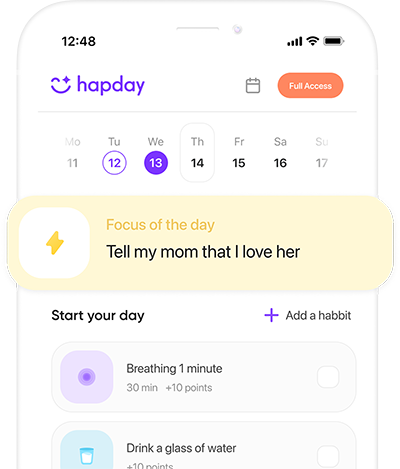
Thinking of placing self-care at the heart of your routine? Check out Hapday to revitalize your motivation journey.
References
- Deci, E. L., & Ryan, R. M. (2000). The “what” and “why” of goal pursuits: Human needs and the self-determination of behavior. Psychological Inquiry, 11(4), 227-268.
- American Psychological Association. (2017). Stress in America: Coping with Change.
- Hirshkowitz M, Whiton K, Albert SM, Alessi C, Bruni O, DonCarlos L, Hazen N, Herman J, Katz ES, Kheirandish-Gozal L, Neubauer DN, O’Donnell AE, Ohayon M, Peever J, Rawding R, Sachdeva RC, Setters B, Vitiello MV, Ware JC. (2015). National Sleep Foundation’s sleep time duration recommendations: methodology and results summary. Sleep Health, 1(1), 40-43.
- Biddle, S. J. H., & Asare, M. (2011). Physical activity and mental health in children and adolescents: A review of reviews. Psychology of Sport and Exercise, 12(5), 347-356.
- Smyth, JM., & Pennebaker, JW. (2008). Exploring the boundary conditions of expressive writing: In search of the right recipe. British Journal of Health Psychology, 13(Pt 1), 1-7.
- Zeidan, F., Johnson, S. K., Diamond, B. J., David, Z., & Goolkasian, P. (2010). Mindfulness meditation improves cognition: Evidence of brief mental training. Consciousness and Cognition, 19(2), 597-605.
- Gallagher, E. N., & Vella-Brodrick, D. A. (2008). Social support and emotional intelligence as predictors of subjective well-being. Journal of Social and Personal Relationships, 25(2), 261-279.
- Neff, K. D. (2011). Self-compassion, self-esteem, and well-being. Social and Personality Psychology Compass, 5(1), 1-12.