



Let’s be real—it’s a wild world out there, isn’t it? External validation is like the daily special on too many people’s personal menus. Honestly, who doesn’t get caught up in this whirlwind sometimes? But here’s the scoop: Understanding and practicing self-love is—oops, I meant can be—absolutely essential for maintaining emotional wellbeing, especially for Gen Z and Millennial women dancing through the intricacies of today’s life. Stick around as we dive into the concept of self-love and pepper in some science-backed daily habits to nurture it.
Table of Contents
- The Psychology Behind Self-Love
- The Importance of Self-Love in Emotional Wellness
- Daily Practices to Enhance Self-Love
- Overcoming Barriers to Self-Love
- Wrapping Up
The Psychology Behind Self-Love
What’s self-love, you ask? Well, it’s kinda like an authentic appreciation for yourself that springs up from actions nurturing your growth—be it physical, psychological, or even spiritual. I remember reading this: A study in The Journal of Personality and Social Psychology once revealed that people with high self-love boast better emotional regulation, chill way more, and rate their life satisfaction pretty high (Neff, 2003). Anyway, the gist is that self-love isn’t just some fleeting fad; it’s basically the backbone of emotional wellbeing. At least, that’s how it seems to me.
The Importance of Self-Love in Emotional Wellness
Let’s face it, emotional wellbeing and self-love are practically BFFs. Embracing self-love means you’re more likely to have a happy-go-lucky self-image and a clearer handle on your own emotions. Ever wondered why some folks just seem more zen? Research suggests that self-loving individuals suffer less from anxiety or depression. A 2020 study actually stumbled upon the fact that self-compassion—a pretty major self-love pillar—can notably cut down psychological stress (Ferrari et al., 2020). Makes you think, right?
Daily Practices to Enhance Self-Love
- Positive Affirmations
Kickoff your day with a dose of positive affirmations. Those little pep talks you give yourself? They’re super helpful, swapping out negative chatter in your head with positivity. A 2015 study—I scribbled down this note somewhere—mentioned that self-affirmation sparks off brain systems linked to self-valuation (Cascio et al., 2015). Cool, huh?
- Mindful Meditation
Mindfulness meditation is—how can I say this?—a game changer for self-love. It’s all about nurturing self-compassion, letting you peek at your thoughts without tossing judgment around. A research piece in Psychological Science suggests it can hush your self-critics and boost self-acceptance (Keng et al., 2011).
- Journaling
Seriously, try journaling. It’s such a fantastic way to untangle your thoughts and feelings, teaching you more about yourself in the process. Turns out, jotting down your experiences aids emotional processing, amplifying self-awareness and, guess what? Self-love. Studies point to expressive writing sky-highing mental health and improving wellbeing (Pennebaker, 1997).
- Setting Boundaries
Healthy boundaries are critical, no question about it. Didn’t someone once say that recognizing and vocalizing your limits protects your emotional turf? Supposedly, research backs this—folks who set firm boundaries boast slap-happy relationships and stress less (Smith, 2019).
- Engage in Physical Activity
We all know this, but a gentle reminder doesn’t hurt: Get moving! Physical activity isn’t just for beefing up health but also for boosting emotional wellbeing. Those endorphins have magic powers—swear it’s true. An article in the American Journal of Preventive Medicine affirmed regular exercise reduces anxiety symptoms (Blumenthal et al., 2007).
- Self-Care Rituals
Self-care rituals anyone? They’re golden for crafting a nurturing routine, be it relaxing baths or diving into a favorite book. The main point is making time to prioritize your wellbeing. Studies reveal that indulging in self-care can do wonders for mood and stress reduction (Kabat-Zinn, 1990).
Overcoming Barriers to Self-Love
Despite all the fab benefits, self-love challenges abound—got any societal pressures or inner critics in your life? Recognizing and wrestling these demons requires active effort. Therapy or counseling might just give you the arsenal to combat those gnarly issues compromising your self-love.
The Role of Therapy
Therapy has this cool way of reshaping self-love perceptions. Whether it’s CBT or mindfulness-based practices, engaging in therapy has shown marked improvement in fostering self-compassion and quelling self-doubt. So sitting down with a therapist might just be the thing—you never know (Levenson et al., 2016).
Community Support
Here’s the thing: community matters, big time. A tight-knit circle—supportive pals and family—can mend your self-love journey. Social support never goes outta fashion; it’s pegged to bolster mental health and acts as a defense shield against stress (Cohen, 2004).
Wrapping Up
Whew, got to the end! Ultimately, understanding self-love isn’t a quick hop but rather a patient and dedicated journey. By integrating daily practices like positive affirmations, mindfulness, and self-care into your lifestyle, you’re nurturing your emotional wellbeing in wondrous ways. Remember—self-love offers a unique lifelong journey, touching on growth and profound self-discovery.
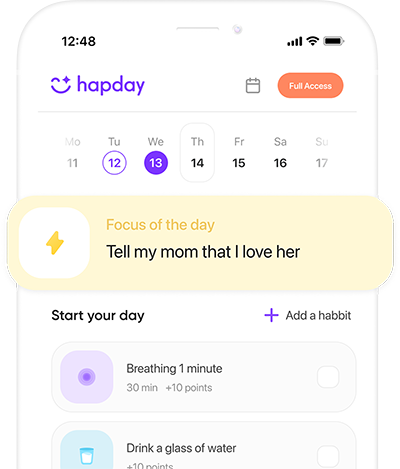
Ready to gift yourself some self-love starting today? Why not embrace this transformative journey with a little help from the Hapday app, a digital guide for enhancing emotional wellbeing. Get started now with Hapday.
P.S. Remember, no pressure—it’s all about your journey!