



Table of Contents
- Understanding Burnout
- Week 1: Self-Assessment and Awareness
- Week 2: Implementing Self-Care Routines
- Week 3: Building a Support System
- Week 4: Reflect and Adjust
- Conclusion
- References
Understanding Burnout
Before zooming into solutions, let’s press pause to look at what’s causing this mess. Sure, the workplace is a major culprit, but personal life stressors like endless chores or rocky relationships are troublemakers, too. What does burnout look like? Picture this: you’re exhausted, motivation’s nowhere to be found, and everything—everything—feels like a chore. It’s like that saying from the Journal of Occupational Health Psychology (2020): burnout doesn’t just poke your career; it messes with your whole life satisfaction.
Week 1: Self-Assessment and Awareness
Identify Stressors
First things first, you’ve got to figure out what’s stressing you out. Is it the never-ending emails at work, someone at home who’s more dramatic than a soap opera, or maybe it’s a cocktail of both? The American Psychological Association says pinpointing these can lead to more effective ways to address them.
Set Achievable Goals
Then, it’s time to set some down-to-earth goals. Don’t aim for the moon if you can’t manage a morning stroll. Maybe start small—like delegating a task or two or learning to say ‘no’ without guilt. There’s evidence (Psychological Science points this out) suggesting that specific goals can spike motivation.
Prioritize Sleep
And let’s not forget sleep. You aren’t a robot—though sometimes it feels we need to be, right? According to the National Sleep Foundation, adults should shoot for 7-9 solid hours. Lack of Z’s only pours gasoline on the burnout fire.
Week 2: Implementing Self-Care Routines
Physical Self-Care
One word: exercise. Whether it’s a brisk walk or yoga in your living room, moving helps. A study in Psychosomatic Medicine says regular activity cuts stress and boosts mood. Aim for about 150 minutes a week, but hey, even a bit counts!
Mental Self-Care
And don’t forget your mind. Ever tried meditation? Spending 10 minutes in silence can sometimes feel like a lifesaver. JAMA Internal Medicine found that mindfulness can really ease the mind’s restlessness.
Emotional Self-Care
Humans are social creatures, even the introverted ones. Pick up that phone, call a friend, or dive into a hobby. It’s about feeding your soul—the stuff that makes life feel a bit less… well, blah.
Week 3: Building a Support System
Reach Out for Support
Don’t be shy—ask for help. According to the Journal of Health and Social Behavior, friends, family, or even chatting with a professional can make a world of difference.
Professional Help
Sometimes a chat with someone who gets it, like a therapist, can be what hits the reset button. The American Journal of Psychiatry noted cognitive-behavioral therapy, or CBT, is pretty effective.
Workplace Adjustments
If it’s work that’s gnawing at your peace, consider chatting with your boss. Maybe shifting work hours or lightening your load isn’t as impossible as it seems.
Week 4: Reflect and Adjust
Evaluate Progress
So, after three weeks, how does life feel? Are you less on edge? Journals or stress apps might help keep track. Or try jotting down thoughts in a notebook—a bit old school, but it works.
Adjust Strategies
If you find some strategies are, let’s say… not doing the trick? Swapping them out might be your answer. Remember the Journal of Applied Psychology—it’s all about flexible coping.
Maintain Balance
The goal here? Keep the good vibes going. For the future, build routines that keep burnout at bay. It’s about setting yourself up for less stress and more living.
Conclusion
Burnout isn’t a life sentence. With just 30 days of focused effort, it’s possible to kick it to the curb and embrace a healthier, more fulfilled version of yourself. Consistency is golden, and being ready to tweak things as you go keeps you ahead in the game. Time to own your journey and kick burnout outta your life.
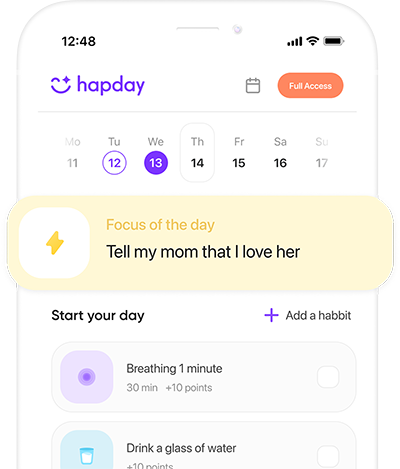
Take the first step now. Ready to tackle the burnout battle? The Hapday app can be your sidekick in managing your journey. Hapday: Your go-to for a life back in balance.
References
- Deloitte. (2021). Women @ Work: A global outlook.
- American Psychological Association. (2018). Stress in America: Generation Z.
- Journal of Occupational Health Psychology. (2020). Burnout and Job Performance.
- National Sleep Foundation. (2020). How Much Sleep Do We Really Need?
- Psychosomatic Medicine. (2017). The Benefits of Exercise for the Clinically Depressed.
- JAMA Internal Medicine. (2014). Meditation Programs for Psychological Stress and Well-being.
- Journal of Health and Social Behavior. (2017). Social Support and Health Outcomes.
- American Journal of Psychiatry. (2018). Cognitive-behavioral therapy for mood disorders.
- Journal of Applied Psychology. (2019). Coping Strategies and Stress Management.