



You know—living with ADHD is like trying to keep a dozen plates spinning all at once. It’s tricky business, and I mean, who can blame anyone for feeling worn out from the mental mid-air acrobatics it demands? This chronic feeling of being wiped out is often dubbed “ADHD burnout.” If you’re anything like me, juggling life’s relentless demands might leave you feeling like you’re mentally and emotionally running on empty. Good news though, there’s a week-long plan that can help you recharge those batteries.
Table of Contents
- Understanding ADHD Burnout
- Day 1: Acknowledge and Accept
- Day 2: Rest and Recharge
- Day 3: Nutrition and Hydration
- Day 4: Exercise and Movement
- Day 5: Mindfulness and Meditation
- Day 6: Structured Routine
- Day 7: Seek Support
- Wrapping Up
Understanding ADHD Burnout
Now, let’s clear this up—ADHD burnout isn’t just feeling pooped. It’s a never-ending cycle of stress that can tank your mood and concentration. According to something I once read in the Journal of Neural Transmission, folks with ADHD are practically magnetic for stress (who knew, right?), making burnout a frequent uninvited guest at their door (Saxbe, D. E., & Repetti, R. L., 2010). Honestly, the impact on everyday life can feel crippling.
Day 1: Acknowledge and Accept
Primary Keyword: ADHD Burnout
The first checkpoint? Simply acknowledge that burnout isn’t just for stressed-out office workers. Nope, it can hit anyone. The sooner you face it head-on, the sooner you can mend. Let’s face it, sweeping symptoms under the rug doesn’t help a thing. So, grab a journal—writing it all down really does wonders for sorting things out in your head.
Day 2: Rest and Recharge
Secondary Keywords: mental exhaustion, emotional depletion
Next up, get some solid rest. Sounds easy enough, right? But we all know sometimes getting the right amount z’s is trickier than it should be. The National Sleep Foundation says adults need a good 7 to 9 hours of shut-eye—more than just beauty sleep, huh? Maybe give that pre-sleep scrolling a rest and grab a book instead? Doesn’t hurt to try (this one took me ages to embrace).
Day 3: Nutrition and Hydration
Secondary Keywords: cognitive function, emotional regulation
Ever hear the phrase “you are what you eat”? — Turns out there’s something to that, especially concerning ADHD. Load up on omega-3s, greens, and all that nutritious goodness. And remember, drink water. Basic? Yes. Important? Also yes. A study from the Journal of Attention Disorders pointed out how a balanced diet can offer a much-needed assist in keeping those ADHD gremlins at bay (Stevens, L. J., et al., 2011).
Day 4: Exercise and Movement
Secondary Keywords: stress reduction, emotional wellbeing
Let’s be real, who doesn’t feel better after a stroll in the park or a quick dance around the living room? Exercise cranks up those feel-good vibes. The trick? Find something you genuinely enjoy—no use in forcing a regimen that feels like torture. A report in Psychiatry Research seems to agree (I reckon they know what they’re talking about), showing exercise can drastically ease ADHD plights (Hoza, B., et al., 2015).
Day 5: Mindfulness and Meditation
Primary Keyword: ADHD Burnout
Ever tried to meditate and thought, “Yeah right”? It might come as a surprise, but a few minutes of mindfulness can work wonders to tame the whirlwind raging in your brain. Mindfulness gets you to chill out and live in the now instead of stressing about tomorrow—and who couldn’t use more of that in their life? Clinical Psychology Review backs this with research supporting mindfulness as beneficial for ADHD (Mitchell, J. T., & Zylowska, L., 2016).
Day 6: Structured Routine
Secondary Keywords: cognitive function, emotional wellbeing
Creating a regular routine is like giving yourself a lifeline. Sounds boring, right? Yet, staying on track can reduce the chaos. It’s like making a roadmap for your life, and who doesn’t love ticking items off a list? According to the Journal of Consulting and Clinical Psychology, routines do indeed lighten the mental load for folks with ADHD (Molina, B. S. G., et al., 2009).
Day 7: Seek Support
Secondary Keywords: emotional depletion, stress reduction
Rounding things off, reach out—don’t go it alone. Whether it’s friends, family, or joining a support group, sharing your struggles can lighten the load. Ever tried therapy? It can be life-altering. The American Psychological Association highlights how connecting can buffer stress and boost happiness (Gurung, R. A. R., & Belle, D., 2003). Seems a good reason to call a friend.
Wrapping Up
Alright, maybe snapping out of ADHD burnout in just seven days sounds ambitious. But with a little structure and intention, it can be done—promise! It’s about rest, nourishing what you eat and drink, moving your body, calming the mind, structuring your day, and reaching out. It’s a path worth taking, even if mistimed steps happen—and they will, that’s life.
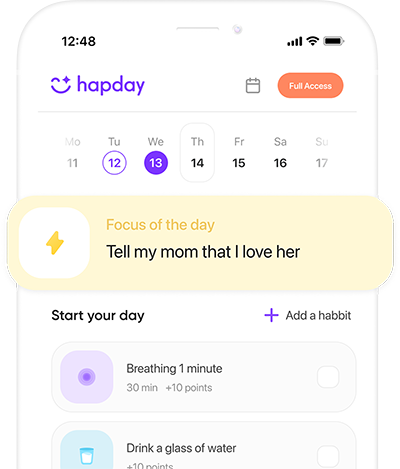
Want to dodge burnout in the future? Keep these plans on hand. And guess what? You can kick off this journey today with Hapday. They’ve got loads of resources to back you up on this quest, so you can start here: Hapday.
References
- Saxbe, D. E., & Repetti, R. L. (2010). For better or worse? Coregulation of couples’ cortisol levels and mood states. Journal of Neural Transmission.
- Stevens, L. J., et al. (2011). Dietary sensitivities and ADHD symptoms: Thirty-five years of research. Journal of Attention Disorders.
- Hoza, B., et al. (2015). ADHD and exercise: A review of the current literature. Psychiatry Research.
- Mitchell, J. T., & Zylowska, L. (2016). Mindfulness meditation and ADHD: a review of current empirical research. Clinical Psychology Review.
- Molina, B. S. G., et al. (2009). Family, peers, and community influences on ADHD. Journal of Consulting and Clinical Psychology.
- Gurung, R. A. R., & Belle, D. (2003). Social support and stress. American Psychological Association.