



You know, these days the hustle and bustle of everyday life can be downright overwhelming. It’s like we have stress and anxiety as uninvited guests hanging out with us all the time. Can you relate? This is why finding ways to boost our mental health isn’t just helpful—it’s essential. One tool that’s been getting a lot of buzz? The mental health journal. Think of it as a little refuge where you can spill your guts and make sense of the tornado of thoughts and emotions swirling in your mind. But what’s it really about, and why should you bother with one?
Table of Contents
- Understanding a Mental Health Journal
- The Perks of Keeping a Mental Health Journal
- Practical Uses of a Mental Health Journal
- How to Start Your Mental Health Journal
- Conclusion
Understanding a Mental Health Journal
First off, let’s clear something up—this ain’t just any notebook or diary. Nope. A mental health journal is like a mirror for your mind. It’s a space carved out just for dissecting your thoughts and feelings. This practice allows you to navigate your internal universe, make sense of your mental health journey, and figure out what triggers you. Loads of studies back this up, showing that journaling can be a real boon for upping self-awareness and keeping emotions in check. Remember reading about Baikie and Wilhelm’s 2005 findings? Those guys sure made a case for it.
The Perks of Keeping a Mental Health Journal
1. Enhances Emotional Intelligence
Guess what? Writing in a mental health journal is like having regular sit-down chats with yourself. It nudges you to dig deep and grasp what you’re really feeling—and why. By tuning into your emotions this way, you build what’s called emotional intelligence, which can work wonders in all your relationships. Let’s face it, who doesn’t want that kind of insight?
2. Reduces Stress and Anxiety
Our journals are like pressure valves for all those pent-up feelings. According to a fascinating study in Advances in Psychiatric Treatment (hat tip to Pennebaker and Chung, 2011), writing about what stresses us can actually deflate the power these experiences have over us. It’s like putting our worries in a box and seeing them for what they are—not so terrifying anymore, right?
3. Facilitates Problem-Solving
Things start to make sense when we write them out. Issues that seemed like giant mountains start looking more like manageable hills. Writing helps you sort through thoughts and gives you space to come up with ingenious solutions and make smarter decisions. Honestly, anyone could use a little more clarity in their lives.
4. Tracks Mental Health Progress
Your journal’s like a personal record keeper. It’s a place where you map out your emotional adventures over time. How cool is that? Seeing how much progress you’ve made can be a real confidence booster. Plus, jotting down your entries regularly helps you spot patterns and triggers, making managing your mental health way easier.
5. Boosts Mood and Optimism
Here’s a sweet bonus—journaling can actually make you feel happier. No, really! By focusing on positives and things you’re grateful for, you teach your brain to lean towards optimism. There’s this study in the Journal of Happiness Studies (Emmons & McCullough, 2003) that showed gratitude journaling boosts happiness. Who wouldn’t want more joy in their day-to-day?
Practical Uses of a Mental Health Journal
Daily Reflection and Gratitude
By jotting down reflections and what you’re grateful for each day, you start focusing on the positives rather than the negatives. It’s a bit like retraining your brain to avoid negativity. Slowly but surely, you cultivate a better outlook.
Trigger and Mood Tracking
Consistently noting your moods or any triggers in your journal helps identify what causes those emotional roller coasters. Knowing this? Super helpful in keeping your mental state balanced.
Goal Setting and Affirmations
Think of your journal as a goal-setting sidekick. Need to boost your mindset? Use those pages for positive affirmations and setting achievable mental health goals. They give you purpose and a positive nudge.
Creative Expression
And hey, words aren’t the only stars here. Filling your journal with drawings or doodles—letting loose with creativity—can be seriously therapeutic, especially if words just don’t cut it sometimes.
How to Start Your Mental Health Journal
Choose Your Medium
Decide your style—old-school paper and pen or a snazzy digital app. Some folks love the feel of ink on paper, while others dig the app tech vibe. It’s all good, whatever floats your boat.
Set a Routine
Find a rhythm that fits your insanity… I mean, lifestyle. It could be daily, weekly—whatever. The point? Keep it going. Consistency is where the magic happens.
Be Honest and Authentic
Your journal’s your private sanctuary. So why not be real? Don’t hold back; just let it out as raw and unfiltered as it comes. Trust me, honesty here is super liberating.
Experiment and Adapt
Seriously, there’s zero wrong ways to journal. Play around with styles—maybe you prefer structured entries today, and tomorrow just want to free-write or sketch. Just let your instincts guide you.
Conclusion
Let’s be real: a mental health journal can be your secret weapon on the journey to a healthier, happier you. It boosts emotional intelligence, cuts back on stress, and helps solve those pesky problems. Regularly turning inward through journaling can be a game-changer for understanding and caring for your mental wellbeing.
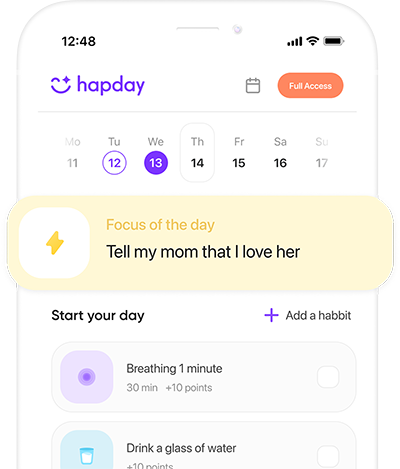
Fancy giving it a shot? Start small, ease into it, and watch your mental bowler become a champion (okay, mixed sports metaphor…but you know what I mean!). Dive into journaling and open up a world of self-discovery and emotional stability. Start that journey today with the Hapday app right here. Who knows where it might lead you?
References:
- Baikie, K. A., & Wilhelm, K. (2005). Emotional and physical health benefits of expressive writing. Advances in Psychiatric Treatment, 11(5), 338-346.
- Pennebaker, J. W., & Chung, C. K. (2011). Expressive writing: Connections to physical and mental health. Handbook of Health Psychology, 263-284.
- Emmons, R. A., & McCullough, M. E. (2003). Counting blessings versus burdens: An experimental investigation of gratitude and subjective well-being in daily life. Journal of Personality and Social Psychology, 84(2), 377.