



Table of Contents
- Understanding Self-Esteem
- The Science Behind Journaling
- Daily Journaling Practices for Self-Esteem Growth
- Incorporating Journaling into Daily Routine
- Potential Challenges and How to Overcome Them
- Conclusion
Understanding Self-Esteem
Alright, so self-esteem… it’s the life’s report card we give ourselves. It’s like our emotional signature, which tells us how much we’re worth—which, by the way, is a lot more than we often believe. Studies from 2014 (shoutout to Orth & Robins for this one) show that our self-esteem is not just an emotional accessory; it’s right up there with essentials like food and water when it comes to mental well-being. Having high self-esteem? Well, it seems that it might just be the secret sauce for happier relationships, job satisfaction, and, yes, even happiness itself. Sounds pretty good, right?
The Science Behind Journaling
Now here’s the science bit—grab your nerd glasses. Journaling isn’t just doodles and unfinished thoughts; it’s a psychological powerhouse. Back in 1998, the Journal of Clinical Psychology told us that expressive writing is a formidable opponent against anxiety and depression (thanks, Smyth!). Who knew that a piece of paper and a pen could pack such a punch? Moreover, journaling boosts self-awareness like no other, a superpower we all need to tackle life’s bumps (Pennebaker, 1997). Don’t you just love it when research has your back?
Daily Journaling Practices for Self-Esteem Growth
1. Gratitude Journaling
Let’s dive into gratitude journaling—sounds quaint, right? But hear me out. Writing about what we’re thankful for has been shown to bump up well-being and happiness (high fives to Emmons & McCullough, 2003 for spilling the beans on this one). By locking in on life’s positives, we slowly but surely build a bulletproof self-esteem.
How to Practice:
- Spend a few minutes jotting down three to five things you’re grateful for. Anything goes—your morning coffee, the cool breeze, a stranger’s smile.
- Reflect on why these mean something to you. Feels good, doesn’t it?
2. Affirmation Journaling
Affirmations are like little cheerleaders reminding us of our greatness when pessimistic thoughts crash in. Cohen and Sherman had a eureka moment in 2014, discovering that self-affirmations act as a stress shield. Kind of like an emotional force field.
How to Practice:
- Pick a few affirmations that resonate. Could be anything from “I’m enough” to “I deserve the best.”
- Write them down, again and again, until they’re your new mantra.
3. Reflective Journaling
Reflective journaling is all about playing detective with our past. By examining what happened and how we felt, we piece together a clearer picture of ourselves (King, 2001). Maybe introspection is the highest form of self-respect, after all.
How to Practice:
- Think about a recent experience that shook you a bit.
- Write down the feels and how you dealt with it. What was the lesson here?
4. Success Journaling
Who doesn’t love a good pat on the back? Success journaling is giving yourself those well-deserved high-fives for the wins, big or small. And remember, acknowledging your triumphs nurtures self-worth (thanks, Ryan & Deci).
How to Practice:
- End your day by writing about one success. Heck, it could even be getting out of bed before snooze!
- Reflect on what you did right and why it worked.
Incorporating Journaling into Daily Routine
Let’s not kid ourselves—starting a new habit can feel like running through molasses. But consistency is where journaling sits pretty. Here’s how you can make it less of a chore and more of a lifestyle:
- Pick your time: Be it morning or night, consistency wins here.
- Find a nook: Have a cozy spot where your pen can flow without interruption.
- Keep it real, keep it short: Start small and simple. A few minutes are all you need to make a big difference.
- Speak your truth: No pretending, just you and your thoughts—wide open.
Potential Challenges and How to Overcome Them
What’s life without a few stumbling blocks? Journaling is no exception, but fret not:
- Time-crunched?: Short bursts of writing work wonders. It’s about quality, not quantity.
- Stuck for words?: Prompts can kickstart your brain’s engines.
- Overwhelmed by emotions?: Ease into it. Difficult feelings need gentle handling—give time a chance to heal.
Conclusion
Daily journaling is like planting seeds of self-belief and watching them bloom. From gratitude to affirmations, reflection, and success—each practice is a stepping stone to a more confident you. Yes, challenges will show up, but stay consistent and open—it’s worth it, promise. Pretty soon, you’ll see journaling as essential as your morning coffee.
Ready to take the plunge? Start journaling today and see where it takes you. It’s time to boost that self-esteem with some good ol’ introspection!
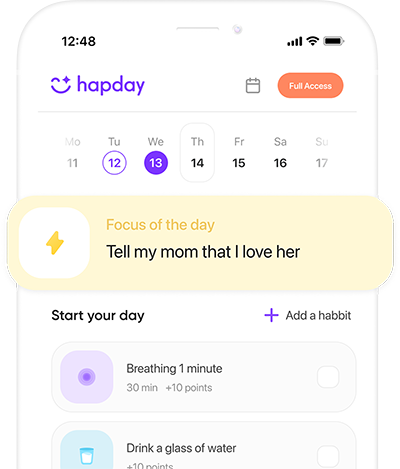
And hey, if you’re itching to start this transformation, try the Hapday app—you’ve just met your new journaling buddy. Download now and start writing your own story.