



Table of Contents
Understanding Fatigue
Fatigue—it’s that monster that goes beyond just a lack of sleep. It’s a relentless weariness, whether you’re talking body or mind… or both. The CDC (yep, the health folks) say nearly a third of Americans feel wiped out even after a full night’s rest. Wild, right? Chronic fatigue doesn’t just drain you physically; it can slow down your brain gears, and might even lead to anxiety or depression. Figuring out why you’re so tired all the time is key to tackling it head-on.
The Science of Mindfulness
So what’s the deal with mindfulness? Well, it’s all about staying in the moment—no judgments, just pure presence. Tune into your thoughts, feelings, and those nagging backaches. A study in the 2018 Health Psychology Review (I know, I read it so you don’t have to) discovered mindfulness can slash stress and boost your life in many ways. It basically teaches you to sidestep that negative feedback loop that often triggers fatigue. A game-changer, trust me.
Mindfulness Coaching Techniques
1. Body Scan Meditation
Ever tried body scan meditation? It’s a mindfulness staple that boosts how in touch you are with your own body. By mentally journeying from head to toe, you acknowledge where you’re tense or uncomfortable. A report in Psychological Science (there’s a name-drop for you) found this method can ease stress by lowering those pesky cortisol levels. Less stress, less fatigue. Simple math—or something like it.
2. Breathing Exercises
Controlled breaths? They’re like magic wands against fatigue. The 4-7-8 technique—inhale four seconds, hold for seven, exhale for eight—is one such trick that’s said to up your oxygen and relax you. Frontiers in Human Neuroscience (fancy, eh?) notes these breathing tactics boost heart rate variability, a.k.a. less stress, more energy. Who wouldn’t want that?
3. Mindful Movement
Yoga, Tai Chi—ever paired those with mindfulness? Get your blood pumping while being present, and fatigue doesn’t stand a chance. A 2017 piece in the Journal of Clinical Psychology found folks felt way better and more energized post-mindful movement. Mood-boosting and fatigue-reducing—what a combo.
Implementing Mindfulness in Daily Life
Morning Rituals
Hop out of bed with a 10-minute mindfulness starter. It’s like a mental coffee. Breathe in, breathe out, imagine your day. Simple but powerful.
Mindful Commuting
Transform your commute with mindfulness. Whether it’s on a train or in a car, just close your eyes, take in the world around you, hear the hum of the city. Less stress, more alive.
Mindful Eating
Bite by bite, savor it all. Listen to your body’s cues—hungry? Full? Being mindful helps digestion and keeps fatigue at bay. Go on, try it.
The Benefits of Mindfulness Coaching
Guidance makes all the difference. A coach is like your personal Yoda, tailoring strategies just for you. Journal of Occupational Health Psychology revealed mindful employees felt less stress and loved their jobs more. It’s a win-win, if you ask me.
Overcoming Obstacles
Nothing’s easy at the start, and mindfulness is no exception. Embracing restlessness and short attention spans is all part of the journey. Think of it like muscle-building for the mind, getting stronger with each practice.
Conclusion
Mindfulness is not a quick fix—it’s a journey. Stick with it and you’ll boost your energy, sharpen your mind, find balance. And isn’t that what we all secretly want?
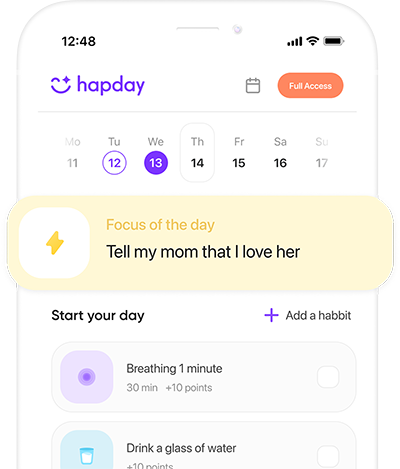
Curious to inject more mindfulness into your life? Download the Hapday app and dive into guided exercises designed for our buzzing world. Explore more today!
References
- Centers for Disease Control and Prevention (CDC). Who knew America was so sleepy?
- Health Psychology Review. Spilling the tea on stress reduction.
- Psychological Science. Cortisol and its battle with mindfulness.
- Frontiers in Human Neuroscience. Breathing: more powerful than we thought.
- Journal of Clinical Psychology. Mindful movement making waves.
- Journal of Occupational Health Psychology. Mindfulness paying off at work.