



Table of Contents
- Understanding Childhood Trauma
- The Impact of Trauma on the Brain
- Self-Help Strategies for Healing
- Building a Support System
- Lifestyle Modifications
- Conclusion
Understanding Childhood Trauma
So, what’s “childhood trauma” really about? Picture this: a young soul dealing with some intense stuff like abuse, neglect, or maybe some family drama you only see in movies. The National Child Traumatic Stress Network mentions that around 25% of kiddos endure some type of trauma before turning 16. Crazy, right? These experiences can mess with the way their brains develop, influencing how they handle emotions or how they see themselves when looking in the mirror.
The Impact of Trauma on the Brain
Ever wondered how trauma messes with the brain? Well, it’s like this: the amygdala—our emotional processor—might get a bit jittery, ramping up feelings of anxiety. Plus, the prefrontal cortex, the brain’s “think before you act” center, might not work as smoothly. The American Journal of Psychiatry even mentioned a study linking childhood trauma to less gray matter in this part of the brain. Who would’ve thought, right?
Self-Help Strategies for Healing
1. Mindfulness Meditation
Ah, mindfulness meditation… practically a wellness buzzword these days. People swear by its power to help detach from pesky traumatic memories, making life just a little more serene. JAMA Internal Medicine published a study showing it can actually help reduce anxiety and depression. So, interested in giving it a go?
How to Practice Mindfulness Meditation:
- Find yourself a quiet spot—no noisy neighbors, please.
- Focus on your breath. Seriously, just breathe.
- If your mind decides to wander, gently nudge it back to the breath.
- Start with 5 minutes before breakfast, then slowly increase your zen time.
2. Journaling
Ever tried just scribbling your thoughts down? It’s like a mini therapy session. Journaling helps you lay out emotions and look back on past events with fresh eyes. According to the Journal of Traumatic Stress, writing can help ease PTSD symptoms. Who knew a pen could be so powerful?
Journaling Tips:
- Dedicate a daily slot for your thoughts.
- Let loose—grammar police not welcome here.
- Focus on what’s rattling inside that head of yours.
3. Physical Activity
When was the last time you broke a sweat? Besides the usual physical perks, exercise can be a mood lifter too. Kicking cortisol to the curb while flooding your system with feel-good endorphins—now that’s how you shake off stress. According to a meta-analysis in Psychological Bulletin, even PTSD suffers can lower anxiety through exercise.
Incorporating Exercise:
- Pick your poison: walking, dancing, or maybe trying out that yoga class down the street.
- Aim for 150 minutes a week—yeah, it’s doable!
- Group workouts can be fun, and hey—maybe you’ll meet your new gym buddy there.
Building a Support System
4. Therapy and Support Groups
Self-help is cool, but sometimes you just need that extra hand, you know? Therapy can guide you through and provide that much-needed insight. CBT or EMDR might sound like fancy abbreviations, but they’ve been game-changers for trauma treatment. Support groups? Those can be lifesavers too.
Finding a Therapist:
- Do a bit of research on professionals focusing on trauma.
- Look into sliding scale fees if budget’s tight or find someone who offers remote sessions.
- Keep searching until you find the right match—your brain deserves the best!
Lifestyle Modifications
5. Establishing a Routine
Routines—boring or brilliant? Having a predictable day can be really calming, providing a sense of control when everything feels out of hand. A study in the Journal of Abnormal Child Psychology highlighted how routines can aid emotionally and behaviorally. Worth a shot?
Tips for a Balanced Routine:
- Stick to a consistent sleep schedule.
- Eat meals around the same time—snacks, too.
- Don’t forget downtime! Hobbies are your brain’s best friend.
6. Practicing Self-Compassion
Being kind to yourself—isn’t that something we forget to do? It’s all about acknowledging your imperfections and still giving yourself a hug, metaphorically (or literally). Research in Self and Identity links self-compassion with reduced PTSD symptoms. A little kindness really does go a long way.
Practicing Self-Compassion:
- Speak to yourself as you would to a friend—cut yourself some slack.
- Replace the constant negative reel in your head with affirmations.
- Let emotions flow without censorship.
Conclusion
Healing from childhood trauma isn’t a sprint; it’s more like a marathon, with some uphill battles. But through mindfulness, journaling, working out, seeking support, sticking to a routine, and practicing some good ol’ self-love, you’ll build resilience and guide yourself toward healing. It’s okay to ask for help along the way—everyone needs a hand sometimes.
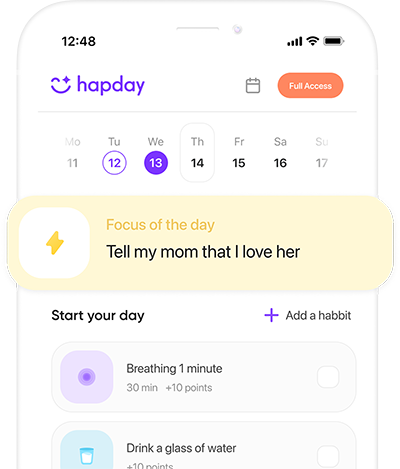
Interested in starting your own healing journey? Check out the Hapday app for personalized self-help strategies. Start your path to healing here.