



Grief disturbs sleep, scatters attention, dulls appetite. It upends the clock. Most of us need structure when that happens, not speeches. A mental health coach for grief offers tools you can use tomorrow morning and someone to hold the plan with you when your hands are full. Around 7–10% of bereaved adults will meet criteria for Prolonged Grief Disorder (PGD) with enduring, impairing symptoms; the DSM-5-TR recognized PGD in 2022. Many more, though, benefit from skills-based support that sits alongside community, faith, or clinical care. In my view, practical scaffolding beats platitudes every time.
Table of Contents
- What a Mental Health Coach Does in Grief
- When to Choose a Coach vs. Therapist
- How to Use a Mental Health Coach for Grief: A Step-by-Step Plan
- How Sessions Often Look with a Mental Health Coach for Grief
- Measuring Progress (Without Pressure)
- Costs, Logistics, and Privacy
- Questions to Ask When Hiring a Mental Health Coach for Grief
- Evidence-Based Exercises to Try with a Coach
- Safety Note
- Closing Thoughts
- Summary
- References
What a Mental Health Coach Does in Grief
A mental health coach for grief stays close to the ground: daily routines, coping strategies, behavior change. They don’t diagnose or treat mental disorders. They help you function while you mourn—like a steadier you on the days you cannot steer.
Expect:
- Psychoeducation: Brief, plain-language explanations about grief waves and why they surge. Many coaches use the Dual Process Model—oscillating between loss-focused and restoration-focused coping—so you know it’s normal to shift between crying and paying the bills in the same afternoon.
- Skills training: Sleep hygiene resets, grounding skills, gentle cognitive reframing, values-based action, and routine building. I’m partial to one skill at a time; stacked too fast, they don’t stick.
- Accountability: Concrete goals with check-ins that keep life tasks moving when motivation ebbs.
A 2014 meta-analysis in Patient Education and Counseling found small-to-moderate gains in psychological outcomes with health coaching across groups. Coaching is not therapy, but structured, goal-focused support can lift mood, bolster self-efficacy, and shore up healthy routines—pillars you can lean on during loss. As one Harvard-affiliated review put it, habit change travels best with feedback and reinforcement.
When to Choose a Coach vs. Therapist
Use a mental health coach for grief when you:
- Need structure around sleep, meals, movement, and work or school.
- Want help turning large tasks into steps and staying consistent week to week.
- Seek concrete tools for anniversaries, triggers, or difficult conversations.
See a licensed therapist instead (or in addition) if you have:
- Intense yearning or anguish lasting beyond 6–12 months with major impairment—possible PGD.
- Suicidal thoughts, self-harm, or inability to perform basic roles.
- Trauma symptoms (nightmares, intrusive images, avoidance) after a violent or traumatic loss.
Treatments such as Complicated Grief Treatment (CGT) have strong evidence; in a JAMA trial, CGT outperformed interpersonal therapy on response rates. Coaches should not treat PGD but can coordinate with clinicians. My bias: when in doubt, add a therapist rather then wait.
How to Use a Mental Health Coach for Grief: A Step-by-Step Plan
- 1) Clarify scope and safety
- In session 1, define limits. A mental health coach for grief provides skills and accountability, not diagnosis, medication advice, or trauma processing. Share red flags, preferred contacts, and crisis plans. Better to over-clarify now than scramble later.
- 2) Set measurable goals
- Translate “feel less overwhelmed” into trackable behaviors: 7 hours in bed nightly, two balanced meals per day, a 10-minute walk five days a week, one social contact weekly. Tracking plus specificity improves follow-through. It sounds basic; it works.
- 3) Baseline and track
- Use brief 0–10 ratings for sleep quality, energy, and distress. Consider validated grief screeners (PG-13 or ICG) for orientation—not diagnosis. Review weekly to find patterns (Sunday spikes before Monday meetings are common).
- 4) Build a coping toolkit
- Grounding: Use the 5-4-3-2-1 sensory technique when a wave hits.
- Cognitive skills: Notice “should” statements and reframe with kinder, truer lines.
- Values compass: Pick one value-guided act per day—text a friend, water the plants, walk the dog—to protect identity beyond the loss.
- Continuing bonds: Write a letter, create a small ritual. Ongoing bonds can be adaptive, as bereavement researchers have noted since the 1990s.
- 5) Structure your week
- Start with anchors: sleep/wake times, meals, movement, an “admin hour.” Your mental health coach for grief can co-create a template and troubleshoot barriers. I prefer anchors before extras; foundation first, then flexibility.
- 6) Plan for triggers
- Map dates, places, or songs that sting; pair each with a specific coping plan (call list, exit option, soothing playlist, a permission slip to step out). Make the plan on a calm day. Use it on the hard one.
- 7) Combine coaching with evidence-based help if needed
- Internet-based CBT for bereavement shows benefits across multiple trials, and CGT remains the leading therapy for complicated grief. A coach can help with homework adherence and skills practice alongside therapy. Think of it as a relay, not a contest.
How Sessions Often Look with a Mental Health Coach for Grief
- Session 1–2: Story, values, goals, schedule, safety plan, and a sleep reset.
- Ongoing: Review brief metrics, troubleshoot barriers, add one new skill at a time, rehearse hard conversations, plan for anniversaries and holidays.
- Between sessions: One or two micro-challenges, short text check-ins if offered, and a brief reflection log. I like 3 lines max—otherwise it becomes homework you’ll avoid.
Measuring Progress (Without Pressure)
- Function: Are you keeping appointments, paying bills, returning to one role you value?
- Symptoms: Trends in distress ratings, sleep, appetite, and concentration.
- Coping: Time to recover after waves; using tools without a prompt.
Expect progress to be non-linear. Good days and crash days are part of grief, not failure. If anyone promises a straight line, be cautious.
Costs, Logistics, and Privacy
- Frequency: Weekly for 4–8 weeks, then taper as skills hold.
- Format: Video, phone, or chat. Asynchronous touch points can improve adherence, especially in the first month.
- Cost: Varies by region and credentials; ask about packages, sliding scales, and cancellation policies. Transparent pricing is a mark of professionalism.
- Privacy: Coaches aren’t bound by HIPAA unless they’re part of a covered entity; request a clear confidentiality agreement and data practices in writing. After 2020’s telehealth boom, this matters more then ever.
Questions to Ask When Hiring a Mental Health Coach for Grief
- How do you define the scope of a mental health coach for grief, and when do you refer out?
- What frameworks do you use (e.g., CBT/ACT skills, Dual Process Model)?
- What does a typical session include? Is there structured homework and tracking?
- How will we measure progress together?
- What training, supervision, and experience do you have with loss like mine? I prefer coaches who can describe their limits plainly.
Evidence-Based Exercises to Try with a Coach
- Expressive writing: 15–20 minutes on thoughts and feelings, three to four times over two weeks. Meta-analyses show small but meaningful well-being benefits.
- Mindful breathing: 4–6 breaths per minute for five minutes to reduce arousal; pair with a cue (after coffee, before email).
- Values-to-action ladder: Choose one value (e.g., kindness), list five micro-actions, schedule one daily.
- Social micro-doses: Two-minute “touch points” (emoji, brief voice note) to gently rebuild support. The Guardian reported during 2020–2021 that short, frequent contacts helped buffer isolation; practice counts.
Safety Note
If you’re thinking about harming yourself or can’t care for basic needs, contact emergency services or your local crisis line immediately (in the U.S., call or text 988). Coaching is not a substitute for urgent or specialized mental health care.
Closing Thoughts
Used well, a mental health coach for grief steadies your days—routines first, then tools—without pushing you to “move on.” Skills and accountability paired with compassion can keep you connected to what still matters. Add therapy when symptoms are severe or persistent. Grief changes you; with the right scaffolding, it doesn’t have to break your life.
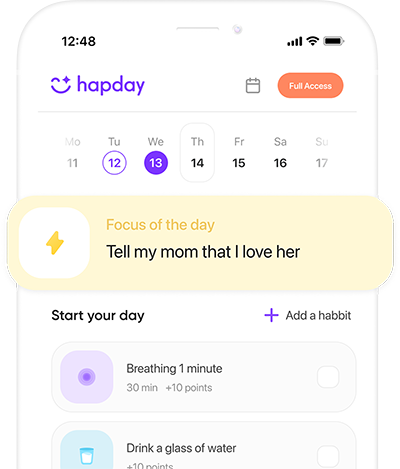
Image alt: mental health coach for grief supporting client with structured coping plan
Summary
A mental health coach for grief helps with skills, structure, and accountability so you can function while you mourn. Therapy addresses complications such as PGD. Use coaching to set measurable goals, track progress, plan for triggers, and re-engage with values. Ask about scope, methods, and metrics, and add evidence-based therapy if needed. Ready to try structured support? Book a consult with a qualified coach and set one small, measurable goal today.
References
- American Psychiatric Association. Prolonged Grief Disorder. https://www.psychiatry.org/patients-families/prolonged-grief-disorder
- American Psychiatric Association. Diagnostic and Statistical Manual of Mental Disorders, Fifth Edition, Text Revision (DSM-5-TR). 2022.
- Lundorff M, et al. Prevalence of prolonged grief disorder in adult bereavement. J Affect Disord. 2017;212:138–149. https://pubmed.ncbi.nlm.nih.gov/28167349/
- Shear K, et al. Treatment of complicated grief: a randomized controlled trial. JAMA. 2005;293(21):2601–2608. https://pubmed.ncbi.nlm.nih.gov/15878904/
- Shear MK, et al. Optimizing treatment of complicated grief: RCT of CGT with/without citalopram. JAMA Psychiatry. 2016;73(7):685–694. https://pubmed.ncbi.nlm.nih.gov/27074257/
- Kivela K, et al. The effects of health coaching on adult patients: systematic review/meta-analysis. Patient Educ Couns. 2014;97(2):147–157. https://pubmed.ncbi.nlm.nih.gov/24508652/
- Stroebe M, Schut H, Boerner K. Cautioning health-care professionals: bereavement research review. Palliat Med. 2017;31(7):677–682. https://pubmed.ncbi.nlm.nih.gov/27852807/
- Frattaroli J. Experimental disclosure and its moderators: meta-analysis. Psychol Bull. 2006;132(6):823–865. https://pubmed.ncbi.nlm.nih.gov/17073523/
- Harvard Health Publishing. Behavioral change and accountability in health coaching. 2014. (summary source)
- The Guardian. Pandemic grief and the role of everyday check-ins. 2020. (reporting)