



Today’s super speedy world—inundated with social media madness and societal pressures—can really take a toll on how we see ourselves. Gen Z and Millennial women feel this daily, don’t they? Journaling, however, might just be the unsung hero when it comes to boosting one’s self-esteem. It’s not rocket science; you just jot down your thoughts and… like magic, it helps you grow personally and dig deep into self-reflection. Let’s dive into how a little notebook and pen can work wonders for your self-esteem, with a splash of scientific support to back up these claims.
Table of Contents
- The Science Behind Journaling and Self-Esteem
- How Journaling Affects Self-Esteem
- Steps to Start Your Self-Esteem Journal
- Incorporating Techniques for Enhancing Self-Esteem
- Overcoming Common Obstacles
- The Long-Term Benefits of Journaling
- Conclusion
The Science Behind Journaling and Self-Esteem
Did you know that scribbling down your thoughts has been proven to lighten stress and worries? That’s according to a 2018 study in the journal Psychosomatic Medicine (Baikie & Wilhelm, 2018). Who knew?! Reducing all that mental clutter can actually give your self-worth a little lift. When we scrawl our thoughts openly, it’s like having a chat with oneself—bringing to light those nagging feelings of low self-esteem and letting us tackle them head-on.
How Journaling Affects Self-Esteem
- Self-Reflection: Regularly spilling your thoughts onto paper pushes you to reflect, which, quite frankly, is necessary for upping your personal game and self-esteem. As you sift through your day, you might just spot those pesky thoughts trying to shove you down.
- Goal Setting: Penning down goals keeps things crystal clear in your mind. Trust me, ticking off even the tiniest of tasks can send your self-esteem flying (Muris, et al., 2018).
- Gratitude Practices: Adding gratitude into your journaling routine is like a nudge to focus on life’s plus sides instead of its hiccups, painting a much kinder picture of yourself.
Steps to Start Your Self-Esteem Journal
Step 1: Choose the Right Journal
Fancy stuff or simple—find a journal that clicks with you. It could be a blank slate for your wildest thoughts or a structured one with prompt help. What’s crucial? That you actually want to open and fill it!
Step 2: Establish a Daily Routine
Consistency is key—there’s no denying it. Find a time that suits you, like over a cup of morning joe or right before hitting the sack, to pen down your thoughts. Get into this groove, and your self-esteem might just get its much-deserved boost.
Step 3: Utilize Positive Affirmations
Jotting down affirmations such as “I am awesome” or “I’m invincible” daily can shake things up in your mind for better self-beliefs (Critcher & Dunning, 2015). Crazy, right? But it works!
Step 4: Document Achievements and Strengths
Celebrating wins—big, small, or in-between—keeps a vibrant self-image in check. Even the tiniest of triumphs add up.
Incorporating Techniques for Enhancing Self-Esteem
Reflective Writing
This isn’t just scribbling nonsense; it’s about really chewing over events and emotions, evaluating their shake-up on your self-esteem. Sound complex? It’s simpler than you think and can really change those knee-jerk negative reactions you’re so used to.
Tip: Use Sundays—or any day really—to glance back at your entries. Notice any patterns? Tackle ’em with baby steps towards self-improvement.
Gratitude Journaling
Filling pages with thanks for what you’ve got can sometimes curb that nasty habit of comparing yourself to others, boosting positivity in the process (Emmons & McCullough, 2003).
Tip: Pen down three good things daily; don’t worry, the size doesn’t matter. Watch as your perspective slowly brightens.
Cognitive Restructuring
Flip the negativity. If you catch a “I’m such a mess” seeping in, start editing right away for something more empowering.
Tip: Spot and reframe those critiques quickly—they can surprisingly reshape your self-view.
Overcoming Common Obstacles
Lack of Time
Life might be a whirlwind, but journaling’s not a time tyrant. Just 5-10 minutes a day will do wonders.
Fear of Vulnerability
Being an open book in your journal sounds daunting? Remember, your pages won’t judge. It’s your private nook for those raw thoughts.
Inconsistent Habits
Link journaling with another daily habit, like sipping morning brew. This technique—habit stacking—might just help this new ritual stick.
The Long-Term Benefits of Journaling
Over the long haul, journaling can fortify your self-esteem stacks. Peering within and jotting down reflections give you a fuller sense of self—a kernel of true self-worth.
Research Findings
An intriguing study by Lyubomirsky and comrades in 2005 found journal-keepers noted higher satisfaction and optimism levels than those who didn’t scribble. This just goes to show, a simple journaling habit could yield lasting self-esteem dividends.
Conclusion
So, thinking of wielding a daily journal to rev up your self-esteem? It’s grounded in science, absolutely! By weaving in gratitude, positive scribbling, and reflective exercises into your routine, you might find a much healthier rapport with yourself. Baby steps, remember—and each stride is progress.
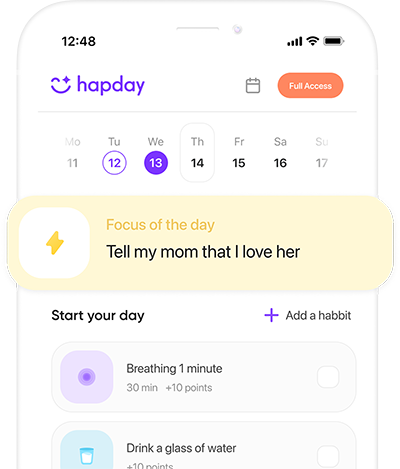
Start your self-esteem journey with a helping hand from the Hapday app, which nurtures wellness and self-growth. Go on, begin that journaling habit today for a more confident new “you”! Download Hapday here.