



Table of Contents
- Understanding Stress in Our Lives
- What is Mindfulness?
- The Science Behind Mindfulness
- Key Mindfulness Techniques to Alleviate Stress
- Incorporating Mindfulness into Your Daily Life
- Tips for Developing a Durable Mindfulness Practice
- Overcoming Common Misconceptions
- References
Key Takeaways
- Mindfulness is a powerful tool for stress reduction that emphasizes present-moment awareness.
- Simple techniques like mindful breathing, body scans, and mindful walking can help alleviate stress.
- Incorporating mindfulness into daily activities can enhance well-being and job satisfaction.
- Setting realistic goals and finding community support are essential for establishing a mindfulness practice.
It was the night before Claire’s crucial presentation, and sleep felt like a distant memory. The deadline was suffocating, amplifying her racing mind. Every attempt to calm down seemed futile. Sounds familiar, doesn’t it? In today’s world, bursting with stimuli, managing stress—especially through mindfulness techniques—has become not just a useful tool, but an essential one.
Understanding Stress in Our Lives
Before we dive into mindfulness, let’s talk about stress itself. Why does our body react the way it does? We’re wired for fight-or-flight, a survival tactic passed down from our ancestors. But, as
“Our bodies haven’t changed to distinguish between a growling tiger and a looming deadline.”
— Dr. Sarah Chen, NYU
As a result, we’re almost always on high alert!
The American Psychological Association states chronic stress can lead to some pretty nasty health issues—heart disease, depression, diabetes… you name it. So learning stress-reduction techniques goes beyond just mental peace; it’s about safeguarding your physical health too.
What is Mindfulness?
Many of us mistake mindfulness for mere relaxation, but it’s much more layered. At its heart, mindfulness is an intentional focus on the present moment, free of judgement. It draws our attention away from past regrets and future worries, pulling us into the ‘now’.
A study from the Journal of Clinical Psychology found that practicing mindfulness can cut stress and anxiety levels significantly.
“Mindfulness is about cultivating a presence, an awake space, no matter what life throws at you.”
— Dr. Tara Brach, Mindfulness Teacher
The Science Behind Mindfulness
Mindfulness isn’t just a buzzword floating around. There’s a solid foundation of research backing it up. Brain imaging studies—fascinating stuff—show that regular mindfulness practice ups the gray matter in regions linked to memory, emotional regulation, and empathy. It also tones down activity in the amygdala, the brain’s fear center, strengthening our attention-related brain regions.
Practicing mindfulness? You’re re-wiring your brain’s response to stress. This neuroplasticity offers tangible, lasting changes in mental function.
Key Mindfulness Techniques to Alleviate Stress
1. Mindful Breathing
Breathing exercises are critical in mindfulness practices. Stress triggers shallower, quicker breaths, sending panic waves to your brain. Slowing your breath can counter this.
Trying out mindful breathing? Sit comfortably with one hand on your chest and the other on your belly. Eyes closed, take deep breaths in through the nose, letting the belly rise, then slowly exhale through the mouth. Five minutes of this, focusing only on your breath, can work wonders.
Why does this help? It anchors your mind in the present, pushing stressors aside. Plus, deep breathing activates the parasympathetic nervous system, known for its calming effects.
2. Body Scan Meditation
The body scan technique draws awareness to your body’s physical sensations, illuminating stress and tension pockets you’re unaware of.
Start by lying comfortably. Close those eyes and breathe deeply. Begin with your toes, notice sensations—warmth, tension, relaxation—and slowly move your focus upward to your head.
Harvard Health Publishing claims body scan meditation hones interoceptive awareness, connecting emotional and physical feelings.
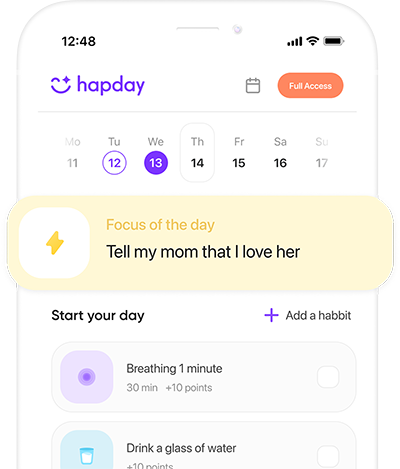
Imagine 2 am, plagued by anxious thoughts about the next day. Apps like Hapday might just be the midnight companion, guiding you through late-night thoughts.
3. Mindful Walking
For those who find sitting meditations tough, mindful walking might be your answer. It transforms an everyday stroll into a meditative exercise focused on walking sensations—each step, the ground beneath your feet, the air around.
Pick a quiet spot and walk naturally, zeroing in on your body’s movements—the motions of your feet. If the mind wanders, gently reel it back to walking.
Research from the National Center for Biotechnology Information suggests that mindful walking might alleviate chronic stress symptoms, nudging one toward a mindful lifestyle.
Incorporating Mindfulness into Your Daily Life
Mindfulness isn’t restrictive; it integrates seamlessly into daily routines. No need for hours on a cushion. You can squeeze mindfulness into activities like eating, working, or chatting away!
Mindful Eating
Next mealtime, try slowing down. Take in the color, texture, taste, smell of your food. Chew slowly, ponder its origins. It not only heightens the eating joy but helps sidestep overeating by tuning into your hunger signals.
Mindfulness at Work
Inject small pauses into your workday for mindfulness. Perhaps a quick breathing exercise before a new task, or a mindful reflection of a task done. It cuts stress, bolstering job satisfaction—Forbes attests that a mindful workplace improves job contentment.
Such habits pave paths to healthier routines, drastically cutting stress. Consistency’s the key, and platforms like Hapday, used by millions, help track mindfulness progress, nurturing daily dedication.
Tips for Developing a Durable Mindfulness Practice
Starting a mindfulness habit can be daunting. Here’s how to ease that first step:
- Set Realistic Goals: Begin modestly, maybe five minutes a day. With time, expand. Overreaching can spell frustration.
- Create a Ritual: Pair mindfulness with an existing habit. Practice upon waking, after brushing teeth, or pre-slumber, embedding it into your regular routine.
- Find a Community: Join mindfulness classes or virtual circles for a support network. Consider platforms like Meetup for local group sessions.
- Practice Self-Compassion: Wandering thoughts can frustrate. Mindfulness thrives on process, not perfection. Be gentle with yourself, keep at it.
Overcoming Common Misconceptions
Many assume mindfulness means a “clear mind.” In truth, it’s about letting thoughts drift in and out, without judgement. Another myth? It’s pointless unless long. Not true! Short, regular sessions can yield substantial benefits.
Through mindfulness, Claire found solace, her stress levels waned, granting clarity and confidence for her presentation. Stress lost its grip, ushering a reality where mindfulness reshapes our stress relationship.
The Bottom Line
Tackling stress with mindfulness isn’t just a journey; it’s transformative. Tools like Hapday offer 24/7 AI coaching, ensuring support when stress lurks, empowering you on this path, alongside over three million users reaping its benefits.
References
- American Psychological Association
- Journal of Clinical Psychology
- Harvard Health Publishing
- National Center for Biotechnology Information
- Forbes