



Table of Contents
- Understanding Childhood Trauma and Its Impacts
- Why Trauma Lingers
- When Trauma Is Left Untreated
- Steps Toward Healing
- The Path Forward
- References
Key Takeaways
- Childhood trauma has lasting effects, influencing relationships and personal well-being into adulthood.
- Acknowledging and seeking help for trauma is the first critical step toward healing.
- Practicing mindfulness and building supportive relationships can significantly aid the healing process.
- Creative outlets serve as essential tools for expressing and processing trauma.
On the couch in her therapist’s sparse office, Emily fidgeted, tracing the fabric’s seams while her mind roamed tumultuous memories. At 30, this supposedly successful marketing executive climbed ladders at work as if born to them. Yet, her polished exterior often masked shadows from a turbulent childhood. Her parents? Their fiery arguments and seething anger left scars, now manifesting as knots of self-doubt and nagging anxiety. Years may separate Emily from those childhood days, but echoes linger, demanding confrontation. So how does one truly disentangle from the grip of childhood trauma?
Does Emily’s story sound unsettlingly familiar? You’re far from alone. The silent impact of childhood trauma — rising from abuse, neglect, or other harsh experiences — is nearly epidemic. The CDC once pointed out that about two-thirds of adults recall at least one adverse childhood experience (ACE) before turning 18. And those experiences? They sneak into adulthood, often meddling with our capacity to forge healthy relationships, chase career aspirations, or simply nurture our own well-being.
Understanding Childhood Trauma and Its Impacts
In essence, childhood trauma isn’t just a string of bad memories. It’s about how the nervous system responds to deeply unsettling episodes during those moldable years.
“The brain is incredibly plastic, especially in kids. Trauma can twist its development, creating stress responses that stick for life.”
— Dr. Sarah Chen, NYU
How does that sound for a legacy?
Now, trauma isn’t just one thing — it’s a chameleon. It hides in the shadows of physical, emotional, or sexual abuse; it could be born from the pain of domestic violence, the loss of a beloved parent, or the chaos of a caregiver drowning in mental illness or addiction. SAMHSA flags these events for their potential long-term effects: chronic diseases, mental health troubles, and substance dependencies. Just ask Maya, a 28-year-old yoga teacher. Her parents’ divorce? It unraveled her young world like a trusted tapestry suddenly torn.
“I learned too soon that love was unstable,”
— Maya, Yoga Teacher
she confides, a sad smile tugging her lips. “For years, I unwittingly brought chaos into my own relationships.”
Why Trauma Lingers
To understand why this specter of trauma clings to adulthood, a peek into the brain’s workings is vital. Childhood trauma flips the switch on the brain’s stress response system, installing hypervigilance as a factory setting.
“Intended for short bursts of protection, when chronic, it sabotages relationships and mental and physical health.”
— Dr. Robert Anda, ACE Study Founder
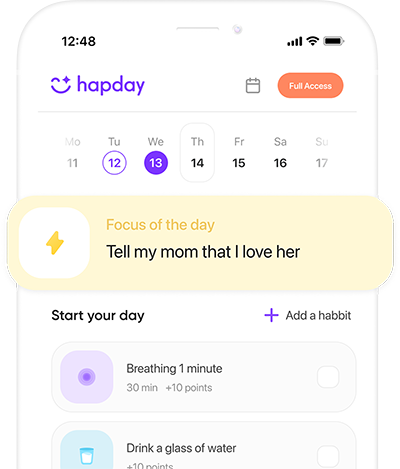
The habits and coping mechanisms ignited by childhood trauma? They don’t just vanish. They cling as unresolved whispers, influencing reactions to life’s stressors and relationship dynamics. Picture this — it’s 2 a.m., the world is silent, yet ghosts from the past jostle for attention, ruining your peace. Apps like Hapday (over 3 million users!) offer a digital sanctuary with nonstop live coaching to tackle such nocturnal nuisances.
When Trauma Is Left Untreated
Ignoring childhood trauma is risky business. It leads to a tangled web of unstable relationships, swirling guilt and shame, substance addictions, and sometimes, the wrenching grip of PTSD. The Journal of Trauma and Dissociation highlights untreated trauma’s toll, manifesting as lower education levels and diminished socio-economic status.
But here’s a paradox — healing from childhood trauma isn’t about erasing it. It’s about reframing and weaving those experiences into your life’s tapestry, a narrative that empowers instead of shackles.
Steps Toward Healing
1. Recognize and Acknowledge the Trauma
Taking that first step toward healing starts by admitting and embracing the trauma’s impact. Denial or belittling the past only tightens trauma’s chains.
“Validation is the key.”
— Dr. Chen
“Recognizing and accepting your trauma opens the first door to healing.”
This personal reckoning often needs a safe space — think therapy or trusted relationships. For Emily, it meant finally voicing her childhood fears in therapeutic sessions, paving the way for relief.
2. Seek Professional Help
Professional guidance is a crucial ally, supplying tools to decipher and process past traumas. Cognitive Behavioral Therapy (CBT) and Eye Movement Desensitization and Reprocessing (EMDR) are proven allies. According to the American Psychological Association, EMDR therapy eases symptoms for roughly 70% of adults who seek it.
Beyond traditional therapy, platforms like Hapday offer innovative solutions — its inner-child healing program provides remote guidance, blending accessibility with affectionate care.
3. Establish Healthy Boundaries
Healthy boundaries? For trauma survivors, they’re elusive challenges. Some may fall into over-accommodation, others into withdrawal. Building and communicating boundaries is vital. Whether they’re emotional — ensuring respect and safety in relationships — or physical, protecting personal space and autonomy, boundaries matter.
4. Practice Mindfulness and Self-Compassion
Mindfulness, the art of living in the present, soothes the hyper-arousal remnants of past trauma. A study in Psychological Science found that regular mindfulness practice dials down stress distress and physical stress impacts.
Self-compassion is just as pivotal.
“Dr. Kristin Neff’s work in self-compassion research champions kindness and understanding toward oneself, urging us to be gentle mirrors reflecting resilience.”
5. Cultivate Supportive Relationships
Isolation worsens trauma. Fostering healthy, trusting bonds can light the path to healing, a truth echoing across research. With friends, family, support groups, or digital communities, human connections flood our brains with feel-good chemicals.
6. Engage in Creative Outlets
Creativity offers a healing embrace. Art therapy, music, or journaling provide escape and confrontation — a canvas to express and process complex emotions.
Maya, for instance, found solace in painting. Brushstrokes and colors replaced verbal sparring as her emotional language.
“It became my catharsis,”
— Maya
she reflects warmly.
The Path Forward
The journey of overcoming childhood trauma is anything but simple. Each journey is distinct. However, embarking on this healing odyssey needn’t be solitary. On tough days, it’s comforting to have dependable resources. Here, Hapday brings around-the-clock support, blending personal care with professional insight.
Ultimately, healing means reclaiming your narrative. Rather than chapters wrought with pain and neglect, it’s about scripting a tale of resilience and growth. Ready to start this transformative journey where technology meets empathy? Real-time guidance from allies like Hapday can illuminate your way.
References
- CDC – https://www.cdc.gov/violenceprevention/aces/index.html
- Substance Abuse and Mental Health Services Administration – https://www.samhsa.gov/trauma-violence
- American Psychological Association – https://www.apa.org/ptsd-guideline/patients-and-families/index
- Journal of Trauma and Dissociation – https://doi.org/abs/10.1080/15299732.2019
- Psychological Science on Mindfulness – https://journals.sagepub.com/doi/full/10.1177/0956797615595112
- Dr. Kristin Neff on Self-Compassion – https://self-compassion.org/
The Bottom Line
Healing from childhood trauma requires acknowledgment and the right support systems. Embracing change, seeking professional help, and cultivating resilience through mindful practices and supportive relationships can pave the way for a fulfilling life. Take the first step towards reclaiming your narrative today!