



You know, in this whirlwind of a world we live in, burnout has crept up like an uninvited guest at a party that just won’t leave—especially for those caught in the grind between TikTok trends and a 9-to-5. Burnout, unlike a bad day, wraps you up in emotional, physical, and mental fatigue caused by stress that just won’t quit (Maslach & Leiter, 2016). But here’s a twist: By weaving a little mindfulness into the daily cloth of our lives, we can push back. Mindfulness—being in the here and now without passing judgment—can dial down stress, sharpen your focus, and boost your mental mojo (Kabat-Zinn, 2003).
Table of Contents
- Understanding Burnout
- The Role of Mindfulness in Combating Burnout
- Start Your Day with Intention
- Practice Mindful Breathing
- Incorporate Mindful Eating
- Embrace Mindful Movement
- Engage in a Digital Detox
- Practice Gratitude
- Cultivate Mindful Relationships
- End Your Day with Reflection
- Implementing Mindfulness in the Workplace
- Conclusion
- References
Understanding Burnout
So, what is this burnout thing all about? It’s not just feeling a bit frazzled. Nope, it’s a full-blown syndrome with emotional exhaustion, a cynical outlook (a.k.a. depersonalization), and a feeling like you’re never really accomplishing anything (Maslach et al., 2001). A peek at a 2021 survey by Indeed showed a jaw-dropping 52% of workers nodding their heads at burnout, up from 43% before the world went a bit off its rocker. But hey, it’s even more prevalent among Gen Z’ers—with 59% feeling burnt to a crisp.
The Role of Mindfulness in Combating Burnout
Here’s the scoop: Mindfulness can help you juggle stress by keeping you aware and accepting of life’s curveballs (Chiesa et al., 2011). According to that Journal of Occupational Health Psychology study, mindfulness doesn’t just kiss the stress goodbye—it shows it the door by helping you keep your emotions in check (Hülsheger et al., 2013). So, what are these magical habits that can help fend off burnout?
1. Start Your Day with Intention
Ever wake up feeling like you’ve hit the ground running without a clue where you’re headed? Flip that script! Spend a few golden morning minutes in meditation or inking your thoughts in a journal. This little ritual can steer your focus and mood for the day. You get to decide what you achieve, how you feel—setting your sails for a day that reflects who you are. Wait—scratch that—it sets a positive tone.
2. Practice Mindful Breathing
Mindful breathing—it’s as easy as pie but packs a punch. Think of it like pressing the reset button. A study by Arch and Craske (2006) backs this up with fancy words like “reduced anxiety and increased relaxation.” Just try the 4-7-8 gig: inhale for four seconds, hold for seven, exhale for eight. Doing this three to four times can calm the chaos instantly.
3. Incorporate Mindful Eating
Ever wolfed down your lunch while scrolling on your phone? Yeah, we’ve all been there. Pull back a bit. Slow eating mindfully not only makes your meal taste better but reduces stress and gives your digestion a helping hand too (Kristeller & Wolever, 2011). So, take a moment to actually taste your food. Smell it. Feel its texture. This leads you to be more in sync with your appetite, which is not so bad, right?
4. Embrace Mindful Movement
Whether it’s yoga, tai chi, or a brisk walk, combining movement with mindfulness makes for a killer duo. These activities are like giving stress the one-two punch, improving overall wellness (Carmody & Baer, 2008). While you’re moving, tune into how it feels and how you breathe. Notice the wind, the sounds—just be present.
5. Engage in a Digital Detox
Let’s face it, screens can be anxiety-inducing energy vampires. Taking planned breaks from them can drastically cut down on the head clatter (Roberts & David, 2016). Designate times where you put away devices and dive into activities that bring you joy—read a book, doodle, or get some fresh air.
6. Practice Gratitude
Keeping a gratitude journal isn’t just for kicks—there’s data out there that show it seriously ups your happiness game (Wood et al., 2010). Note down three things you’re grateful for each day. It doesn’t have to be profound. This simple practice shifts your outlook from “ugh” to “yeah!”
7. Cultivate Mindful Relationships
Mindfulness isn’t just about you. It extends to how we connect with others, too. Engaging in true listening and being fully there in conversations can strengthen your bonds and alleviate stress. Kozlowski (2013) found that mindful chatter actually boosts empathy and trims interpersonal tension.
8. End Your Day with Reflection
Close off your day with a moment of pause. Do a little meditation, let go of the day’s stress. Use this quiet time to reflect, acknowledge wins, and glean wisdom from whatever hiccups cropped up.
Implementing Mindfulness in the Workplace
If the office ranks as your major stress source—easy fix! Toss mindfulness into your workday to up productivity and stave off burnout. Think mini mind breaks, breathing exercises during meetings, or mindful planning for a more balanced work-life rhythm.
Conclusion
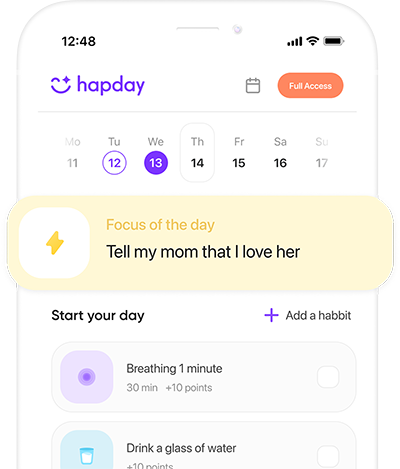
Daily mindfulness can flip burnout on its head, guiding you to a better state of being. By heightening awareness of our own thoughts, emotions, and physical signals, mindfulness provides stress-busting, emotional armor. Ready to step up your mindfulness game? Get started today with Hapday and enhance your mental wellness.
References
- Maslach, C., & Leiter, M. P. (2016). Understanding the burnout experience: Recent research and its implications for psychiatry. World Psychiatry, 15(2), 103-111.
- Kabat-Zinn, J. (2003). Mindfulness-based interventions in context: Past, present, and future. Clinical Psychology: Science and Practice, 10(2), 144-156.
- Hülsheger, U. R., Alberts, H. J. E. M., Feinholdt, A., & Lang, J. W. B. (2013). Benefits of mindfulness at work: The role of mindfulness in emotion regulation, emotional exhaustion, and job satisfaction. Journal of Applied Psychology, 98(2), 310-325.
- Arch, J. J., & Craske, M. G. (2006). Mechanisms of mindfulness: Emotion regulation following a focused breathing induction. Behaviour Research and Therapy, 44(12), 1849-1858.
- Kristeller, J. L., & Wolever, R. Q. (2011). Mindfulness-based eating awareness training for treating binge eating disorder: The conceptual foundation. Eating Disorders Journal, 19(1), 49-61.
- Roberts, J. A., & David, M. E. (2016). My life has become a major distraction from my cell phone: Partner phubbing and relationship satisfaction among romantic partners. Computers in Human Behavior, 54, 134-141.
- Wood, A. M., Froh, J. J., & Geraghty, A. W. A. (2010). Gratitude and well-being: A review and theoretical integration. Clinical Psychology Review, 30(7), 890-905.
- Kozlowski, S. W. J. (2013). The Oxford Handbook of Organizational Psychology. Oxford University Press.