



Table of Contents
- Week 1: Understanding Your Trauma
- Week 2: Mindfulness and Grounding Techniques
- Week 3: Building a Support System
- Week 4: Building Resilience
- Week 5: Reflect and Plan for the Future
You know, those shadows from the past that sometimes creep into our adult lives? Yeah, childhood trauma. It’s a beast that can leave long-lasting marks, muddling your mental health, straining relationships, and just making everyday life a tad more complicated. Yet, there’s hope. With a bit of effort sprinkled with some guidance, you can challenge and tame it. Here’s a 5-week challenge crafted with Gen Z and Millennial women in mind. Spoiler: it’s science-backed.
Week 1: Understanding Your Trauma
Alright, let’s start at the beginning—get to know what you’re dealing with. Childhood trauma… it could look like emotional neglect, physical abuse, maybe witnessing some ugly scenes right at home. Years ago, the National Institute of Mental Health came out with some research saying this kind of trauma can mess with your brain’s development and stress systems. No small potatoes there (NIMH, 2019).
Steps:
- Journaling: Spend a quick 15 minutes every day just writing stuff down—your past, your feelings. This can be your personal map to spotting trauma patterns.
- Education: Grab an article or dive into a documentary about childhood trauma to really see what it does.
- Professional Help: And hey, maybe chat with a therapist who knows their stuff about trauma. They can give you a lens you might not have.
Week 2: Mindfulness and Grounding Techniques
Imagine this: turning down the emotional volume on those pesky traumatic memories. Mindfulness can be your remote-control for that. Harvard University’s study a while back found that mindfulness meditation helps chill out the amygdala—a.k.a., your brain’s stressed-out buddy (Harvard Health Publishing, 2018).
Steps:
- Daily Meditation: Kick-off with 5 minutes of mindfulness. By the end of the week, aim for 15. You got this.
- Grounding Exercises: Try the 5-4-3-2-1 technique to anchor yourself whenever anxiety knocks. It’s like naming five things you see, then four you touch, etc. It’s a lifesaver.
- Mindful Activities: Turn mundane tasks into mindful moments. Eating, walking, even doing the dishes. Be all there.
Week 3: Building a Support System
Let’s face it, going solo isn’t the easiest. A good support system? It’s like having an emotional safety net. Apparently, social support can really help buffer the tough stuff trauma throws at you (American Psychological Association, 2020).
Steps:
- Reach Out: Find support groups or online spaces filled with people who’ve been there, done that.
- Communication: Have those heart-to-hearts with friends or family you trust. Sharing is halfway towards healing.
- Therapy Sessions: If you’re up for it, join some group therapy. It’s solidarity on a whole new level.
Week 4: Building Resilience
Resilience—bouncing back like a pro—can be nurtured. Some study I stumbled upon from the Journal of Traumatic Stress said it reduces trauma’s impact and speeds up recovery (Bonanno, 2004).
Steps:
- Set Goals: Little wins are everything. Set those achievable goals and celebrate when you crush them.
- Positive Affirmations: Start your mornings with some self-love talk. It might feel silly at first, but it helps.
- Physical Activity: Get moving. A jog, some yoga, or whatever gets those endorphins dancing.
Week 5: Reflect and Plan for the Future
Reflection—yes, it’s that powerful. This final week is about taking stock. What’s changed? Where to next?
Steps:
- Reflective Journaling: Jot down your journey—changes in thoughts, feelings, routines. It’s big stuff.
- Future Planning: Map out long-term goals for personal growth. Where do you want to be next year?
- Celebrate Progress: Big or small, progress is progress. Give yourself a high-five for the strides you’ve made.
Embarking on this 5-week journey could be your ticket to healing those wounds from the past, and stepping into a life that feels lighter and fuller. Remember, it’s a personal race—not a sprint—so be gentle with yourself along the way.
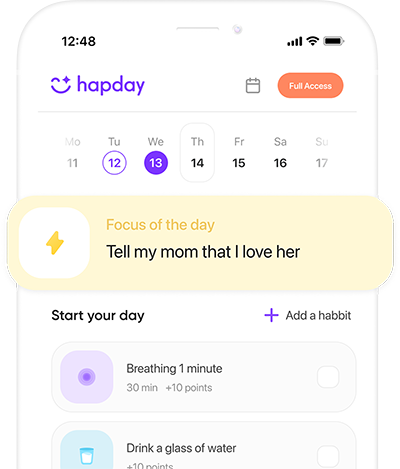
Curious about tailoring this more to your life? Check out Hapday for some personalized guidance.
References:
- National Institute of Mental Health. (2019). The impact of childhood trauma on the brain.
- Harvard Health Publishing. (2018). Mindfulness meditation and its role in PTSD recovery.
- American Psychological Association. (2020). The role of social support in trauma recovery.
- Bonanno, G. A. (2004). Resilience in the face of potential trauma. Journal of Traumatic Stress, 17(2), 153-162.