



Table of Contents
- Understanding Guilt: The Why Behind the Feeling
- Identifying Sources of Guilt in Your Life
- Emotional Toll and the Need for Mindfulness
- Shifting Perspective: From Guilt to Growth
- The Role of Forgiveness
- Establishing Boundaries: Your Emotional Fortress
- Crafting a Plan for Ongoing Change
- Seeking Professional Guidance When Necessary
- When Guilt Spills Over: Handling Relapses
- An Empowering Ending—and a New Beginning
- References
Understanding Guilt: The Why Behind the Feeling
To dismantle guilt, we must first lay the groundwork by understanding it. It often gets tagged as a curious cocktail of regret, responsibility, and oh, a dash of remorse. The origins of guilt can be traced to our actions, spoken words, even thoughts that rub against our own moral values.
“Guilt helps us to maintain those pivotal relationships and nudges us towards amends.”
— Dr. Sarah Chen, Clinical Psychologist
Without it? We’d be like ships adrift, marooned by our own selfish actions.
From an evolutionary lens—makes sense, doesn’t it? A deep dive conducted by the University of California illuminated how guilt tightens social bonds, boosting cooperation within groups. But here’s the catch: when guilt decides to overstay its welcome, morphing into stress or anxiety, it threatens our mental wellbeing. So… how do we slow down this speeding train of guilt?
Identifying Sources of Guilt in Your Life
First things first: pinpointing the origin of this guilt beast. Feeling swamped? You’re not flying solo in this. The American Psychological Association has the numbers to back this up—almost 60% of folks admit they’re haunted by guilt and regret regularly. These emotions, more often than not, stick to recognizable patterns.
Parental Guilt
Now, here’s a relatable dilemma: picture Kelly, a 32-year-old dynamo balancing marketing deadlines and school events. “It’s a constant tug-of-war,” she sighs. Such is the plight of many working moms slogging through today’s hustle culture.
Relationship Guilt
Then there’s relationship guilt—the kind that whispers at you from the shadows of past romantic entanglements. Take Maya, 28, whose post-divorce musings spiraled into endless self-reflection on what might have been.
Self-Guilt
And oh, the self-imposed variety. That relentless critic inside, often fueled by society’s obsession with perfection.
“Many, especially the millennials, live under the shadow of unattainable expectations—nod to social media for that.”
— Dr. Sarah Chen, Clinical Psychologist
Emotional Toll and the Need for Mindfulness
The weight of guilt is not just an emotional burden—it’s physiological too. Keep it unchecked, and you’re inviting stress with wide open arms. A Harvard study tossed light on how chronic stress ups the risks linked to heart disease, depression, and the like.
Mindfulness encourages a present-bound awareness, a permission slip to feel without shaming oneself. Science has had its say on this—the Journal of Behavioral Medicine points out how mindfulness cools the emotional tempest within us.
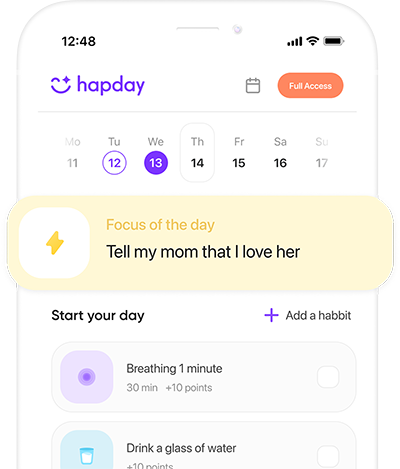
For those on the lookout for guided experiences, why not try Hapday—the AI Life Coach app? Its suite of exercises stands ready to assist in managing the swell of guilt, anytime, anyplace.
Shifting Perspective: From Guilt to Growth
The trick to moving guilt-wards towards growth? Flip the narrative. Swap “Why on earth did I do that?” for “What gem did I glean here?” It’s this mindset shift that strengthens resilience.
Take parenting, for instance. Lydia, a solo mom, mourned missed moments during her daughter’s formative years. But therapy helped reshape these moments—from scenes of regret to lessons in independence.
The Role of Forgiveness
Forgiveness is the keystone. A meta-analysis from the Journal of Positive Psychology connects forgiveness with enhanced mental wellbeing and a zestful life.
Establishing Boundaries: Your Emotional Fortress
Boundary creation is the nemesis of guilt—especially for those slipping into people-pleasing traps. But harnessing boundaries can enrich relationships and buttress self-assurance.
Start small, even tiny. Practice uttering that oh-so-difficult “no” for new commitments that drain rather than fulfill.
“It’s self-preservation, not approval-mining,”
— Dr. Sarah Chen, Clinical Psychologist
helping curb the guilt that thrives on pacifying others.
As you begin, putting pen to paper—or tapping keys—can be therapeutic. Apps like Happier Mind offer a platform for journaling boundary experiences, charting steps as you evolve beyond guilt’s clutches.
Crafting a Plan for Ongoing Change
Remember, change is a marathon, not a sprint. Lay out a practical plan with feasible goals. Ponder adding a weekly “nudge” to test comfort zones or tackle a guilt-triggering scenario.
Think about Jake, a 29-year-old artist wrecked with guilt over his art’s perceived lack of depth. By setting monthly goals to display his art in informal galleries, he flipped guilt into a growth narrative.
Seeking Professional Guidance When Necessary
For many, professional support could be the game-changer in tackling deep-seated guilt. Therapy avenues span from cognitive-behavioral to narrative therapies—each tailor-fitted to reweave life’s narrative.
When cost or logistics are barriers, platforms like Hapday could serve as a launchpad, offering structured, affordable support without the steep price of traditional therapy.
When Guilt Spills Over: Handling Relapses
It’s not a smooth sail; relapses happen. The answer lies in swift recognition and deploying learnt tactics. Ask, “What stirred this? What’s my path forward?” Consistent reassessment builds the grit to trek onwards.
An Empowering Ending—and a New Beginning
Shrugging off guilt’s shroud is a deeply personal journey, albeit universally strengthening. By grasping its roots, embracing mindfulness, recasting setbacks, drawing boundaries, and reaching for help, you forge a resilient, compassionate self.
Eager to banish guilt? Dive into cognitive tools and support systems for a lasting journey ahead. Hapday (hapday.app) stands readied to offer customized AI mentoring, granting you that extra hand when confronting guilt or drawing life’s boundaries.
Key Takeaways
- Understanding guilt is the first step to overcoming it.
- Mental and emotional health can deteriorate when guilt is not addressed.
- Embracing mindfulness and breathing exercises helps alleviate feelings of guilt.
- Forgiveness and boundary setting are crucial in moving past guilt.
- Professional help can be beneficial in dealing with deeper issues of guilt.
The Bottom Line
Dismantling guilt is not just securing peace for today but crafting a future where self-love and growth steer the helm.
References
- American Psychological Association
- Harvard Health Publishing
- Journal of Positive Psychology
- University of California
- Yale Journal of Biology and Medicine